
The
Proximity Fuse: The Secret Weapon That Changed Anti-Aircraft
Warfare
In the early days of World War II, shooting down an enemy aircraft
was an exercise in futility. Anti-aircraft gunners fired thousands of
shells into the sky, hoping one might explode close enough to bring down
a plane. It could take anywhere from 2,500 to 100,000 rounds to score a
single kill. But by 1943, a revolutionary new weapon had changed
everything—and the enemy had no idea why Allied guns had suddenly become
so deadly.
The proximity fuse, officially designated the VT (Variable Time)
fuse, was one of the most closely guarded secrets of the war. Ranking
alongside radar and the atomic bomb in strategic importance, this
miniature technological marvel transformed near-misses into lethal hits.
It was the “gunner’s dream” finally realized: a shell that could sense
when it was near a target and detonate automatically at the perfect
moment.

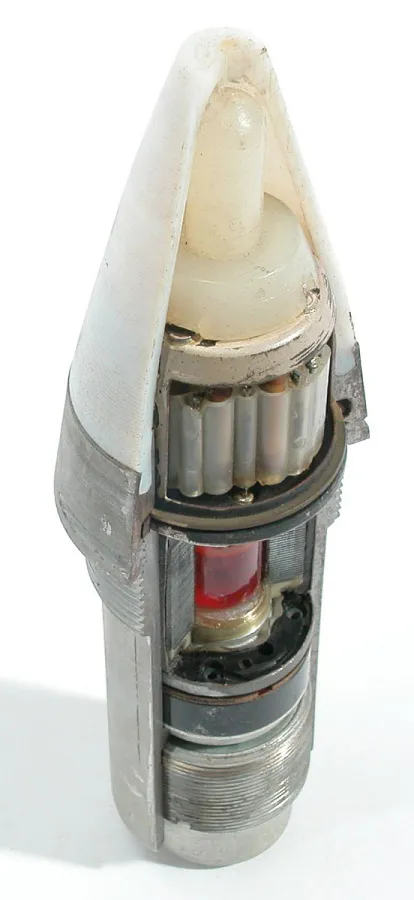
microelectronics. The development of the proximity fuze during WWII
revolutionized artillery effectiveness by using radio technology to
trigger explosions near targets. (Smithsonian National Air and Space
Museum, Gift of James A. Van Allen and the University of Iowa)
The
Impossible Dream: A Shell That Knows When to Explode
Before the proximity fuse, anti-aircraft artillery relied on two
deeply flawed methods. Gunners either set a mechanical timer to detonate
the shell after a specific number of seconds—requiring them to
accurately predict where a fast-moving aircraft would be—or they hoped
for a direct hit that would trigger a contact fuse. Against aircraft
traveling at hundreds of miles per hour and constantly maneuvering in
three dimensions, both approaches were woefully inadequate.
The concept of a “smart” fuse that could detect its own proximity to
a target had been a theoretical dream for decades. But turning that
dream into reality required solving problems that seemed insurmountable:
How do you pack a working radio transmitter and receiver into the nose
of an artillery shell? How do you build electronics delicate enough to
detect radio waves but rugged enough to survive being fired from a gun
at forces up to 20,000 times the force of gravity?
From
British Concept to American Engineering Marvel
The story begins in Britain, where researchers Samuel Curran and
William Butement developed a radio-based proximity detection system.
They successfully tested it with unguided rockets, but doubted the
fragile electronics could survive the violent shock of being fired from
an artillery piece. In 1940, as part of the famous Tizard Mission—one of
the most significant acts of scientific cooperation in history—British
scientists shared their research with the United States.
American physicist Merle Tuve and his team at what would become Johns
Hopkins University’s Applied Physics Laboratory took on the challenge.
The project, known as Section T, grew into a massive undertaking
involving over 100 American companies and costing more than $1 billion
in 1940s dollars. Among the team members was a young physicist named
James Van Allen, who would later discover the radiation belts
surrounding Earth.
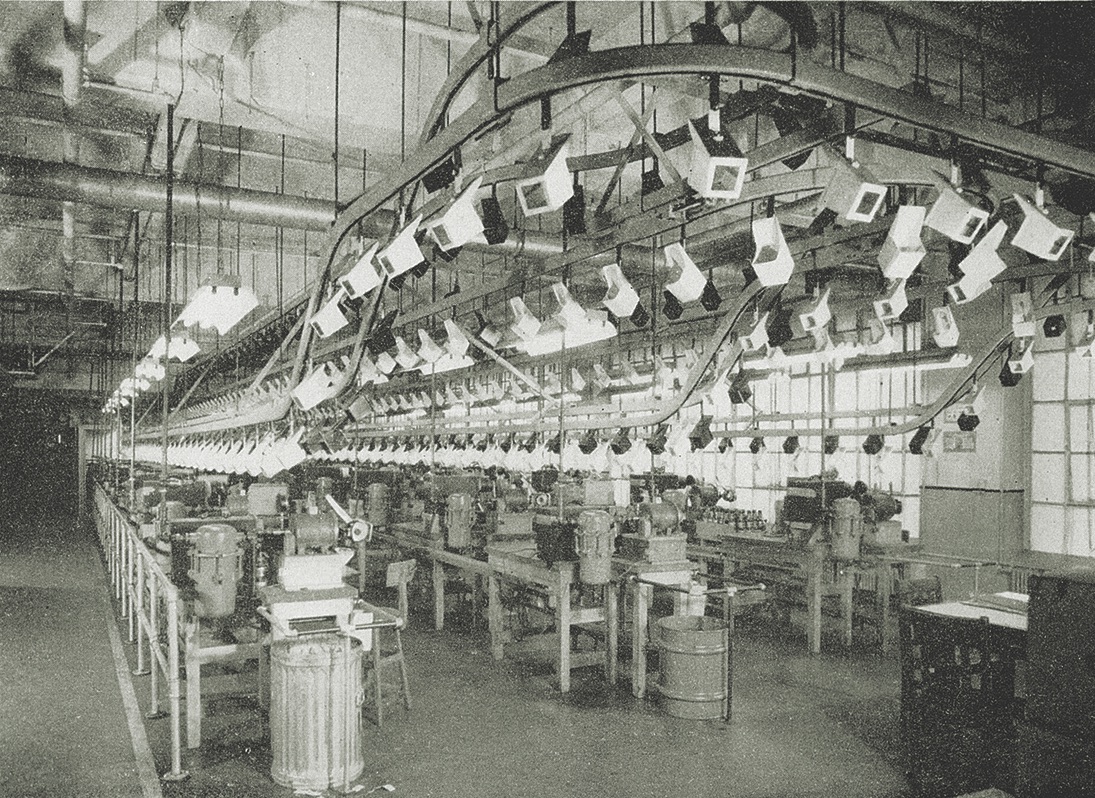
workers had assembled and installed more than 22 million innovative
fuzes. (National Archives)
The engineering breakthroughs were extraordinary. Researchers
developed miniature vacuum tubes the size of pencil erasers, potted in
plastic and wax to withstand the shock. They invented a novel battery
system: a wet-cell battery with its electrolyte sealed in a glass
ampule. When the shell was fired, the shock shattered the ampule, and
the shell’s spin distributed the acid, activating the battery for the
few seconds of flight time needed.
The fuse worked by transmitting a continuous radio wave using the
shell’s body as an antenna. When these waves reflected off a nearby
object—an aircraft, the ground, or even a V-1 flying bomb—the receiver
detected the reflected signal. Because the shell was moving rapidly, the
Doppler effect created a distinctive “beat” frequency. When this signal
reached a preset threshold, indicating optimal lethal range (typically
20-70 feet), an electronic switch called a thyratron triggered the
detonator.
Secrecy More
Intense Than the Manhattan Project
The proximity fuse was so secret that its security classification was
second only to the atomic bomb. The very name “Variable Time” fuse was
deliberate misdirection, designed to make enemy intelligence believe it
was simply an improved mechanical timer.
For the first two years of combat use, the fuse was restricted
exclusively to naval operations over water. This ensured that any dud
rounds would sink to the ocean floor rather than fall into enemy hands.
When a dud accidentally landed on Sicily in 1943, a special recovery
team was immediately dispatched. The thousands of workers—mostly
women—who assembled the delicate components in factories were told
nothing about what they were building. They were searched daily, and
security was absolute.
By war’s end, over 22 million proximity fuzes had been manufactured,
each one serialized and tracked in sealed containers. The secret
held.
First Blood in the Pacific
On January 5, 1943, near Guadalcanal, the light cruiser USS
Helena achieved the first combat kill with a proximity-fuzed
shell, downing a Japanese “Val” dive-bomber. The impact was immediate
and devastating—for the enemy.
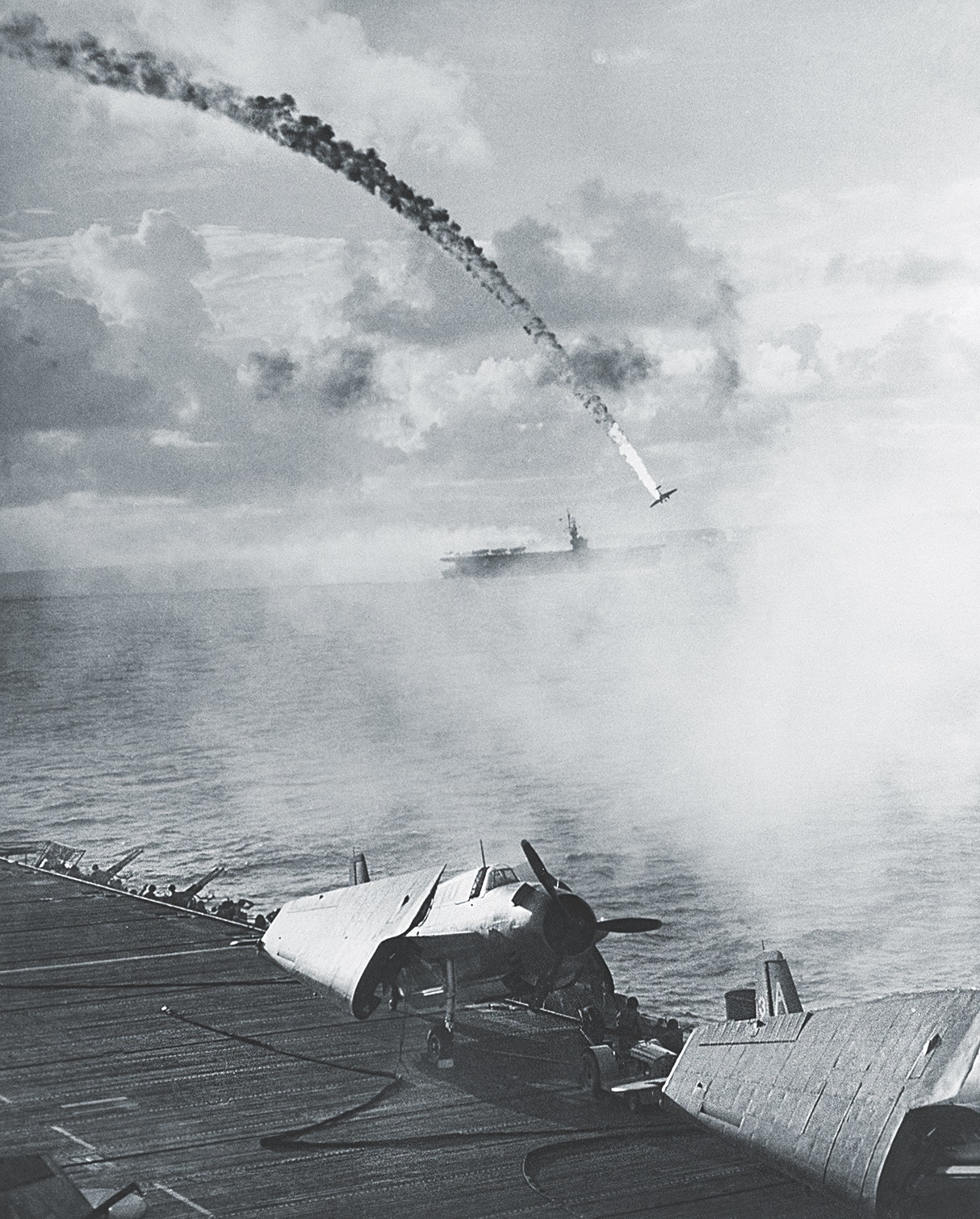
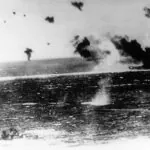
warship in the Pacific. (U.S. Navy)
In 1943, proximity-fuzed shells accounted for 51% of all Japanese
aircraft shot down by naval anti-aircraft fire, despite comprising only
25% of the ammunition expended. The fuse was three to four times more
effective than conventional ammunition. During the Battle of the
Philippine Sea in June 1944—the famous “Great Marianas Turkey
Shoot”—American naval gunners equipped with proximity fuzes decimated
Japanese air attacks. Some historians argue that the catastrophic loss
of experienced pilots to this mysterious new weapon contributed to
Japan’s desperate adoption of kamikaze tactics later in the war.
Secretary of the Navy James Forrestal declared that the proximity
fuse “helped blaze the trail to Japan.”
The Weapon That
Stopped Hitler’s Vengeance
In June 1944, Germany unleashed a new terror weapon against London:
the V-1 “buzz bomb,” a small, fast, unmanned jet-powered missile. These
weapons were difficult targets for conventional anti-aircraft guns, and
they were killing thousands of British civilians.
The Allies made a critical decision: they lifted the restriction on
land-based use of the proximity fuse and deployed it to coastal gun
batteries defending London. The results were staggering. The kill rate
against V-1s jumped from 24% to nearly 80% in a matter of weeks. By the
end of August 1944, artillery batteries armed with proximity fuzes were
destroying 97% of the V-1s that came within range.
The weapon that was supposed to break British morale had been
neutralized by a secret American fuse.
“The Funny Fuze Won
the Battle of the Bulge”
The proximity fuse’s most famous ground combat application came
during Germany’s last desperate offensive in December 1944. When German
forces launched their surprise attack through the Ardennes forest,
American artillery units had a secret weapon.
Proximity-fuzed shells fired to detonate several meters above the
ground created devastating airbursts that rained shrapnel down on enemy
soldiers. Unlike conventional shells that exploded on impact with the
ground, these airbursts bypassed the protection of foxholes and
trenches. The psychological impact was as devastating as the physical
casualties.
General George S. Patton, never one for understatement, declared:
“The funny fuze won the Battle of the Bulge for us.”
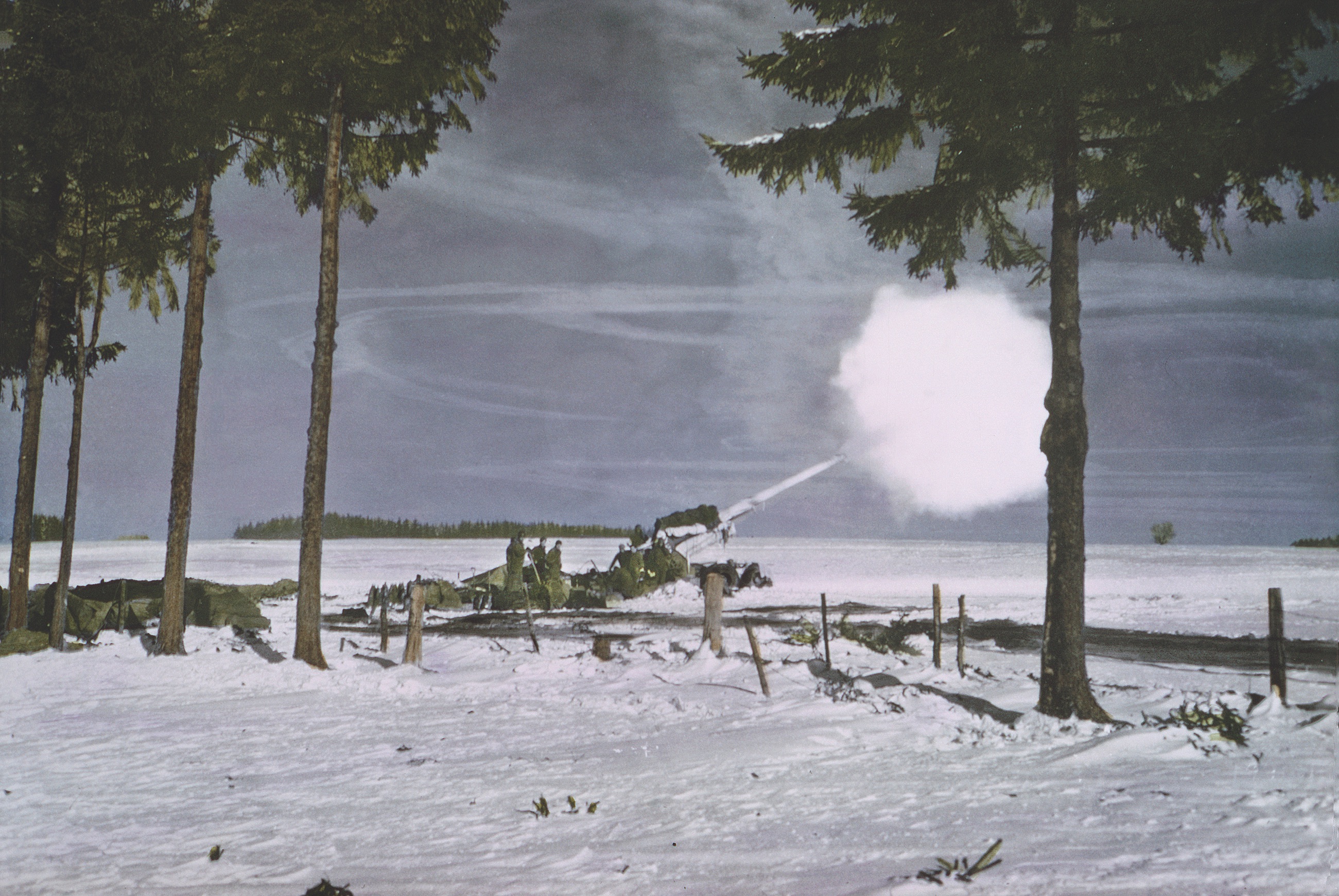
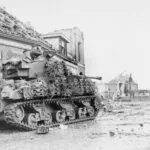
the Bulge. The fuze was devastatingly effective against German ground
troops. (U.S. Army)
A Weapon That Changed
History
The proximity fuse increased the lethality of anti-aircraft fire by a
factor of 5 to 10. Night kill ratios for naval gunners increased by an
astonishing 370%. By protecting Allied fleets from air attack and
neutralizing the V-1 threat, the fuse saved countless lives and
prevented the destruction of irreplaceable ships and equipment.
General Dwight D. Eisenhower later suggested that had the Germans
developed the proximity fuse first, the Allied invasion of Europe “might
have been exceedingly difficult, perhaps impossible.”
The technology pioneered for the proximity fuse didn’t disappear
after 1945. The principles of miniaturized radar, rugged electronics,
and proximity sensing became foundational for post-war military
technology. Modern air-to-air and surface-to-air missiles still rely on
sophisticated proximity fuzes descended from this World War II
innovation.
The Secret Weapon That
Stayed Secret
Despite its enormous impact on the war, the proximity fuse remained
largely unknown to the public for decades after 1945. While radar and
the atomic bomb captured headlines and public imagination, the “funny
fuze” that had saved so many lives and changed the course of battles
remained classified.
Today, military historians recognize the proximity fuse as one of the
most significant technological achievements of World War II—a weapon
that combined scientific brilliance, engineering ingenuity, and
operational security to create a true force multiplier. It stands as a
testament to what can be achieved when brilliant minds are given
seemingly impossible challenges and the resources to solve them.
In the desperate struggle of World War II, when every advantage
mattered and every innovation could save lives, the proximity fuse
proved that sometimes the smallest devices can have the biggest impact.
A shell that knew when to explode changed the course of history—and most
of the world never even knew it existed.