
Victory Gardens: How Americans Grew Their Way to Victory
When Eleanor Roosevelt planted a Victory Garden on the White House lawn in 1943, she defied her own Department of Agriculture. They worried it would make the government look desperate. But the First Lady understood something profound: in total war, even a tomato plant could be a weapon.
She was right. By 1944, 18 million American families had answered the call, transforming backyards, rooftops, and vacant lots into productive plots. Together, they grew an astonishing 40% of all fresh vegetables consumed in the United States—output equivalent to the entire commercial farming industry.
This is the story of how ordinary Americans armed with seeds and shovels became one of the most effective home front forces in history.

“Our Food is Fighting”: The Crisis That Sparked a Movement
The attack on Pearl Harbor didn’t just send millions of men to war—it created a food crisis at home. With farmworkers joining the military and transportation networks commandeered for military logistics, America’s agricultural system faced unprecedented strain.
The numbers were stark: the nation needed to feed not only its own population but also millions of Allied troops overseas. Railways that once carried produce to market now hauled tanks and ammunition. Trucks delivered soldiers, not vegetables. Commercial canning operations shifted to military rations.
In May 1942, the government implemented mandatory food rationing. Sugar, meat, butter, and canned goods became precious commodities, distributed through a complex system of ration books and stamps. For the first time since the Civil War, American families couldn’t simply buy what they wanted at the grocery store.
The solution came from an unlikely source: World War I. During that conflict, Americans had planted “war gardens” to supplement food supplies. Now, facing an even greater challenge, the government revived the concept with a new name and unprecedented scale.
Victory Gardens weren’t just about food—they were about victory itself.
The Propaganda Machine: Selling Seeds as Patriotism
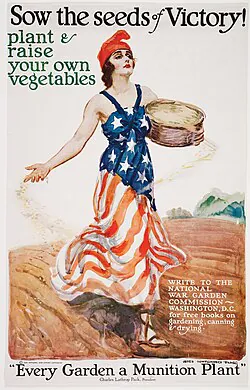
The U.S. government launched one of the most sophisticated propaganda campaigns in American history to promote Victory Gardens. The Department of Agriculture and Office of Civilian Defense coordinated with seed companies, garden clubs, and youth organizations in a unified push.
Posters appeared everywhere: on streetcars, in post offices, at schools. “Our food is fighting,” they declared. “Food will win the war.” The messaging was brilliant in its simplicity—every carrot you grew freed up resources for soldiers overseas. Every tomato was a small act of defiance against the Axis powers.

The campaign enlisted America’s most beloved figures. Mickey Mouse, Batman, and Superman appeared in promotional materials, teaching children about composting and pest control. Hollywood stars posed with hoes and watering cans. Even skeptical government officials eventually joined in—Vice President Henry Wallace cultivated his own garden.
But the government didn’t just sell patriotism—it sold knowledge. Recognizing that millions of participants would be novice gardeners, they distributed educational materials on an unprecedented scale. The “ABC of Victory Gardens” booklet became a bestseller. Newspapers ran weekly columns with advice from scientists and chemists. Radio programs featured gardening tips between war updates.
The message was clear: you didn’t need farming experience to serve your country. You just needed a patch of dirt and the will to dig.
A Nation Transformed: 18 Million Gardens Strong
The response exceeded all expectations. By May 1943, 18 million Victory Gardens were growing across America—roughly one for every two households. The movement had become a national phenomenon.
The statistics are staggering:
- 18.5 million gardens by 1944 (12 million urban, 6 million rural)
- 10 billion pounds of food produced in 1943 alone
- 9-10 million tons of fruits and vegetables annually at peak
- 40% of all fresh vegetables consumed in America came from Victory Gardens
To put this in perspective: at its height, the Victory Garden movement matched the entire commercial vegetable farming industry in output. Backyard gardeners were producing as much food as professional farmers.
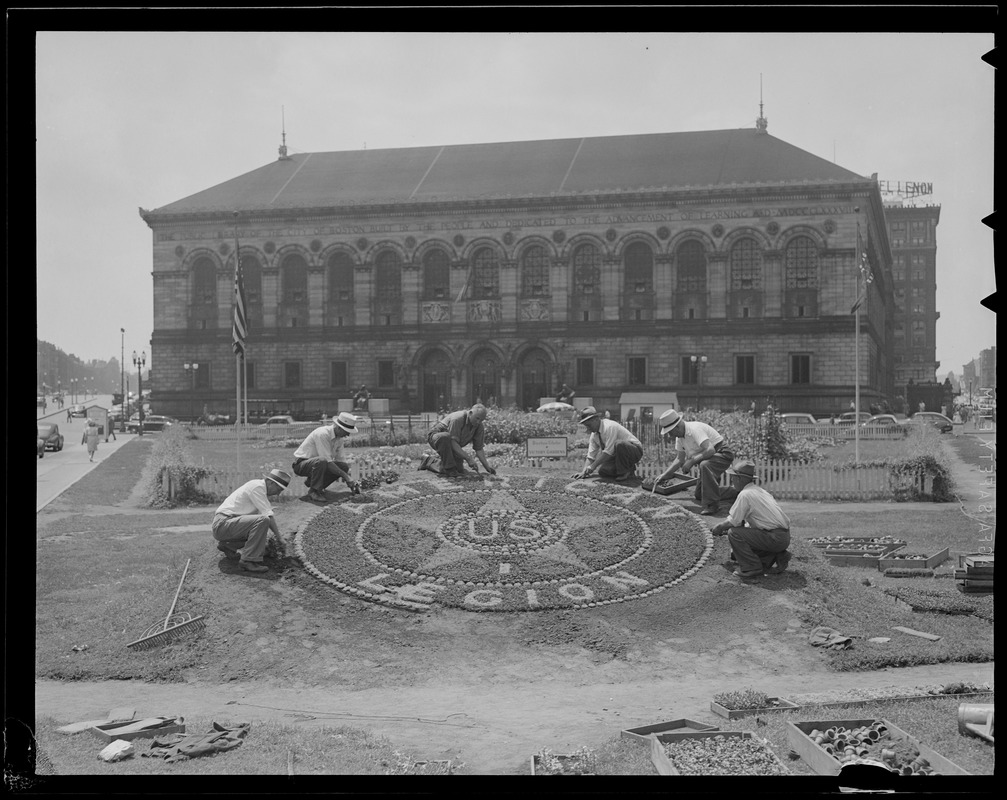
The gardens appeared everywhere. In cities, residents transformed vacant lots into community plots. Rooftops in New York sprouted tomatoes. Window boxes in Chicago grew herbs. San Francisco’s Golden Gate Park hosted massive community gardens. Boston’s Copley Square, normally a place for leisure, became a patchwork of vegetable plots.
Companies provided land for employee gardens. The National Institutes of Health turned its grounds into productive farmland. Schools replaced ornamental flowers with vegetables, teaching children agriculture alongside arithmetic.
Even baseball fields weren’t sacred. When the nation needed food more than recreation, diamonds became gardens.
The Gardeners: A Cross-Section of America
The Victory Garden movement engaged Americans from all walks of life, though not always equally or fairly.
For many families, it truly was a collective effort. Children weeded and watered. Mothers planned and planted. Fathers, when home from war work, built raised beds and compost bins. The gardens became spaces where families worked together toward a common goal—a rare bright spot in an otherwise anxious time.
In rural areas, women often shouldered the primary responsibility as men left for military service. They managed larger plots, sometimes an acre or more, while also maintaining household duties and war work.
Urban participation was particularly remarkable. City dwellers with no farming experience learned to coax vegetables from small plots. Neighbors shared tools, seeds, and advice. Community gardens became social hubs where people exchanged not just gardening tips but war news, recipes, and mutual support.

But the movement also reflected America’s deep inequalities. In Japanese American internment camps, Victory Gardens took on a different meaning. Forcibly removed from their homes and imprisoned in remote camps, Japanese Americans were encouraged—sometimes compelled—to plant gardens. For them, it wasn’t primarily about patriotism. It was about survival.
The gardens supplemented meager government rations with fresh produce, including traditional Japanese vegetables that provided a connection to their heritage. In the harsh, barren landscapes of camps like Manzanar and Tule Lake, these gardens became acts of cultural preservation and community building as much as food production.
In the segregated South, harvest shows and competitions held separate categories for Black and white gardeners, with different prizes awarded. Even in a national movement, Jim Crow persisted.
From Seed to Table: What They Grew and How
Victory Gardens focused on practical, high-yield crops that even novice gardeners could manage. The most popular vegetables included:
- Tomatoes (the undisputed champion)
- String and wax beans
- Beets and carrots
- Lettuce and radishes
- Onions and cabbage
- Kale and Swiss chard
Many Americans encountered vegetables they’d never seen before. Kohlrabi, a staple in European gardens, became a curiosity in American plots. Some loved it; others found it strange and woody.
The government’s educational materials emphasized succession planting—staggering crops so that harvests came throughout the season rather than all at once. They taught companion planting, pest control without modern chemicals, and soil management.
But the most critical skill was preservation. Fresh vegetables ripen quickly, and without proper storage, a bountiful harvest could become waste. Canning became a national obsession. Hardware stores sold out of Mason jars. Pressure cookers became prized possessions. Women gathered for canning parties, processing bushels of tomatoes and beans while sharing recipes and war news.
The goal wasn’t just to eat fresh vegetables in summer—it was to stock pantries for winter, reducing dependence on rationed canned goods year-round.
Beyond Food: The Social Impact of Digging In
The Victory Garden movement’s impact extended far beyond nutrition. It provided something precious in wartime: a sense of control and purpose.
For civilians anxious about loved ones overseas, gardening offered a tangible way to contribute. You couldn’t fight on the front lines, but you could grow food that freed up resources for those who did. The physical labor was therapeutic—government materials promoted it as “a definite release from war stress and strain.”
The gardens fostered community in powerful ways. Nearly 20,000 communities hosted harvest shows and festivals where residents competed for ribbons and raised money for military relief funds. These events became celebrations of collective achievement, moments of joy in an otherwise grim period.
Neighbors who might never have spoken became gardening partners, sharing tools, seeds, and knowledge. In community gardens, people from different backgrounds worked side by side, united by common purpose.
Yet for all the patriotic rhetoric, a 1944 poll revealed a more pragmatic truth: 54% of Americans grew gardens primarily for economic reasons—to save money and supplement rationed food. Only 20% cited patriotism as their main motivation.
This doesn’t diminish the movement’s significance. If anything, it makes it more remarkable. Americans didn’t need to be convinced by propaganda alone. The gardens met real needs: they saved money, provided better nutrition, and gave families more control over their food supply during uncertain times.
The patriotism was real, but so was the hunger.
After the War: Legacy and Revival
When the war ended, most Victory Gardens disappeared almost overnight. Americans were eager to return to normalcy, and commercial agriculture ramped back up.
But some gardens persisted. Boston’s Fenway Victory Gardens, established in 1942, never closed. Today, it’s the oldest continuously operating Victory Garden in America. Minneapolis’s Dowling Community Garden has a similar story—a wartime necessity that became a cherished community institution.
In 2009, Michelle Obama planted a “Kitchen Garden” on the White House lawn, consciously echoing Eleanor Roosevelt’s wartime example. The principles of Victory Gardens resonate in modern movements: urban farming, community-supported agriculture, and sustainable living—all emphasizing self-sufficiency and community resilience.
Most tellingly, Victory Gardens return during crises. During the COVID-19 pandemic, seed companies reported unprecedented demand. In Ukraine, following Russia’s 2022 invasion, citizens established their own victory garden campaigns, growing food amid war just as their grandparents had done.
The simple act of planting seeds remains a powerful symbol of resilience and defiance.
The Harvest of History
The Victory Garden movement stands as one of the most successful civilian mobilizations in American history. It demonstrated that ordinary people, armed with basic tools and determination, could make extraordinary contributions to national security.
The numbers tell part of the story: 18 million gardens, 10 billion pounds of food, 40% of the nation’s fresh vegetables. But statistics can’t capture the full impact—the sense of purpose it gave anxious civilians, the communities it built, the skills it taught, the hope it provided.
Victory Gardens proved that in total war, there is no home front and no battle front—only a nation united in common cause. Every American, regardless of age or ability, could serve. Every backyard could become a battlefield in the fight for victory.
Eleanor Roosevelt was right to plant that garden despite official objections. It wasn’t a sign of desperation—it was a symbol of strength. It said: we will do whatever it takes, no matter how small the act, to win this war.
And in the end, they did.
The lesson endures: when crisis comes, we don’t need to wait for someone else to solve it. Sometimes victory grows from the ground up, one seed at a time.