
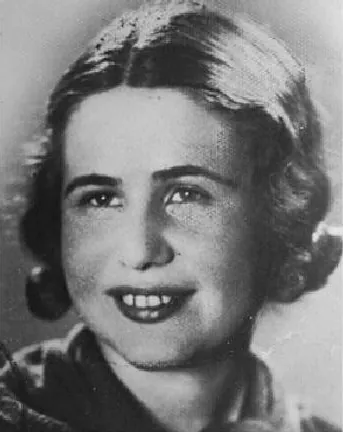
Irena
Sendler: The Woman Who Buried 2,500 Names in a Jar
In the autumn of 1943, a Polish social worker sat in a Gestapo
interrogation room at Warsaw’s Pawiak prison. Her legs had been
shattered. Her interrogators demanded names — the names of the children
she had smuggled out of the Warsaw Ghetto, the names of her
collaborators, the names of the families hiding them. She gave them
nothing. Not a single name. Not one address.
Her name was Irena Sendler, and she had already saved approximately
2,500 Jewish children from almost certain death. This is her story.
A Doctor’s Daughter
and a Lesson in Humanity
Irena Stanisława Sendler was born on February 15, 1910, in Warsaw.
She grew up in Otwock, a town with a large Jewish population, where her
father, Dr. Stanisław Krzyżanowski, ran a medical practice. He treated
the poor — Jewish and Christian alike — often for free, and he taught
his daughter that a person’s worth had nothing to do with their religion
or background.
When Irena was seven, her father died of typhus contracted from his
patients. The local Jewish community, grateful for his years of service,
offered to pay for Irena’s education. Her mother declined, but the
gesture left a lasting impression on the young girl.
At the University of Warsaw in the 1930s, Sendler protested the
“ghetto bench” system — a form of segregation that forced Jewish
students to sit in separate sections of lecture halls. She deliberately
sat with her Jewish friends and defaced her own grade card in protest.
The university suspended her for three years. She didn’t regret it.
By 1935, she was working for Warsaw’s Department of Social Welfare
and Public Health, witnessing firsthand the poverty grinding down the
city’s most vulnerable families.
Into the Ghetto: A Pass
and a Purpose
When Germany invaded Poland in September 1939, Nazi authorities
quickly banned the Social Welfare Department from assisting Jewish
citizens. Sendler ignored the ban. Together with colleagues like Jadwiga
Piotrowska and Irena Schultz, she began forging documents and smuggling
food and medicine to Jewish families.
When the Warsaw Ghetto was sealed in November 1940, trapping
approximately 400,000 Jews behind its walls, Sendler’s mission became
more urgent. She obtained a special pass from the city’s epidemic
control department, allowing her to enter the ghetto under the pretext
of conducting typhus inspections — a disease the Germans feared enough
to grant access. Inside the ghetto, she wore a Star of David armband as
a gesture of solidarity.
What she found inside was a slow-motion catastrophe. Families were
starving. Children were dying in the streets. Disease was rampant. And
then, in July 1942, the deportations began.
The Great Action:
When Rescue Became Survival
The “Great Action” — the systematic deportation of Warsaw Ghetto
inhabitants to the Treblinka extermination camp — began on July 22,
1942. Within weeks, it was clear that the ghetto was being emptied for
annihilation. Sendler shifted her focus entirely to saving children.
She joined Żegota, the Polish Council to Aid Jews,
an underground organization backed by the Polish government-in-exile.
Under the codename “Jolanta,” she became head of Żegota’s children’s
section. Her network of trusted colleagues — mostly women from the
Social Welfare Department — began the dangerous work of smuggling
children out of the ghetto one by one.
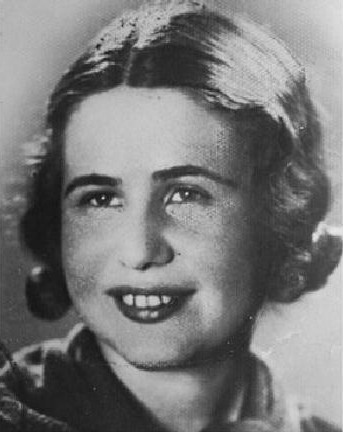
Vashem Photo Archives / United States Holocaust Memorial Museum
The methods were as creative as they were harrowing:
- Ambulances: Infants and small children, sometimes
sedated, were hidden under stretchers, in laundry bags, or inside
coffins. - Toolboxes and suitcases: Older children were folded
into crates and boxes loaded onto trucks leaving the ghetto. - Underground passages: Children were guided through
the city’s sewer system and subterranean corridors. - Border buildings: A courthouse and a Catholic
church that straddled the ghetto wall served as transit points. - Medical pretexts: Sendler used her official pass to
“remove” children supposedly suffering from contagious diseases like
tuberculosis.
Once on the “Aryan” side, each child received a new Polish identity —
forged documents, a new name, sometimes dyed hair. They were placed with
vetted Polish families, in Catholic convents, or in orphanages. The
Rev. G. P. Boduen Children’s Home became one of the key receiving
institutions.
The Jars Buried Under the
Apple Tree
Sendler was haunted by one fear above all others: that the children
would survive the war but lose their identities forever — that they
would grow up not knowing who they were, where they came from, or that
they had families who had loved them.
So she kept records.
On thin strips of tissue paper, she wrote each child’s original name
alongside their new identity and placement location. These lists were
the only thread connecting the children to their pasts. To protect them
from the Gestapo, she sealed the papers inside glass jars and buried
them under an apple tree in the garden of a trusted colleague, Jadwiga
Deneka, at 9 Lekarskiej Street in Warsaw.
She planned to dig them up after the war and use them to reunite the
children with any surviving family members.

children like these were among those Sendler’s network worked to
save. — Wikimedia Commons / Public Domain
Arrest, Torture, and a
Miraculous Escape
On October 18, 1943, the Gestapo came for her.
They arrived at her Warsaw apartment at dawn. During the raid,
Sendler managed to pass her current list of children’s names to a
neighbor before she was taken. At Pawiak prison, she was subjected to
brutal interrogation. Her interrogators broke the bones in her legs and
feet. She was beaten repeatedly. She said nothing.
Sentenced to death, she was scheduled for execution on November 13,
1943. But Żegota had not abandoned her. The organization bribed a German
guard, who led her out of the prison the night before her scheduled
execution. Her name was posted on public execution lists — officially,
Irena Sendler was dead.
She adopted the false identity of Klara Dąbrowska and went into
hiding. Even then, she continued working with the resistance until the
war’s end. She walked on broken legs for the rest of her life.
After the War: Jars
Unearthed, Families Lost
When the war ended, Sendler dug up the jars. The lists were intact.
But the world they described was gone.
Of the approximately 2,500 children she had saved, the vast majority
had lost their parents to the Holocaust. She worked with Jewish
organizations to locate the children and reconnect them with any
surviving relatives, but most parents had been murdered at Treblinka or
in the ghetto. Many children had bonded deeply with their adoptive
families and chose to remain with them.
In post-war communist Poland, Sendler’s wartime connections to the
non-communist Polish government-in-exile made her a target of suspicion.
The state security services harassed her. Her heroism was officially
ignored.
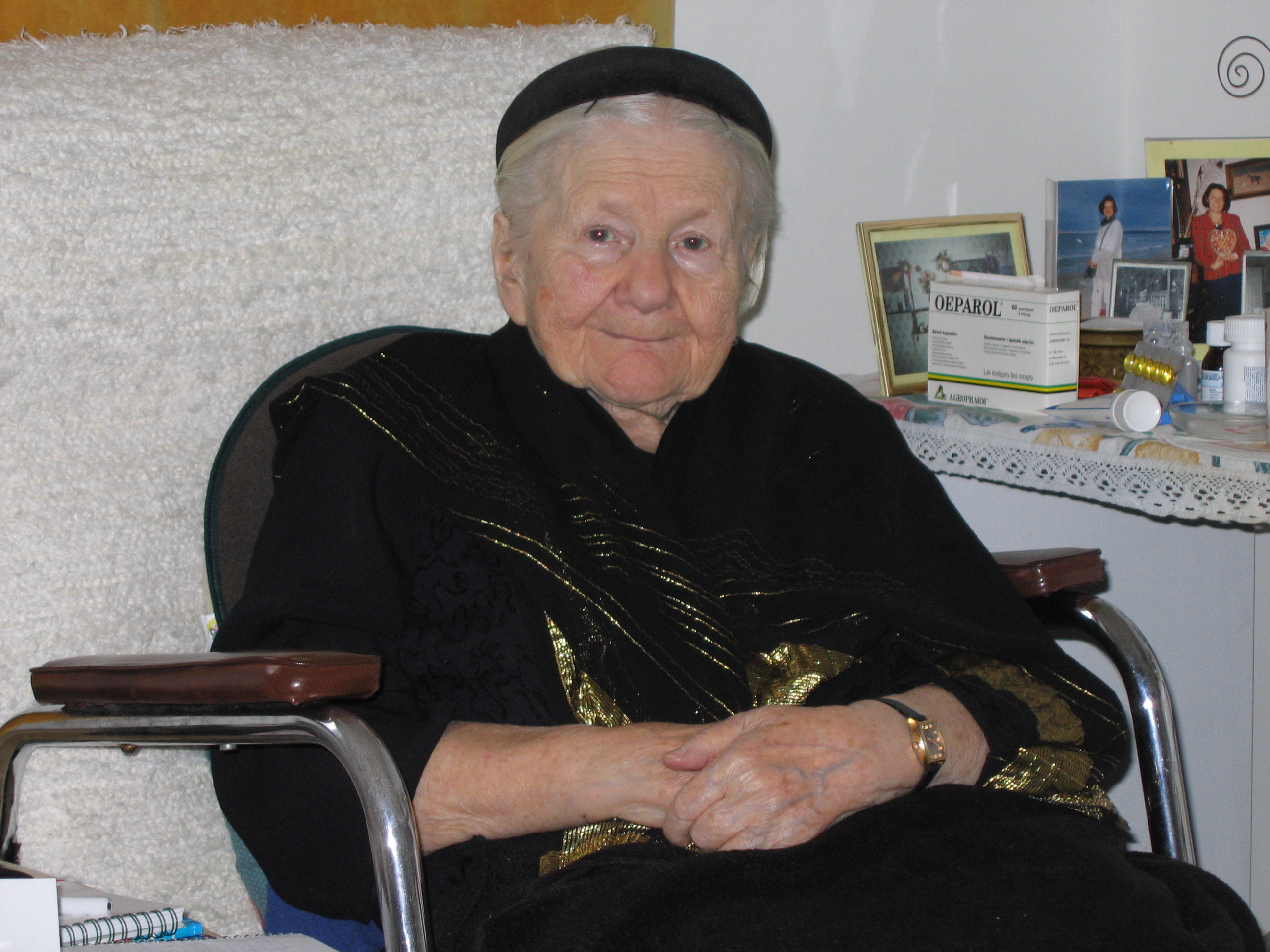
age of 94. She lived to see her story reach the world. — Mariusz
Kubik / Wikimedia Commons (CC BY-SA 4.0)
In 1965, Yad Vashem in Israel recognized her as Righteous
Among the Nations — but the communist government refused to
issue her a passport to travel and receive the honor until 1983.
Rediscovery: Four
Students from Kansas
For decades, Irena Sendler’s story remained largely unknown outside
Poland. Then, in 1999, four high school students from Uniontown, Kansas
— Megan Stewart, Liz Cambers, Janice Underwood, and Jessica Shelton —
stumbled across a brief mention of her in a magazine article. They
assumed she had died. They were wrong.
The students wrote a play called Life in a Jar, which they
performed across the United States. The production brought international
attention to Sendler’s story. She was still alive, living quietly in
Warsaw at the age of 89.
The recognition that followed was long overdue. In 2003, Poland
awarded her the Order of the White Eagle, the country’s
highest civilian honor. In 2007, she was nominated for the Nobel Peace
Prize. She did not win — the prize went to Al Gore and the IPCC — but
the nomination alone brought her story to millions of people around the
world.
Irena Sendler died on May 12, 2008, at the age of 98.
A Legacy Written on Tissue
Paper
When asked about her actions after the war, Sendler was
characteristically modest. She often said that she could have done more
— that she regretted every child she hadn’t been able to save. She never
considered herself a hero.
But the 2,500 people who survived because of her — and their
children, and their grandchildren — tell a different story. Each of them
exists because a young social worker from Warsaw decided that a human
life was worth more than her own safety.
The jars she buried under that apple tree were more than a
record-keeping system. They were an act of faith — a belief that the war
would end, that the children would survive, and that someday, someone
would want to know who they really were.
She was right.
Irena Sendler’s story is preserved by the Life in a Jar
Foundation and the POLIN Museum of the History of Polish Jews in Warsaw.
The glass jars she buried are now a symbol of Holocaust remembrance
worldwide.