
Operation
Mincemeat: The Dead Man Who Fooled Hitler
In the spring of 1943, a body washed ashore near the small Spanish
port of Huelva. Dressed in the uniform of a Royal Marines officer, the
dead man — identified as Major William Martin — carried a briefcase
chained to his wrist. Inside were letters from senior British generals
discussing top-secret invasion plans. Within days, the documents had
been photographed by German intelligence and rushed to Berlin. Adolf
Hitler read them and believed every word.
There was just one problem: Major William Martin had never existed.
And the invasion plans were entirely fake.
What followed was one of the most audacious, creative, and
consequential deception operations in the history of warfare — a plan so
improbable that it could only have been conceived by the British
intelligence community at its most brilliantly eccentric.

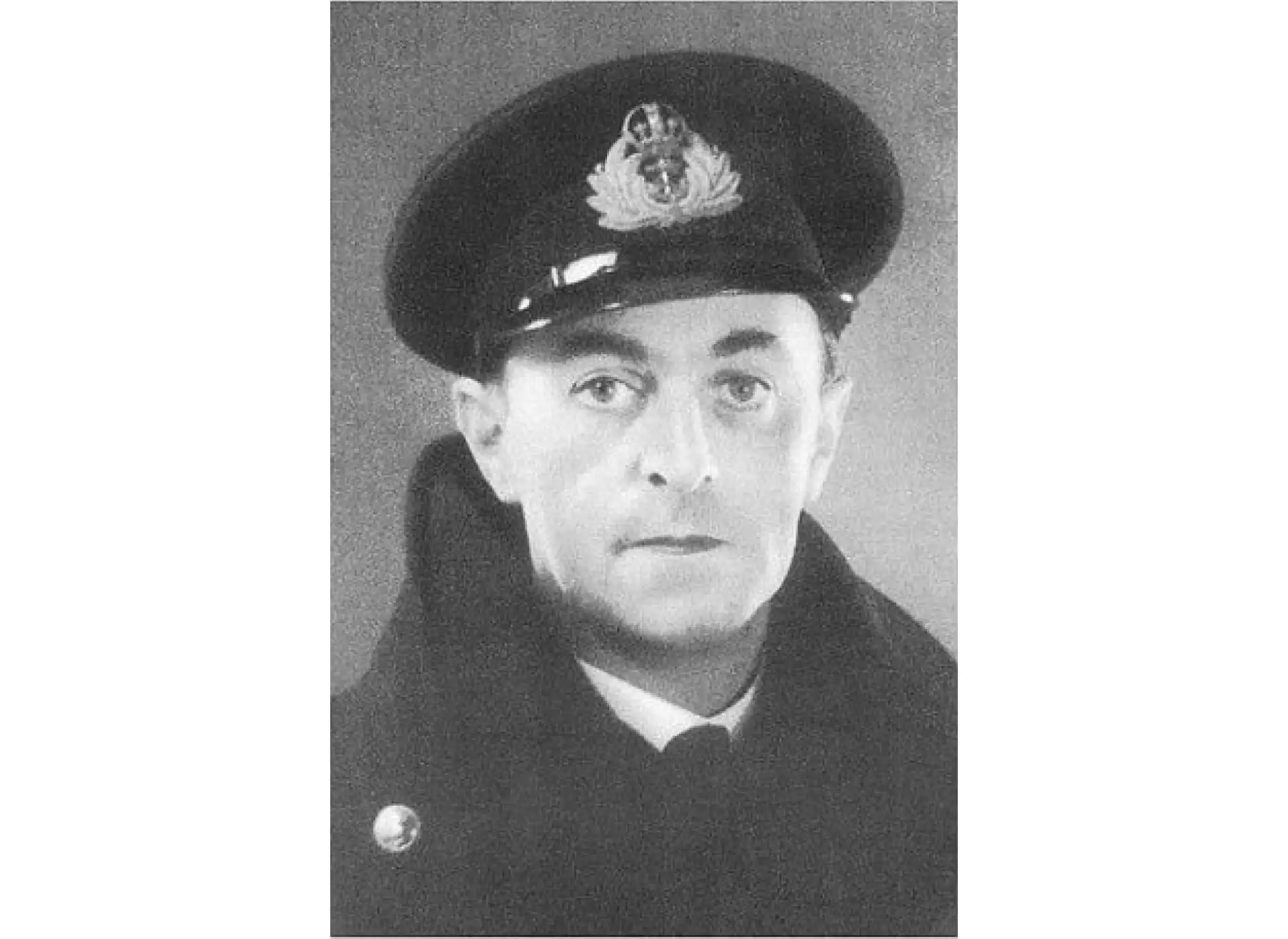
Operation Mincemeat alongside Charles Cholmondeley. Source: The
National WWII Museum, New Orleans
The Problem:
Everyone Knew It Would Be Sicily
By early 1943, the Allies had driven Axis forces from North Africa.
The next logical step was an invasion of southern Europe — and the most
obvious target was Sicily. The island sat at the crossroads of the
Mediterranean, and capturing it would open the sea lanes and provide a
springboard for an assault on mainland Italy.
The problem was that it was too obvious. Winston Churchill
himself reportedly said, “Everyone but a bloody fool would know that
it’s Sicily.” If the Germans reinforced the island with armored
divisions and coastal defenses, the invasion could turn into a
bloodbath.
Allied planners needed a way to make the Germans look elsewhere. They
needed a lie so convincing that Hitler would strip Sicily of its
defenders and send them somewhere else entirely.
The answer came from a 1939 memo written by a young naval
intelligence officer named Ian Fleming — the same man who would later
create James Bond.
The Trout Memo
and the Birth of a Macabre Plan
Fleming’s memo, known as the “Trout Memo” (after the art of
fly-fishing, where you lure fish with artificial bait), contained a list
of potential deception tactics. Suggestion number 28 was described as
“not a very nice one”: plant misleading documents on a corpse and allow
it to fall into enemy hands.
The idea sat dormant for three years. Then, in late 1942, RAF Flight
Lieutenant Charles Cholmondeley revived it. He proposed dropping a body
with false papers from an aircraft. The Twenty Committee — Britain’s
inter-service intelligence body responsible for deception operations —
assigned Cholmondeley to work with Ewen Montagu, a sharp-minded naval
intelligence officer and barrister, to develop the concept.
Together, they built something extraordinary.
The Man Who
Never Was: Creating Major William Martin
The operation required a real corpse. After consulting with the
eminent pathologist Sir Bernard Spilsbury, the team determined they
needed a body whose cause of death could plausibly be attributed to
drowning — consistent with a plane crash at sea. They also needed
someone with no family who might ask awkward questions.
They found their man in Glyndwr Michael, a 36-year-old homeless
Welshman who had died in a London hospital on January 28, 1943, after
accidentally ingesting rat poison. The phosphorus in the poison had
caused fluid to accumulate in his lungs — a finding that could pass for
drowning.
Michael’s body was transformed into Captain (Acting Major) William
Martin of the Royal Marines. The rank was carefully chosen: senior
enough to carry top-secret documents, but not so prominent that German
intelligence would personally know him.

created by British intelligence for Operation Mincemeat. The photograph
is of MI5 officer Ronnie Reed. Source: Wikimedia Commons / UK
National Archives — Public Domain
To make the deception airtight, Montagu and Cholmondeley created an
entire life for their fictional officer. They filled his pockets with
what intelligence officers call “pocket litter”:
- A Royal Marines identity card with his photograph
- Two passionate love letters from his fictitious fiancée “Pam” (the
photo was of an MI5 clerk named Jean Leslie) - A jeweler’s receipt for a diamond engagement ring
- Stubs from London theatre tickets
- A stern letter from Lloyds Bank about an overdraft of £79
- Keys, cigarettes, and a letter from his “father”
Every detail was designed to make Major Martin feel real — a man with
debts, a girlfriend, a life interrupted.
The
Documents: A Lie Wrapped in Official Letterhead
The heart of the deception was a briefcase handcuffed to Major
Martin’s wrist. Inside were two fabricated letters of staggering
audacity.
The first was a personal letter from Lieutenant General Sir Archibald
Nye, Vice Chief of the Imperial General Staff, to General Sir Harold
Alexander. Written in the casual, slightly indiscreet tone of a private
communication between senior officers, it explicitly discussed plans to
invade Greece and Sardinia — and dismissed the coming assault on Sicily
as a mere diversionary feint.
The second letter was from Lord Louis Mountbatten, Chief of Combined
Operations, to Admiral Sir Andrew Cunningham. It introduced Major Martin
as an amphibious warfare expert and included a clumsy joke about
sardines — a subtle reinforcement of Sardinia as a target.
To detect whether the documents had been opened, a single eyelash was
placed inside the main letter.
HMS Seraph and the Drop Off
Huelva
On April 17, 1943, the body of “Major Martin” was sealed in a steel
canister packed with dry ice. Two days later, it was loaded onto the
British submarine HMS Seraph, commanded by Lieutenant Bill
Jewell. The crew was told their secret cargo was a meteorological
device.
After a ten-day voyage, HMS Seraph surfaced off the coast of
Huelva in the early hours of April 30. The location was no accident:
local currents would carry the body ashore, and the area was known to
harbor a pro-German Spanish official and an active German intelligence
agent. The submarine’s officers gently released the body into the sea
and read the 39th Psalm.
Lieutenant Jewell then sent the coded message back to London:
“MINCEMEAT completed.”

Mediterranean operations, 24 December 1943. HMS Seraph carried the body
of ‘Major William Martin’ to the Spanish coast in April 1943.
Source: Imperial War Museum (IWM) — Public Domain
Hitler Takes the Bait
The body was discovered by a Spanish fisherman that same morning and
turned over to the authorities. As anticipated, despite Spain’s official
neutrality, the Spanish Navy shared the contents of the briefcase with
the local Abwehr agent. The documents were carefully opened,
photographed, and resealed before being returned to the British.
When the letters arrived back in British hands, the planted eyelash
was missing. The Germans had read every word.
Ultra intercepts of German communications soon confirmed that Hitler
had swallowed the deception completely. On May 14, 1943, he issued a
directive stating: “Measures regarding Sardinia and the Peloponnese
take precedence over everything else.”
The consequences were immediate and dramatic:
- The 1st Panzer Division was moved from France to Greece
- Two additional Panzer divisions were transferred from the Eastern
Front to the Balkans - Seven German divisions were diverted to Greece and ten to the
Balkans overall - The garrison on Sardinia was doubled
- German torpedo boats were moved from Sicily to the Greek
islands
Sicily — the actual target — was left dangerously under-defended.
Operation Husky: The Payoff
When the Allies launched Operation Husky on July 9, 1943, they
achieved near-total strategic surprise. The German and Italian defenders
were unprepared and under-strength. Even after the landings began, the
German High Command remained convinced for weeks that Sicily was a feint
— Hitler sent Field Marshal Erwin Rommel to Salonika to command the
defense of Greece, which never came.
Sicily fell in just 38 days — far faster than the 90 days planners
had estimated, and with significantly fewer Allied casualties than
feared. The rapid conquest also precipitated the collapse of Benito
Mussolini’s fascist regime in Italy, opening a new front that would tie
down German forces for the remainder of the war.
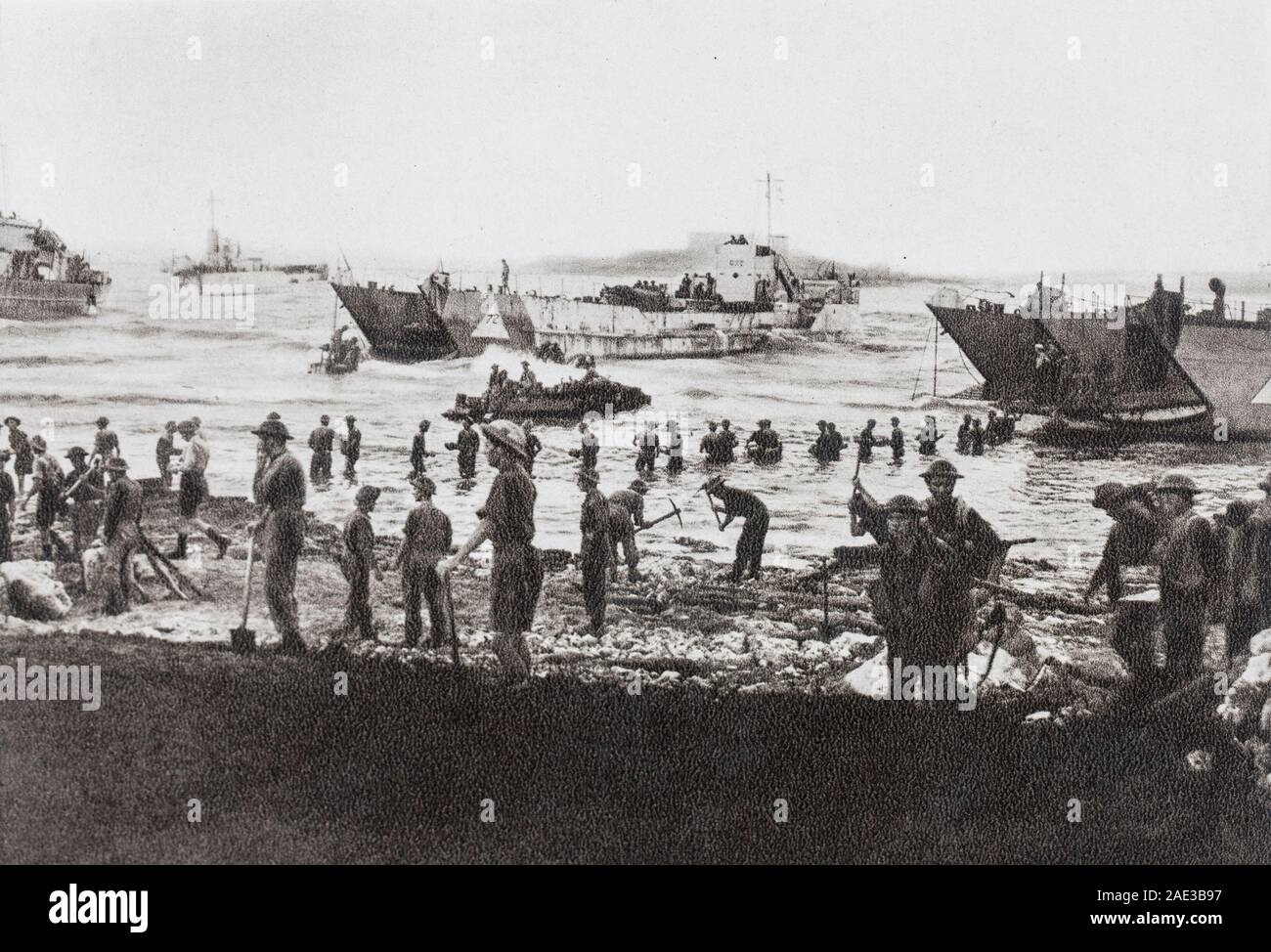
deception ensured the beaches were far less defended than they might
have been. Source: Alamy / U.S. Army Signal Corps — Public
Domain
The Man Behind the Mask
For decades, the true identity of the man who changed the course of
the war remained classified. Glyndwr Michael was buried with full
military honors in the Nuestra Señora de la Soledad cemetery in Huelva,
Spain, under the name Major William Martin.
In 1996, amateur historian Roger Morgan uncovered evidence
identifying the body as Michael’s. In 1998, the Commonwealth War Graves
Commission added an inscription to the headstone: “Glyndwr Michael;
Served as Major William Martin, RM.” A plaque was later erected in
his hometown of Aberbargoed, Wales — finally giving public recognition
to the homeless drifter who, in death, played a silent and crucial role
in Allied victory.
Ewen Montagu published his account of the operation in 1953 under the
title The Man Who Never Was, which became a bestseller and was
adapted into a film in 1956. A second film, simply titled Operation
Mincemeat, was released in 2022.
A Deception for the Ages
Operation Mincemeat succeeded because it exploited something more
powerful than military force: human psychology. The Germans believed the
documents because they wanted to believe them. Hitler’s
obsession with the Balkans made him receptive to exactly the kind of
intelligence that confirmed his fears.
Montagu and Cholmondeley understood this. They didn’t just plant
false information — they built a false person, complete with
love letters and bank overdrafts, because they knew that the Germans
would look for reasons to doubt the documents. They found none.
In the end, a homeless Welsh drifter who died alone in a London
hospital became, in death, one of the most important figures of the
Second World War. He never fired a shot. He never gave an order. He
simply played his part — and the Allies did the rest.
Operation Mincemeat remains a masterclass in wartime deception,
studied in intelligence schools to this day. The original documents are
held at the National Archives in Kew, London.