

The
Kindertransport: 10,000 Children Saved, 10,000 Goodbyes Forever
On a cold December morning in 1938, nearly 200 children boarded a
train in Berlin. They carried small suitcases, a few treasured
possessions, and the weight of an impossible goodbye. Their parents
stood on the platform, forcing smiles through tears, waving until the
train disappeared from view. Most of these children would never see
their mothers and fathers again.
This was the first Kindertransport—the “Children’s Transport”—a
desperate rescue mission that would save approximately 10,000
predominantly Jewish children from Nazi persecution. Between December
1938 and September 1939, trains carried unaccompanied children from
Germany, Austria, Czechoslovakia, and Poland to safety in Great Britain.
It was an extraordinary act of humanitarian compassion. It was also a
tragedy of forced separation that would haunt survivors for the rest of
their lives.
The Night That Changed
Everything
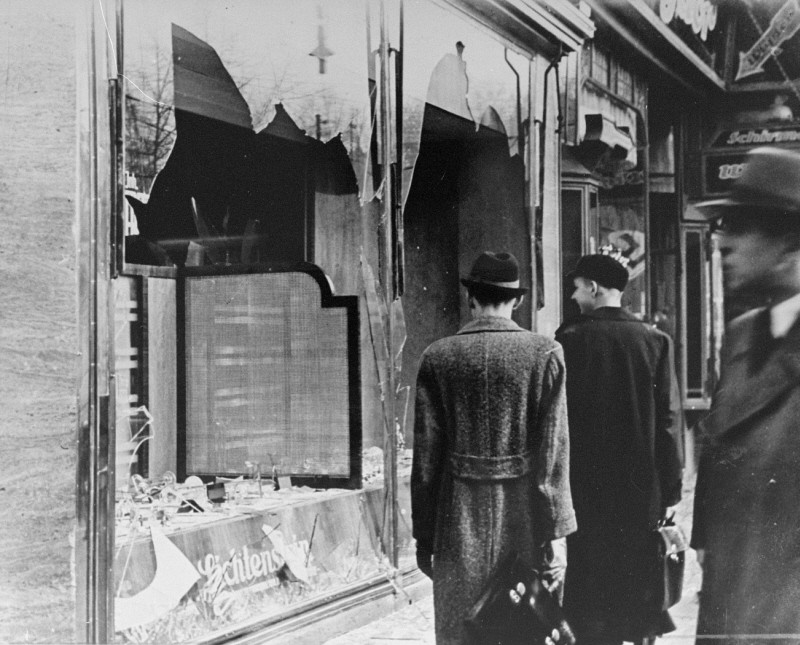
Kristallnacht, November 1938. Photo: United States Holocaust Memorial
Museum
The catalyst for the Kindertransport came on the night of November
9-10, 1938. Kristallnacht—the “Night of Broken Glass”—saw
state-sanctioned violence sweep across Nazi Germany and Austria.
Synagogues burned. Jewish-owned businesses were destroyed. Jewish men
were arrested and sent to concentration camps. The streets glittered
with shattered glass from thousands of broken windows.
The international outcry was immediate. In Britain, a delegation of
Jewish and Quaker leaders appealed directly to Prime Minister Neville
Chamberlain. The message was urgent: Jewish children were in mortal
danger. Would Britain help?
The British government agreed to a compromise. They would issue
temporary travel visas for unaccompanied children under 17 from Germany,
Austria, and Czechoslovakia. But there was a critical condition: the
rescue effort could not burden British taxpayers. Private citizens and
charitable organizations would have to guarantee £50 per child
(equivalent to over £2,000 today) to cover their care and eventual
re-emigration.
The assumption underlying this policy was tragically optimistic: that
the children would eventually reunite with their families once the
“crisis” passed. History would prove this hope devastatingly wrong.
A Desperate Selection
Inside Nazi-controlled territories, Jewish organizations faced an
impossible task: selecting which children would be saved. The
Reichsvertretung der Juden in Deutschland (Reich Representation
of Jews in Germany) and the Kultusgemeinde (Jewish Community
Organization) in Vienna prioritized the most vulnerable: orphans,
children whose parents were in concentration camps, and those whose
families could no longer support them.
For parents, the decision was agonizing. Send your child away to a
foreign country where they didn’t speak the language, to live with
strangers, possibly forever? Or keep them close and hope the nightmare
would end?
Fourteen-year-old Marion Rochmann’s parents made their choice. They
gave her a small toy puppy to take on the journey from Berlin.
Ten-year-old Anna Nussbaum’s father pressed a dog-shaped pin into her
hand at the Vienna train station. These were the last gifts these
children would receive from their parents. Both Marion’s and Anna’s
parents were later murdered in the Holocaust. The toy puppy and the pin
are now preserved at Yad Vashem in Jerusalem—silent witnesses to love
and loss.
The Journey to Safety

Kindertransport flight to Great Britain, January 1939. Photo: Imperial
War Museums
The first Kindertransport departed Berlin on December 1, 1938,
carrying children from a Jewish orphanage destroyed during
Kristallnacht. They arrived in Harwich, England, the next day. Over the
following nine months, transport after transport followed from major
cities across the German Reich.
Each child was allowed only a small suitcase. The trains crossed into
the Netherlands or Belgium, where Dutch volunteers often met them with
food and comfort after the tense passage through Germany. From the
ports, they sailed by ship across the North Sea to Harwich.
The journey was bewildering and frightening. Many children were very
young—some as young as five years old. They didn’t understand why they
were leaving. They didn’t speak English. They clutched their suitcases
and their memories.
Upon arrival at Liverpool Street Station in London, children with
pre-arranged sponsors were collected by their foster families. Those
without homes were sent to temporary reception centers, most notably a
disused holiday camp at Dovercourt Bay, where they waited—sometimes for
weeks—until placements could be found.
Life in a Foreign Land

England, December 1938. Photo: United States Holocaust Memorial Museum
The nearly 10,000 children who arrived in Britain faced vastly
different experiences. Approximately half were placed with foster
families; the others lived in hostels, schools, or worked on farms.
While many foster families provided genuine love and care, the
experiences were far from universally positive.
Some children thrived in warm, welcoming homes. Others faced
religious pressure in Christian households or were exploited as domestic
labor. Siblings were often separated to ease the burden on host
families. The children had to learn English, adapt to British culture,
and navigate the complex emotions of gratitude, grief, and guilt.
Then came September 1, 1939. Germany invaded Poland. Britain declared
war. The transports stopped. The children were trapped in Britain, cut
off from their families. Letters became increasingly rare, then ceased
altogether.
In a cruel irony, the refugee children were officially classified as
“enemy aliens” because they held German, Austrian, or Czech passports.
In 1940, approximately 1,000 older Kindertransport children—mostly boys
over 16—were interned in camps on the Isle of Man. Some were even
deported to Canada and Australia alongside Nazi prisoners of war.
Despite this treatment, many of these boys later enlisted in the British
army to fight against the regime that had destroyed their families.
The Rescuers
While the British government provided the legal framework, the
Kindertransport succeeded because of the efforts of ordinary people and
dedicated organizations. The Movement for the Care of Children
from Germany (later the Refugee Children’s Movement)
coordinated the rescue effort. An appeal on BBC radio resulted in 500
offers of homes almost immediately.
One rescuer stands out: Sir Nicholas Winton, a
British stockbroker who organized separate transports that saved 669
children from Czechoslovakia. Winton worked tirelessly, forging
documents, finding foster families, and arranging travel. He kept his
efforts secret for nearly 50 years until his wife discovered a scrapbook
in their attic. In 1988, he was reunited with many of the children he
had saved—now adults with families of their own—on a British television
program. The moment remains one of the most moving pieces of television
ever broadcast.
The Unbearable Truth

London, depicting five children with their suitcases. Sculptor: Frank
Meisler, 2006. Photo: Wikimedia Commons
The initial premise of the Kindertransport—that it was a temporary
measure—proved to be a tragic miscalculation. The vast majority of the
children rescued would never see their parents again. Their families
were trapped in Nazi-occupied Europe and became victims of the
Holocaust. Six million Jews were murdered, including the parents of most
Kindertransport children.
After the war, the children—now young adults—had to confront an
unbearable truth: they were orphans. The homes they remembered no longer
existed. The communities they came from had been destroyed. The parents
who had sacrificed everything to save them were gone.
Survivor Vera Schaufeld, who arrived on a Kindertransport from
Prague, later reflected: “I was saved, but I lost everything. My
parents, my home, my childhood. I survived, but at what cost?”
A Complex Legacy
The Kindertransport saved nearly 10,000 lives. It stands as a
powerful example of humanitarian action in the face of atrocity. But it
is also a story of profound loss and trauma. The children were saved,
but they lost their parents, their homes, and their childhoods.
In the post-war years, most of the Kinder built new lives.
Many became British citizens; others emigrated to Israel, the United
States, Canada, and Australia. The British government passed the
Guardianship Act of 1944 to provide legal and financial
support for those who were still minors and had not been adopted.
Today, the Kindertransport is commemorated through memorials,
museums, and educational programs. The sculpture “Kindertransport—The
Arrival” at Liverpool Street Station depicts five children with their
suitcases, forever frozen in that moment of arrival. The Imperial War
Museums in London feature Kindertransport stories in its Holocaust
Galleries. Yad Vashem in Israel preserves testimonies and artifacts,
including Marion’s toy puppy and Anna’s dog-shaped pin.
Recent research by Dr. Amy Williams at Yad Vashem has uncovered
previously unknown Kindertransport lists, revealing new details about
the children’s journeys and allowing some survivors to reconnect with
their past.
Lessons for Today
The Kindertransport raises uncomfortable questions that remain
relevant today. What is our responsibility to refugee children fleeing
persecution? How do we balance national security concerns with
humanitarian obligations? What are the long-term costs of family
separation, even when done with the best intentions?
The children of the Kindertransport were the lucky ones—they
survived. But survival came at an immeasurable price. Their story is a
testament to both human compassion and the enduring pain of loss. It
reminds us that rescue, while essential, cannot erase trauma. And it
challenges us to ask: when the next crisis comes, will we open our
doors?
The toy puppy and the dog-shaped pin sit in their display cases at
Yad Vashem, silent witnesses to 10,000 goodbyes that became forever.
They are reminders of the parents who loved their children enough to let
them go, and the children who carried that love across borders, across
oceans, and across a lifetime of grief.
The Kindertransport rescued approximately 10,000 children between
December 1938 and September 1939, with a final transport in May 1940.
Most of their parents were murdered in the Holocaust. The survivors went
on to build new lives, but they never forgot the families they lost or
the impossible choice their parents made to save them.