In a nondescript Victorian mansion in the English countryside, a
secret war was being fought—not with guns or bombs, but with
mathematics, logic, and sheer intellectual determination. While soldiers
battled across Europe and the Pacific, the brilliant minds at Bletchley
Park were waging a different kind of warfare: breaking the German Enigma
code, a cipher the Nazis believed was absolutely unbreakable.
The intelligence they produced, codenamed Ultra, would prove to be
one of the most decisive weapons of World War 2. Historians estimate it
shortened the war by two to four years, saving countless lives and
changing the course of history. Yet for nearly three decades after the
war ended, the story remained one of the most closely guarded secrets of
the 20th century.
The Machine That Couldn’t Be
Broken
The German military’s confidence in the Enigma machine wasn’t
misplaced arrogance—it was based on cold, hard mathematics. This
electromechanical marvel combined mechanical ingenuity with electrical
complexity to create what seemed like an impenetrable fortress of
secrecy.

and rotors. (Photo: Bletchley Park Trust)
At first glance, the Enigma looked like a peculiar typewriter housed
in a wooden box. But beneath its deceptively simple exterior lay a
sophisticated scrambling system. When an operator pressed a key, an
electrical signal passed through a series of rotating wheels called
rotors, each containing complex internal wiring that scrambled the
signal. After passing through three (or sometimes four) rotors, the
signal hit a reflector that sent it back through the rotors along a
different path, finally illuminating a letter on the lampboard.
The genius—and the curse—of the design was its constant motion. With
every keypress, the rightmost rotor advanced one position, like the
odometer in a car. This meant that pressing the same letter multiple
times would produce a different encrypted letter each time, defeating
traditional code-breaking techniques that relied on frequency
analysis.
But the Germans didn’t stop there. Military versions of Enigma
included a plugboard—a patch panel that allowed operators to swap pairs
of letters before and after the rotor scrambling. This feature
exponentially increased the complexity.
The numbers were staggering: over 103 sextillion possible daily key
settings. That’s 103 followed by 21 zeros. The Germans calculated that
even if enemy codebreakers tested one setting per second, it would take
longer than the age of the universe to try them all. The Enigma, they
believed, was mathematically unbreakable.
They were wrong.
The Polish Pioneers Who
Struck First
The first cracks in the Enigma fortress didn’t come from Britain or
America—they came from Poland. Years before the war began, the Polish
General Staff’s Cipher Bureau assembled a team of brilliant young
mathematicians to tackle the German cipher threat. Among them was
Marian Rejewski, a 27-year-old mathematician who would
achieve what the Germans thought impossible.
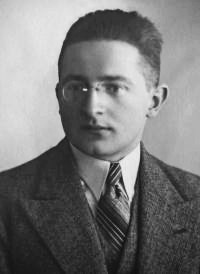
the foundations for breaking the Enigma code. (Photo: Public Domain)
In late 1932, Rejewski made the first major breakthrough. Using group
theory and permutation mathematics—not traditional linguistic
codebreaking—he deduced the internal wiring of the Enigma’s rotors
without ever having seen a military version of the machine. He exploited
a critical procedural flaw: German operators would encrypt the
three-letter message key twice at the start of each transmission,
creating predictable patterns.
Working with fellow mathematicians Jerzy Różycki and
Henryk Zygalski, Rejewski developed practical methods
for routine decryption. They built the “Bomba Kryptologiczna”
(Cryptologic Bomb), an electromechanical device that could automatically
search for the correct rotor settings, finding a daily key in about two
hours. Zygalski devised a system of perforated paper sheets that could
identify rotor positions through overlapping patterns.
For years, the Polish Cipher Bureau quietly read German military
communications. But in December 1938, the Germans increased Enigma’s
security, adding more rotors and plugboard connections. The Polish
methods still worked, but would require resources Poland simply didn’t
have.
With war looming, the Poles made a historic decision. In July 1939,
just weeks before the Nazi invasion, they invited British and French
intelligence to a secret meeting near Warsaw. There, they shared
everything: their methods, a reverse-engineered Enigma replica, and
their decryption machinery designs.
It was an extraordinary act of international cooperation. As British
codebreaker Peter Calvocoressi later admitted, without the Polish gift,
the Allied effort “would never have got off the ground.”
Bletchley Park: Where
Minds Became Weapons
The intelligence windfall from Poland gave the British Government
Code and Cypher School at Bletchley Park a crucial head start. But the
Germans’ security improvements meant new approaches were needed. Enter
Alan Turing, a 27-year-old Cambridge mathematician who
would become the most famous codebreaker of the war.
[IMAGE_3: Photograph of Alan Turing at Bletchley Park]
Turing’s approach centered on exploiting “cribs”—short sections of
plaintext that codebreakers knew or suspected appeared in the
ciphertext. German military communications were often predictable:
weather reports began with “Wetter” (weather), messages ended with “Heil
Hitler,” and certain phrases appeared regularly.
But Turing’s real genius was recognizing how to exploit the Enigma’s
critical flaw: because of the reflector design, no letter could ever be
encrypted as itself. If you suspected the word “Wetter” appeared at a
certain position in the ciphertext, you could immediately rule out any
alignment where a letter matched itself.
To test the remaining possibilities rapidly, Turing designed a new
machine: the Bombe. But it was another Cambridge mathematician,
Gordon Welchman, who made it truly effective. Welchman
devised a “diagonal board” that exploited the reciprocal nature of the
plugboard connections, allowing the Bombe to make logical deductions
that dramatically reduced false positives.
The resulting Turing-Welchman Bombe was an electromechanical
marvel—not a computer, but a complex logical deduction device that
simulated dozens of Enigma machines running in parallel. Each Bombe was
about the size of a wardrobe, filled with rotating drums and clicking
relays. By the end of the war, over 200 Bombes were in operation, run
primarily by members of the Women’s Royal Naval Service (WRNS), enabling
Bletchley Park to decipher thousands of messages per day.
Ultra: The
Intelligence That Changed Everything
The decrypted messages were codenamed Ultra, and their distribution
was more tightly controlled than almost any other secret of the war.
Only a handful of commanders had access, and they were forbidden from
acting on Ultra intelligence without creating a plausible cover story
for how they “discovered” the information.
The precautions were necessary because Ultra’s value was immense:
The Battle of the Atlantic
Ultra was a decisive weapon against the U-boat threat that nearly
strangled Britain. Decrypts of German naval Enigma revealed the
locations of U-boat “wolf packs,” allowing the Admiralty to reroute
vital convoys away from danger. This evasive routing saved countless
lives and millions of tons of shipping.
When the Germans introduced a fourth rotor for their U-boat Enigmas
in February 1942, it caused a ten-month intelligence “blackout” that
nearly proved catastrophic. Allied shipping losses soared. But once
Bletchley Park broke the new cipher in December 1942, the tide turned
decisively. Ultra enabled the Allies to switch from defense to offense,
actively hunting and destroying U-boats. By May 1943, U-boat losses
became unsustainable, and Admiral Dönitz was forced to withdraw his
submarines from the North Atlantic.
North Africa
Ultra gave Allied commanders an unprecedented view of Axis supply
lines. By tracking ships carrying fuel, ammunition, and equipment to
Rommel’s Afrika Korps, the Allies could systematically target and
destroy critical supplies. General Bernard Montgomery knew Rommel’s fuel
situation, his troop dispositions, even his state of mind from decrypted
personal messages. This intelligence contributed directly to the victory
at El Alamein in November 1942.
D-Day
Ultra’s contribution to the Normandy landings was indispensable. It
provided Allied planners with a detailed order of battle for German
forces in France, revealing their strength and dispositions. But most
critically, it confirmed the success of Operation Fortitude, the
elaborate deception plan designed to convince the Germans that the main
invasion would occur at the Pas de Calais.
Decrypts showed that Hitler himself had bought the deception, keeping
powerful Panzer divisions away from Normandy in the crucial hours and
days after June 6, 1944. Those divisions might have thrown the Allies
back into the sea. Instead, they sat idle 150 miles away, waiting for an
invasion that would never come.
The Secret That Stayed
Secret
The Allies went to extraordinary lengths to protect the source of
Ultra. A fictional MI6 spy, codenamed “Boniface,” was created as a cover
story. When acting on Ultra intelligence—such as attacking a supply
convoy—a “plausible” discovery method would be staged, like a chance
sighting by a reconnaissance plane.

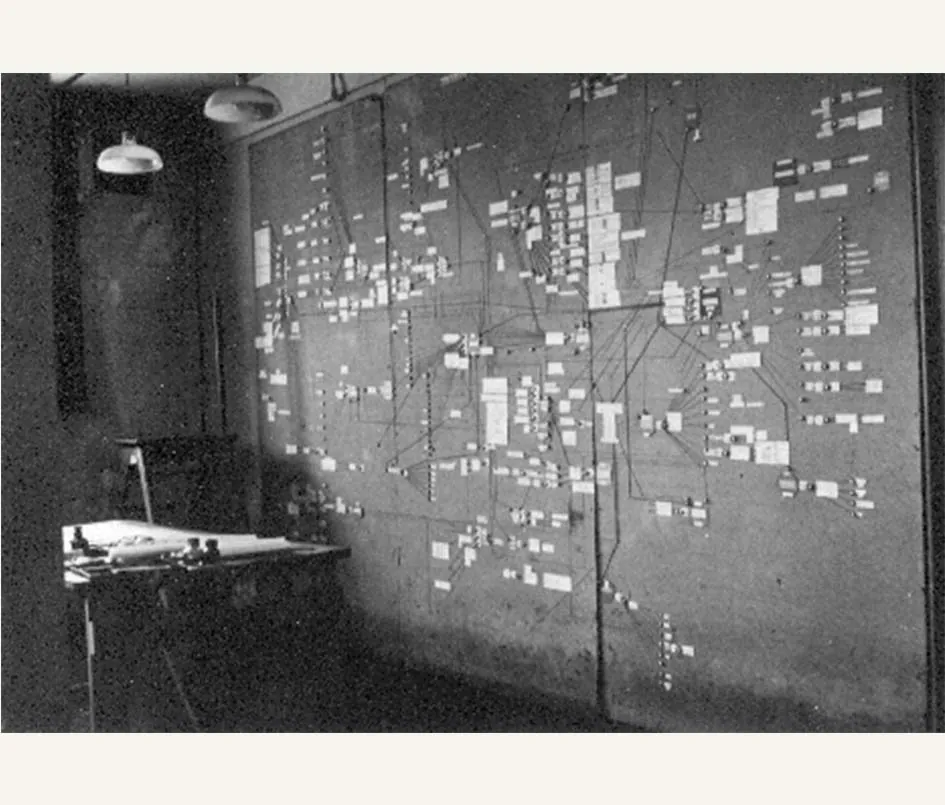
and Gordon Welchman to break Enigma codes. Over 200 were built during
the war. (Photo: Bletchley Park Trust)
German commanders occasionally suspected a security breach. Admiral
Dönitz, watching his U-boats hunted with uncanny precision, ordered
multiple investigations. But each time, German cryptographers concluded
that the Enigma machine itself was secure. They suspected spies,
traitors, even that the British had developed impossibly advanced radar.
But they never believed their cipher could be broken.
This misplaced confidence was the Allies’ greatest asset.
Sir Harry Hinsley, a Bletchley Park veteran who became the official
historian of British intelligence, estimated that without Ultra, “the
war would have been something like two years longer, perhaps three years
longer, possibly four years longer.” The intelligence saved lives,
conserved resources, and gave Allied commanders a decisive strategic
advantage in nearly every major campaign.
The Silence After Victory
When the war ended, the secret of Ultra didn’t. The British
government ordered all Enigma machines and Bombes destroyed or hidden
away. Thousands of Enigma machines were given to former colonies and
allies, who used them for their own communications—never knowing the
British could still read them.
The men and women who worked at Bletchley Park were sworn to secrecy.
They returned to civilian life, unable to tell even their families what
they had done. The Polish mathematicians who had started it all returned
to communist Poland, their achievements unknown to the world.
It wasn’t until 1974—nearly 30 years after the war—that the first
public revelations about Ultra emerged. Only then did the world learn
about the secret war fought with mathematics and logic, about the Polish
pioneers who struck the first blow, about Alan Turing’s genius, and
about the thousands of codebreakers who worked in silence to shorten the
war.
In 2014, Marian Rejewski, Jerzy Różycki, and Henryk Zygalski were
posthumously honored with the prestigious IEEE Milestone Award, finally
receiving recognition for their foundational role in breaking
Enigma.
A Legacy Written in Code
The Enigma story is more than a tale of technological triumph—it’s a
reminder that in times of conflict, the most decisive battles aren’t
always fought with guns. The machines built to break the codes,
particularly the Bombes and the later Colossus computers used for other
German ciphers, were crucial precursors to the digital age.
But perhaps the most important legacy is human: the power of
international cooperation, the value of intellectual diversity, and the
courage of those who fought a secret war, knowing they might never
receive recognition for their sacrifice.
The Enigma machine was designed to keep secrets. Instead, it revealed
a profound truth: that human ingenuity, determination, and collaboration
can overcome even the most formidable obstacles. In the end, the
“unbreakable” code was broken—not by brute force, but by the power of
human minds working together toward a common goal.
And in doing so, they changed the course of history.