
Operation Starvation: Mining Japan Into Submission
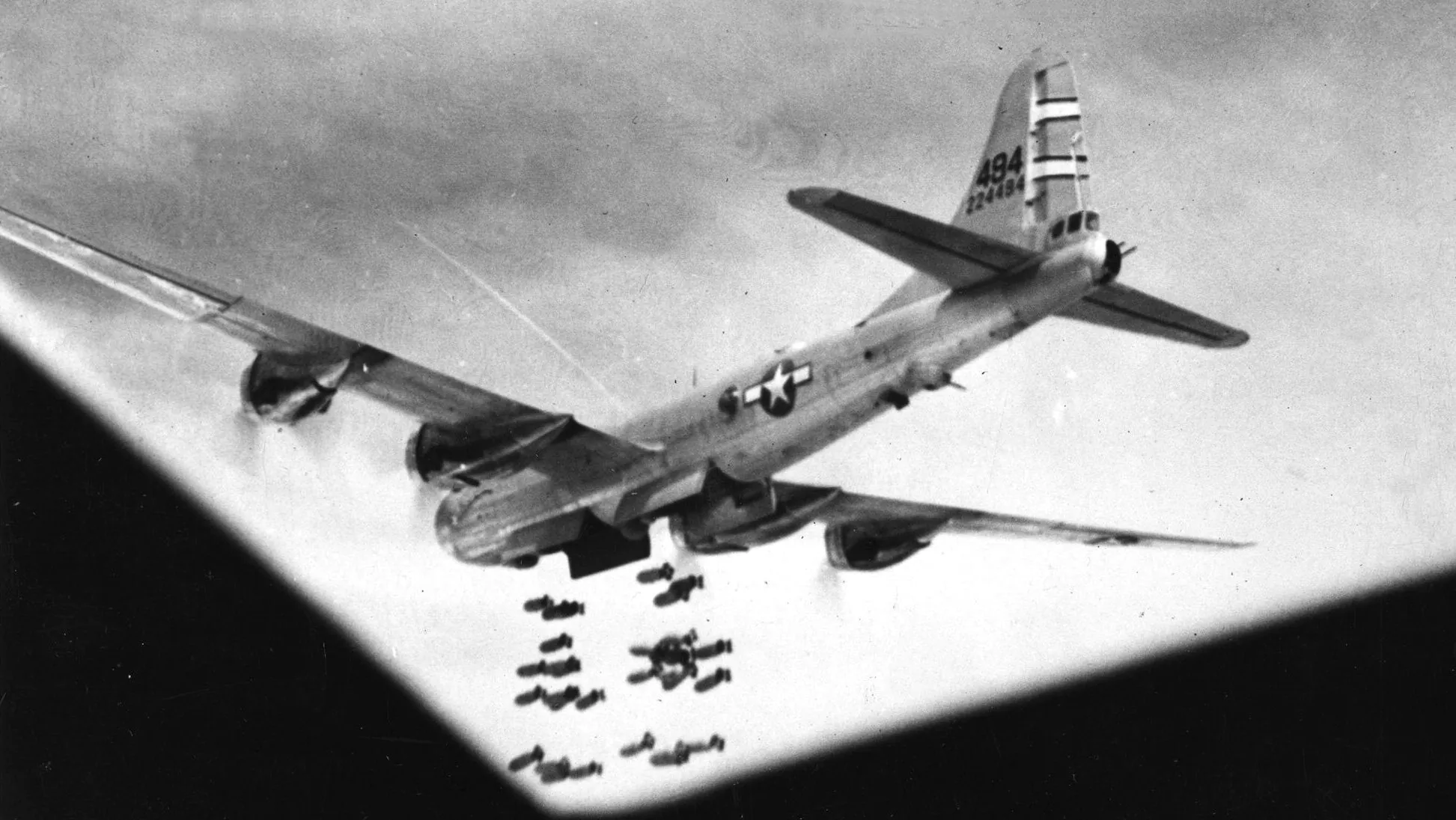
On the night of March 27, 1945, ninety-two B-29 Superfortresses lifted off from Tinian Island on an unusual mission. Instead of the incendiary bombs that had recently turned Tokyo into an inferno, their bomb bays carried something different: sleek, parachute-equipped naval mines. Their target wasn’t a city, but a narrow stretch of water between Japan’s main islands—the Shimonoseki Strait, through which 80% of Japan’s shipping passed.
What followed was one of the most devastatingly effective campaigns of World War II, yet it remains virtually unknown compared to the dramatic island battles and atomic bombings that dominate Pacific War narratives. Operation Starvation would sink more Japanese tonnage in five months than submarines had in years, cut the island nation’s imports by 90%, and bring Japan’s war economy to its knees—all while losing just fifteen aircraft.
An Island Nation’s Achilles Heel
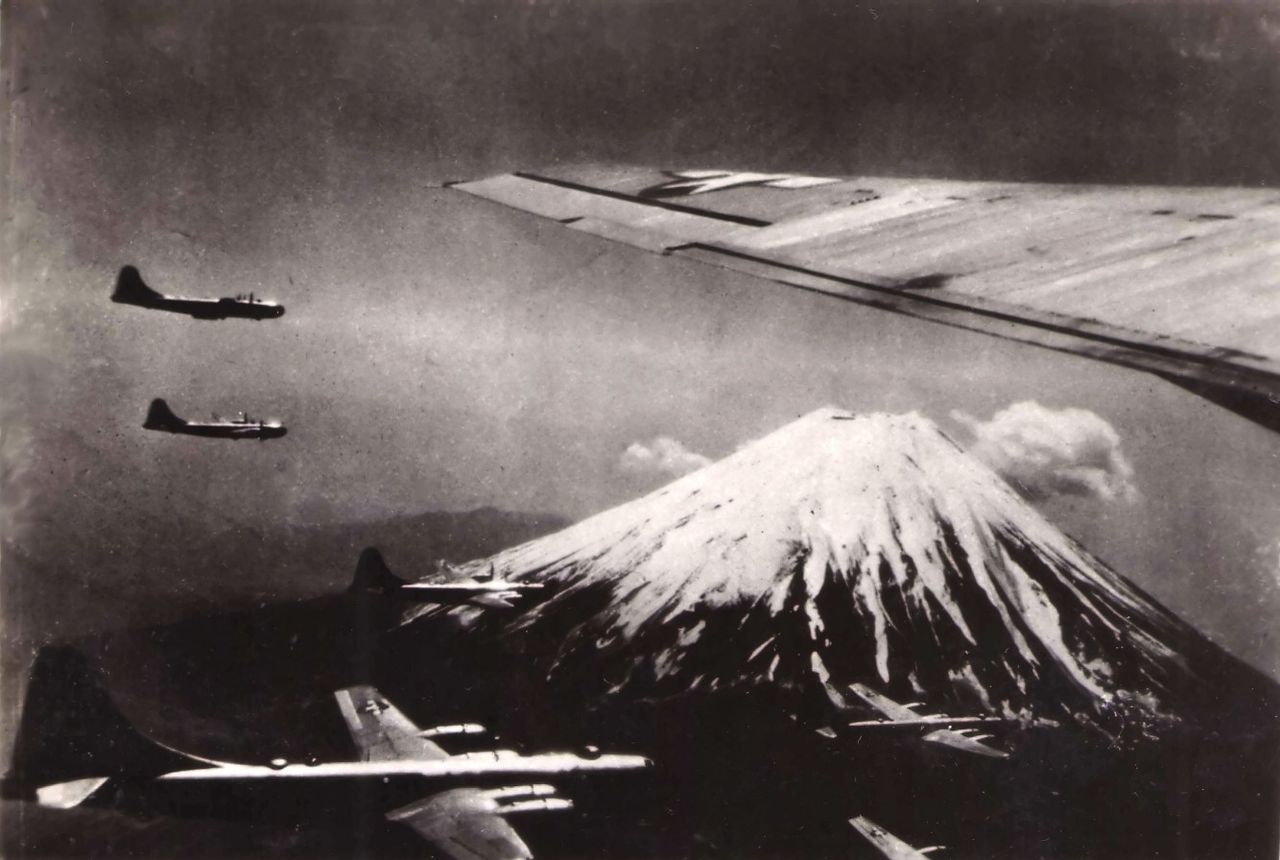
By early 1945, Japan was a nation living on borrowed time. As an island empire with minimal natural resources, it depended almost entirely on maritime shipping for survival. The statistics were stark: Japan imported 88% of its iron ore, 80% of its oil, and 20% of its food. Even domestically produced coal—the fuel for its factories—moved primarily by coastal shipping.
American submarines had already taken a heavy toll on Japan’s merchant fleet, but the vast expanse of the Pacific meant many ships still slipped through. What Japan needed to survive was its internal sea lanes—the protected waters between its home islands where ships could move relatively safely from port to port, redistributing imported goods and domestic production.
This was Japan’s vulnerability, and Admiral Chester Nimitz saw it clearly.
The Navy’s Idea, The Air Force’s Reluctance
The concept of aerial mining wasn’t new. The British Royal Air Force had successfully used it against German shipping in European waters, achieving remarkable results: 164 Axis ships sunk or damaged for the loss of only 94 aircraft. The math was compelling—far better than trying to bomb moving ships at sea.
But when Nimitz proposed that the new B-29 bombers be used for a systematic mining campaign against Japan, he met resistance from an unexpected quarter: the U.S. Army Air Forces.
General Henry “Hap” Arnold, chief of the Army Air Forces, had other plans for his prized B-29s. These were the most advanced bombers in the world, capable of reaching Japan from bases in the Mariana Islands. Arnold wanted them focused on strategic bombing—destroying Japan’s cities and industrial capacity through direct attack. Mining harbors seemed like a Navy job, not a mission worthy of his strategic bombers.
The debate reflected a deeper tension about how to defeat Japan. Army Chief of Staff George Marshall advocated for invasion. Naval commanders like Nimitz believed blockade and bombardment could force surrender without the horrific casualties an invasion would entail. Mining fit squarely into the blockade strategy.
Enter Curtis LeMay
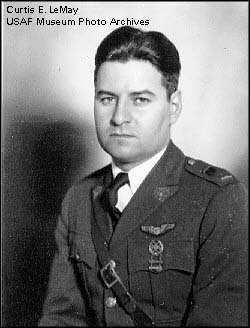
The deadlock broke when Major General Curtis LeMay took command of the XXI Bomber Command in January 1945. Unlike his predecessor, LeMay was enthusiastic about mining. He saw it not as a distraction from strategic bombing, but as a complementary campaign that could strangle Japan’s economy while his incendiary raids destroyed its cities.
LeMay dramatically expanded the planned scope of the operation. He assigned an entire wing—the 313th Bombardment Wing under Brigadier General John H. Davies—to the mining mission. Based on Tinian and equipped with the latest radar systems, the 313th would become specialists in the unique art of aerial mine-laying.
The Navy, delighted to finally have Air Force cooperation, provided the weapons: sophisticated Mark 25 and Mark 36 influence mines. Unlike contact mines that exploded when struck, these were triggered by a ship’s magnetic field, acoustic signature, or the pressure change from its passage through water. They featured delayed-arming mechanisms and “ship counters” that let a preset number of vessels pass safely before activating—making them nearly impossible for the Japanese to predict or sweep.
With over 200 possible configurations, each mine was a technological marvel. And the B-29s could carry them deep into Japanese waters where surface ships and submarines couldn’t safely venture.
The Campaign Begins

That first mission on March 27, 1945, was a resounding success. The ninety-two B-29s flew individually at night, using radar to navigate to precise drop points. From altitudes between 5,000 and 8,000 feet, they released their parachute-retarded mines into the dark waters of the Shimonoseki Strait.
The strait—a narrow passage between the islands of Honshu and Kyushu—was Japan’s jugular vein. Closing it would be like cutting off blood flow to the brain.
Within days, Japanese ships began exploding. The strait was closed for two weeks while minesweepers frantically tried to clear the channels. But the sophisticated American mines were designed to defeat sweeping efforts. Some wouldn’t arm for days. Others would let several ships pass before detonating. The Japanese never knew which channels were safe.
Over the next five months, Operation Starvation unfolded in five phases, each expanding the scope of the blockade:
Phase I (March 27 – May 2) focused on the Shimonoseki Strait and supported the ongoing invasion of Okinawa by disrupting Japanese naval movements.
Phase II (May 3 – May 12) extended mining to the major industrial ports: Tokyo, Nagoya, Kobe, and Osaka.
Phase III (May 13 – June 6) targeted ports in northwest Honshu and Kyushu, closing the Shimonoseki Strait for another fifteen days and sinking or damaging 113 ships.
Phase IV (June 7 – July 8) intensified operations across all regions, deploying over 3,500 additional mines.
Phase V (July 9 – August 15) aimed for total blockade, extending minefields even to Korean ports to cut off supplies from the Asian mainland.
The Stranglehold Tightens
The results were catastrophic for Japan. Within a month of the campaign’s start, Japanese imports were cut in half. By war’s end, they had plummeted by 90%.
Shipping through Kobe—one of Japan’s largest ports—fell by 85% between March and July. Thirty-five of Japan’s forty-seven essential convoy routes were abandoned entirely. Ships that did venture out faced a terrifying lottery: would this be the voyage that triggered a mine?
The mines sank or damaged 670 Japanese vessels totaling over 1.25 million tons. In the final six months of the war, aerial mining destroyed more Japanese shipping than submarines, surface ships, and direct air attacks combined.
But the true impact went far beyond tonnage statistics. Japan’s war economy ground to a halt. Factories fell silent for lack of raw materials. The fishing fleet—a critical source of protein for the Japanese diet—was paralyzed. Food shipments from Korea and Manchuria stopped. Urban populations began to starve.
Operation Starvation was living up to its name.
The Most Efficient Campaign of the War
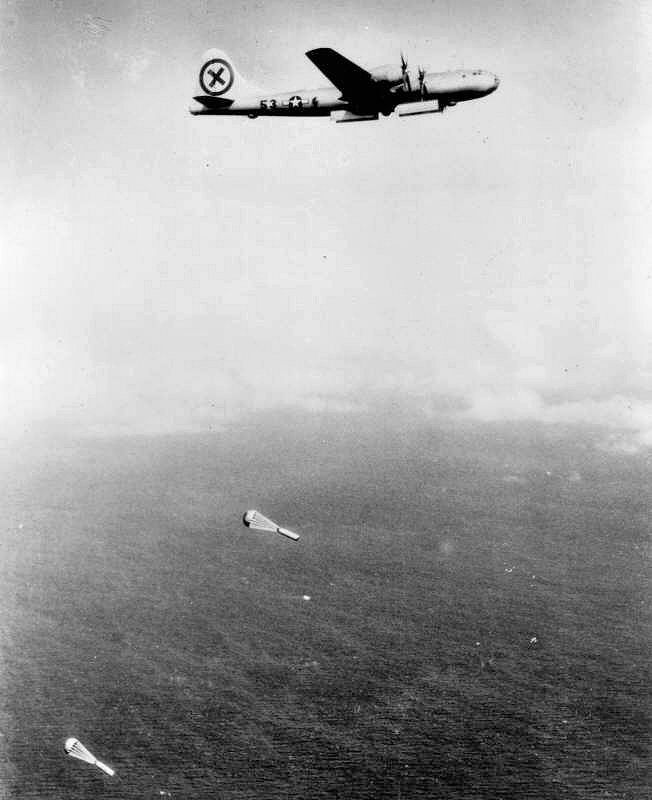
The campaign’s efficiency was remarkable. The 313th Bombardment Wing flew 1,533 sorties and laid 12,135 mines—just 5.7% of the XXI Bomber Command’s total missions during the period. Yet this small investment yielded outsized results.
Only fifteen B-29s were lost during the entire campaign. Compare this to the losses from strategic bombing raids, where a single mission could cost dozens of aircraft.
The U.S. Strategic Bombing Survey, conducted after the war, concluded that Operation Starvation was “the single most efficient means of destroying Japanese shipping during the war.” It achieved more damage per sortie, per aircraft lost, and per ton of ordnance dropped than any other campaign.
Post-war interrogations of Japanese officials confirmed the devastating impact. Captain Kyuzo Tamura, chief of the Japanese Navy’s mine section, stated bluntly: “The result of B-29 mining was so effective against shipping that it eventually starved the country. I think you probably could have shortened the war by beginning earlier.”
This assessment haunted American planners. The Strategic Bombing Survey concluded that had Operation Starvation begun earlier and been pursued more aggressively, it might have forced Japan’s surrender without the need for invasion or atomic weapons.
Why Don’t We Remember It?
Given its success, why is Operation Starvation so little known?
Part of the answer lies in timing. The campaign ran from March to August 1945—the same period that saw the brutal battle for Okinawa, the firebombing of Tokyo, and ultimately the atomic bombings of Hiroshima and Nagasaki. These dramatic, visible events captured public attention and historical memory.
Mining harbors at night lacked the visceral impact of mushroom clouds or burning cities. There were no iconic photographs, no dramatic newsreel footage. The campaign was methodical, technical, and—by design—largely invisible to those it was destroying.
There’s also the matter of service rivalry. The Air Force, eager to prove the decisiveness of strategic bombing, had little incentive to highlight a campaign that suggested blockade might have been sufficient. The Navy, which had advocated for mining all along, could claim vindication—but the operation had been executed by Air Force bombers, complicating the narrative.
And perhaps most significantly, Operation Starvation raised uncomfortable questions. If this campaign was so effective, why wasn’t it started earlier? How many lives—American and Japanese—might have been saved if the blockade strategy had been pursued more aggressively from the beginning?
A Lesson in Strategic Efficiency
Operation Starvation stands as a case study in strategic efficiency. It demonstrated that modern industrial nations, particularly island nations, are profoundly vulnerable to disruption of their maritime logistics. It showed that indirect approaches—attacking an enemy’s ability to sustain war rather than directly destroying their forces—can be devastatingly effective.
The campaign also highlighted the importance of inter-service cooperation. The Navy provided the mines and expertise; the Air Force provided the delivery platform and operational execution. Neither service could have achieved the results alone.
Most importantly, Operation Starvation proved that wars can be won not just through dramatic battles and overwhelming force, but through patient, systematic campaigns that strangle an enemy’s capacity to fight. Sometimes the quietest operations are the most deadly.
As the last B-29 dropped its final mine on August 15, 1945—the day Japan announced its surrender—the Shimonoseki Strait and dozens of Japanese ports lay choked with thousands of mines. Japan’s merchant fleet was shattered, its economy paralyzed, its people starving.
The operation that almost no one remembers may have been one of the most decisive of the entire war.