
Operation
Shingle: The Anzio Landing That Became a Four-Month Siege
At 2:00 AM on January 22, 1944, the first wave of Allied troops
splashed ashore at Anzio, Italy. The beaches were quiet. No machine gun
fire. No artillery. Just 36,000 men landing virtually unopposed, 35
miles behind German lines and within striking distance of Rome. By
nightfall, only 13 Allied soldiers had been killed. The road to the
strategic Alban Hills—and to Rome itself—lay wide open.
It was the perfect start to what would become one of World War II’s
most controversial operations.
Four months later, when Allied forces finally broke out of the Anzio
beachhead, 43,000 of their comrades had become casualties. What was
supposed to be a bold flanking maneuver had devolved into a brutal siege
that Winston Churchill would bitterly describe as landing “a beached
whale” instead of “a wild cat.”
How did such a promising beginning turn into such a costly
stalemate?
The Italian Stalemate
By late 1943, the Allied advance up the Italian peninsula had ground
to a frustrating halt. German Field Marshal Albert Kesselring had
established the Gustav Line, a formidable defensive barrier that
stretched across Italy’s mountainous terrain south of Rome. At its heart
was Monte Cassino, where repeated Allied assaults had been bloodily
repulsed.
The terrain favored the defenders completely. Every river crossing,
every mountain pass, every approach was covered by German artillery and
machine guns. The Allies were paying in blood for every mile, and
Rome—the symbolic prize—remained tantalizingly out of reach.
Italian Campaign that led to the stalemate at the Gustav Line. (Imperial
War Museums)
Winston Churchill, never one to accept stalemate, championed a bold
solution: use Allied naval superiority to leapfrog the Gustav Line
entirely. An amphibious landing at Anzio, just 35 miles south of Rome,
could outflank the German defenses, threaten their supply lines, and
force them to abandon their positions. It was classic
Churchill—audacious, imaginative, and risky.
American commanders were more skeptical. Lieutenant General Mark
Clark, commanding the U.S. Fifth Army, worried about resources. Landing
craft were in desperately short supply, with most already allocated for
the upcoming invasion of Normandy. Only Churchill’s persistent lobbying
secured enough vessels to land two divisions instead of the originally
planned single division.
The Man Who Didn’t Want to Go
The operation fell to Major General John P. Lucas, commander of the
U.S. VI Corps. From the start, Lucas harbored deep misgivings. He
privately called the operation a “death trap” and feared being put
ashore with insufficient forces to both hold a beachhead and drive
inland aggressively.
His concerns weren’t entirely unfounded. Clark’s final orders were
ambiguous, instructing Lucas to “advance on” the Alban Hills but without
specifying a timeline or making it an absolute priority. Clark also
cautioned Lucas not to “stick his neck out”—a reference to Clark’s own
near-disaster at the Salerno landings months earlier.

cautious consolidation decision became one of the operation’s most
controversial aspects. (U.S. Army Signal Corps)
These mixed messages would prove fateful. Lucas was being asked to be
bold, but his superior was telling him to be careful. For a commander
already inclined toward caution, the result was predictable.
The Perfect Landing
The landing itself was a textbook success. German intelligence had
assured Kesselring that no Allied landing was imminent. When the
invasion fleet appeared off Anzio, the Germans were caught completely by
surprise.
By the end of January 22, the Allies had landed 36,000 troops and
3,000 vehicles with minimal opposition. Casualties were astonishingly
light: 13 killed, 97 wounded, and about 200 German prisoners taken. A
U.S. Ranger patrol even drove to within sight of Rome, finding the roads
clear and undefended.
The strategic objective—the Alban Hills—was just 20 miles away. From
those heights, Allied artillery could cut the two main highways
supplying the German forces on the Gustav Line. The opportunity was
golden.
And then Lucas stopped.
The Fatal Pause
Instead of exploiting his success, Lucas made the decision that would
define—and doom—the operation. He ordered his forces to dig in and
consolidate the beachhead. His priority was to land more men and
equipment, build up supplies, and prepare for the German counterattack
he believed was inevitable.
From Lucas’s perspective, the decision made sense. He had been warned
not to overextend. He had insufficient forces for both holding a
beachhead and making a deep advance. Better to be cautious than to risk
having his force cut off and destroyed.
But caution squandered surprise. Every hour Lucas spent consolidating
was an hour Kesselring spent reacting.
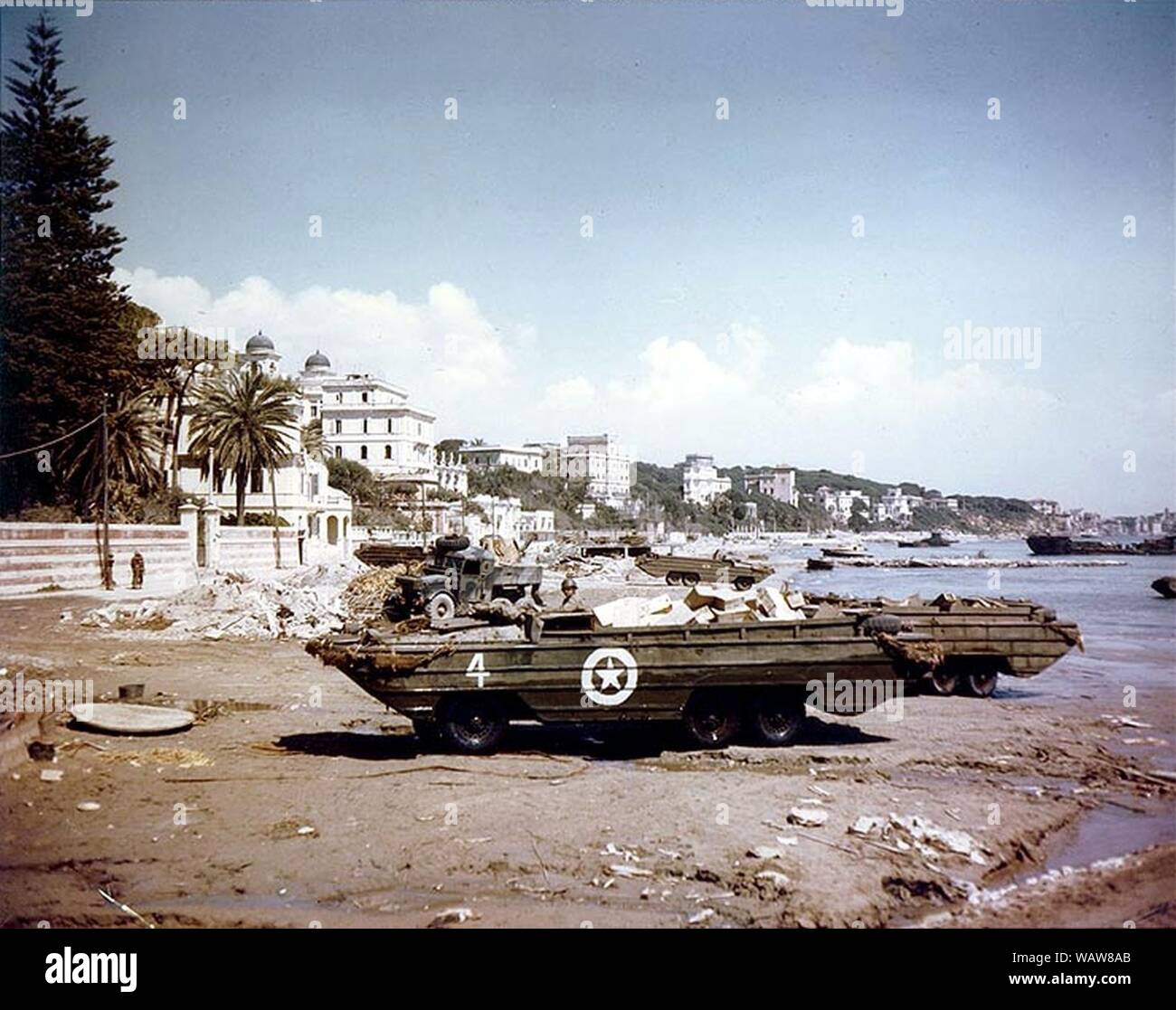
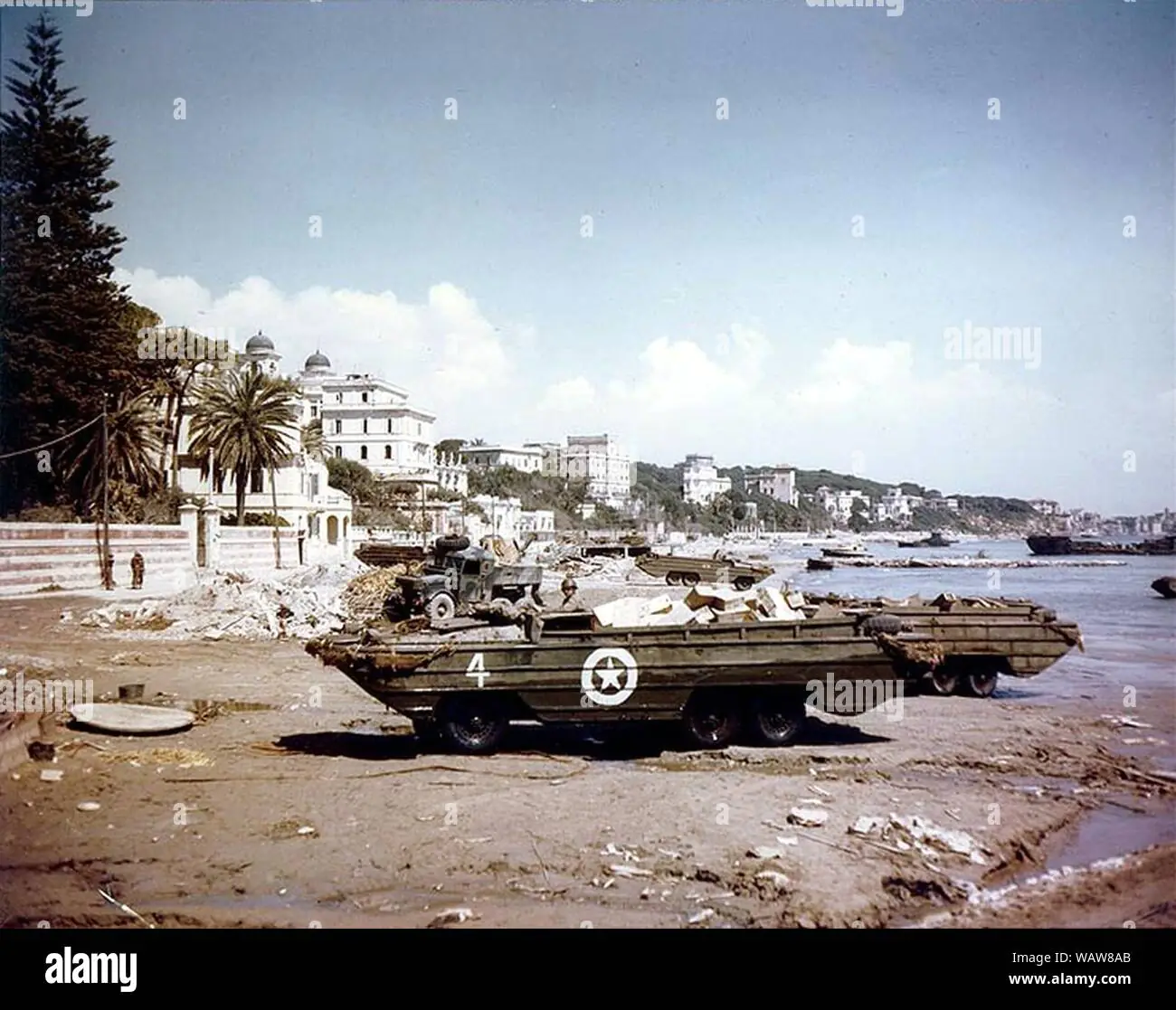
showing the congestion that resulted from Lucas’s decision to
consolidate rather than advance. (U.S. National Archives)
Churchill’s frustration was palpable. “I had hoped we were hurling a
wild cat onto the shore,” he lamented, “but all we got was a beached
whale.”
Kesselring’s Masterful
Response
While Lucas dug in, Kesselring demonstrated why he was considered one
of Germany’s finest defensive commanders. Although caught by surprise,
his reaction was immediate and brilliant.
He declared Anzio a major crisis zone and began pulling together
every available unit. Anti-aircraft batteries with their deadly 88mm
guns were rushed forward to form an anti-tank screen. Divisions were
pulled from the Gustav Line, from northern Italy, from France, even from
the Balkans.
Within 72 hours, elements of five German divisions had begun
encircling the Allied beachhead. By the end of the week, General
Eberhard von Mackensen’s newly formed 14th Army had established what
Kesselring called an “iron wall” around the Allied position.
The Germans seized the high ground, including the crucial Alban Hills
that Lucas had failed to take. From these heights, German artillery
observers had a clear view of the entire beachhead. Every movement,
every supply dump, every aid station was visible and vulnerable.
The trap had closed.
Four Months of Hell
What followed was a nightmare. For four months, Allied soldiers were
pinned down in a shallow perimeter, subjected to relentless artillery,
mortar, and air attacks. The Germans knew exactly where everything was,
and they pounded the beachhead mercilessly.
In February, the Germans launched Operation Fischfang (Operation Fish
Catch), a major counteroffensive aimed at driving the Allies back into
the sea. For days, the outcome hung in the balance. The fighting was
savage, with both sides suffering heavy casualties. The Allied line bent
but didn’t break.
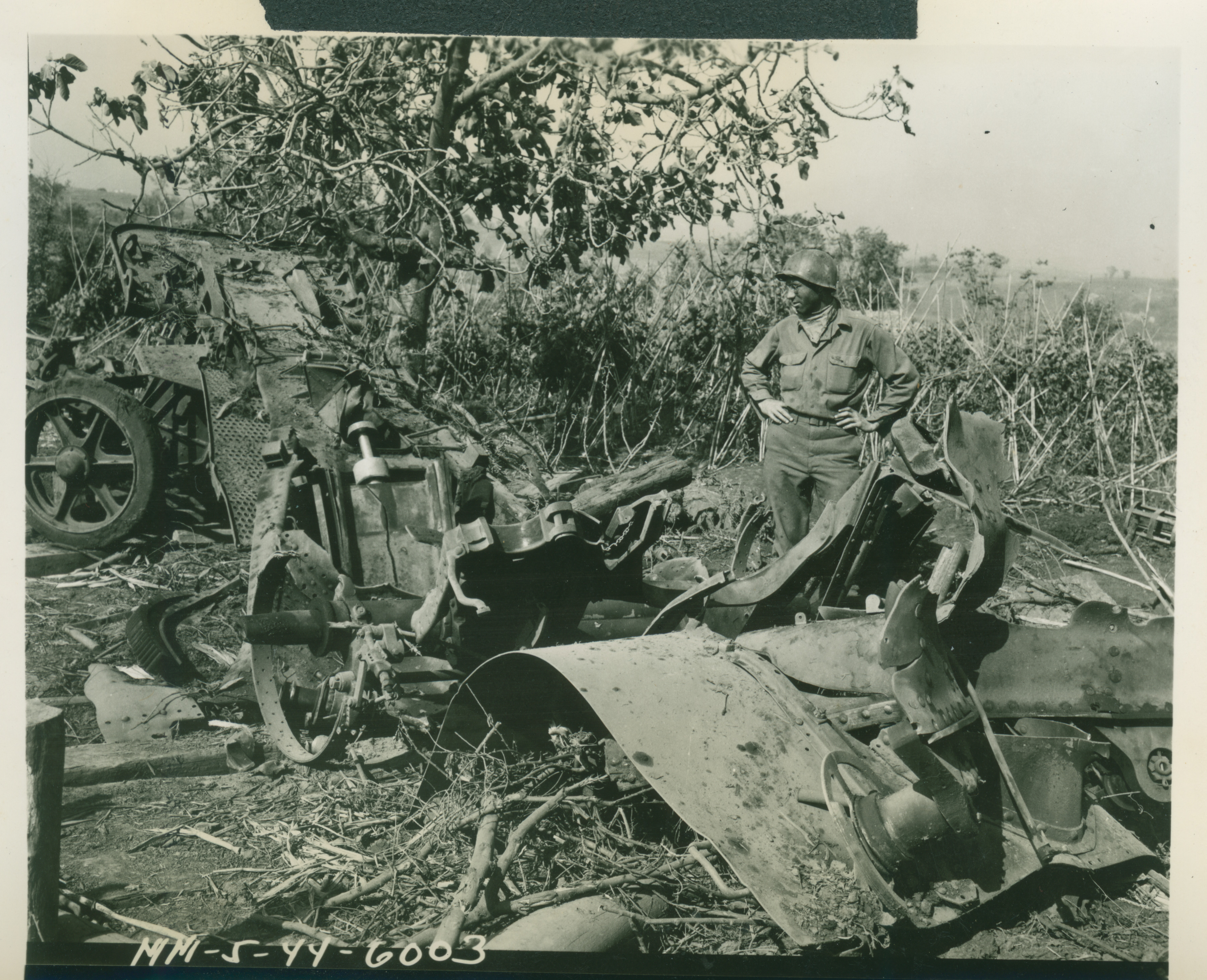
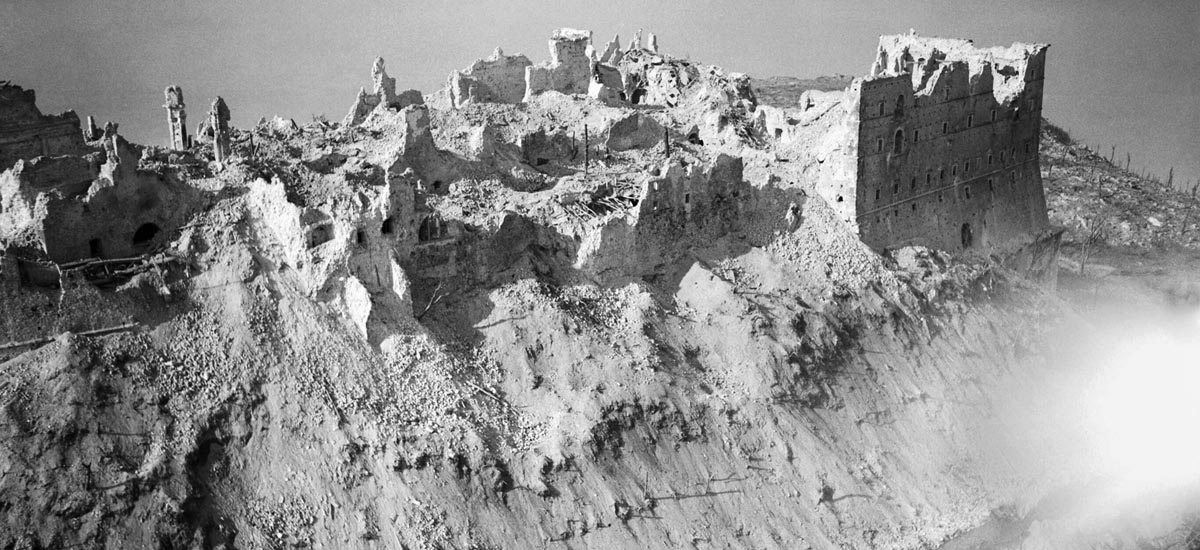
evidence of the brutal four-month siege and constant bombardment. (The
National WWII Museum)
The battle devolved into a static, attritional struggle reminiscent
of World War I trench warfare. Soldiers lived in foxholes and dugouts,
enduring constant shelling. Non-combat casualties from trench foot,
malaria, and combat exhaustion mounted alongside the battle
casualties.
In February, a frustrated Allied command replaced Lucas with the more
aggressive Major General Lucian Truscott. But even Truscott couldn’t
break the stalemate immediately. The Germans were too well dug in, and
the beachhead was too constricted.
The Breakout and
Clark’s Controversial Decision
The breakthrough finally came in May 1944, when the Allies launched
Operation Diadem, a massive offensive against the Gustav Line
coordinated with a breakout from Anzio. After months of brutal fighting,
the Gustav Line finally cracked. The German Tenth Army began retreating
northward.
Truscott’s forces successfully broke out of the Anzio perimeter. The
plan was for them to drive east to Valmontone, cutting Highway 6 and
trapping the retreating German Tenth Army. It was a chance to destroy a
major German force and potentially shorten the war in Italy.
But General Clark had other ideas. He ordered Truscott to redirect
the main thrust northwest—toward Rome. The decision was widely seen as
motivated by Clark’s desire for the prestige of capturing the Italian
capital. Rome fell to the Allies on June 4, 1944, giving Clark his
moment of glory.
But the bulk of the German Tenth Army escaped the trap. They would
establish new defensive lines in northern Italy and continue fighting
for another year. The strategic opportunity was lost for a symbolic
prize.
The Terrible Cost
The final accounting was grim. Over four months, the Allies suffered
approximately 43,000 casualties at Anzio: 7,000 killed, 36,000 wounded
or missing. German casualties were similar—around 40,000, including
5,000 killed.
For what? Rome fell, but it would have fallen anyway once the Gustav
Line broke. The German army escaped largely intact. The Italian campaign
would drag on until May 1945.
Lessons and Legacy
Operation Shingle remains one of World War II’s most debated
operations. The initial landing was tactically brilliant—a textbook
example of achieving surprise. But the failure to exploit that surprise
turned success into stalemate.
The operation did achieve one strategic objective: it tied down the
German 14th Army, some 135,000 troops who couldn’t be sent to France to
oppose D-Day or to the Eastern Front to fight the Soviets. In that
sense, Anzio served its purpose as a diversion.
The battle also provided hard-won lessons in amphibious operations
and logistics that would be applied just two days after Rome fell, when
Allied forces landed in Normandy. The mistakes at Anzio helped ensure
success on D-Day.
But the human cost was staggering, and the strategic results were
mixed at best. Anzio stands as a powerful reminder that in war, tactical
success means nothing without the will to exploit it. Surprise is a
fleeting advantage. Hesitation is often fatal.
Lucas’s caution may have been understandable, but it was also
catastrophic. Churchill’s wild cat became a beached whale, and thousands
of Allied soldiers paid the price for that transformation.
The beaches of Anzio, once the site of a perfect landing, became a
killing ground where bold strategy met cautious execution—and caution
won, at a terrible cost.