
The Babi
Yar Massacre: 33,771 Jews Murdered in Two Days
On a crisp autumn morning in September 1941, thousands of Jewish
families in Kiev gathered at a street corner, clutching their most
precious belongings. They had been ordered to report for
“resettlement”—or so the notices claimed. Instead, they were marched to
a ravine called Babi Yar, where, over the next 48 hours, Nazi forces
would execute one of the largest single massacres in the history of the
Holocaust.
By the time the shooting stopped on September 30, 33,771 Jewish men,
women, and children lay dead in the ravine. This was not the
industrialized killing of Auschwitz or Treblinka. This was the
“Holocaust by bullets”—intimate, brutal, and carried out in broad
daylight.
The Pretext: Explosions
and Scapegoats

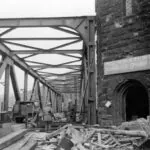
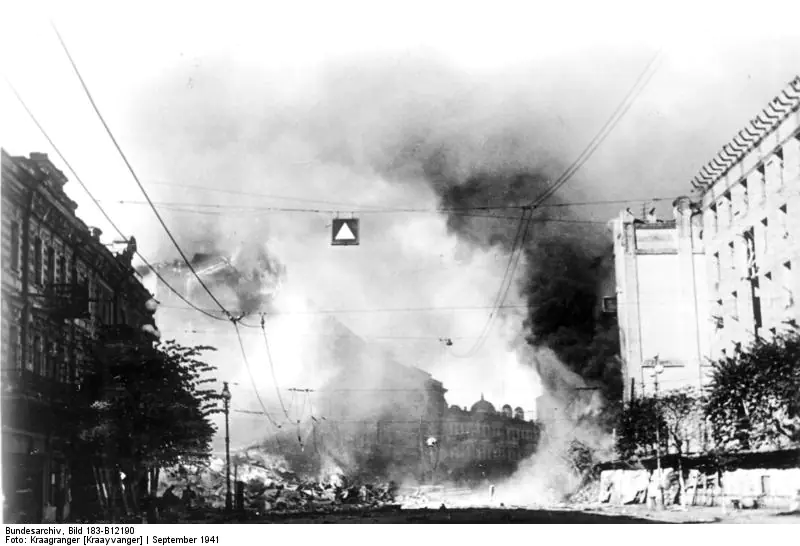
1941. The explosions blamed on Jews were used as pretext for the Babi
Yar massacre. (German Federal Archives/Bundesarchiv, CC BY-SA 3.0 DE)
When German forces occupied Kiev on September 19, 1941, they found a
city still reeling from the chaos of retreat. The Soviet secret police
had left behind a deadly parting gift: time-delayed mines planted
throughout the city center. Within days, massive explosions ripped
through German headquarters and other occupied buildings, killing
soldiers and officials.
The Germans needed a scapegoat. They found one in Kiev’s Jewish
population.
Before the war, approximately 160,000 Jews called Kiev home, making
up about 20% of the city’s population. By the time the Germans arrived,
around 100,000 had fled or joined the Soviet military. The remaining
60,000—mostly women, children, the elderly, and the infirm—had nowhere
to go.
German military governor Generalmajor Kurt Eberhard, Police Commander
SS-Obergruppenführer Friedrich Jeckeln, and Einsatzgruppe C Commander
Otto Rasch made their decision swiftly: Kiev’s Jews would be
exterminated. The task fell to SS-Standartenführer Paul Blobel and his
Sonderkommando 4a.
The Deception:
“Bring Documents and Warm Clothing”
On September 28, 1941, notices appeared on walls and fences
throughout Kiev. Written in Russian, Ukrainian, and German, they ordered
all Jews to assemble the following morning at 8:00 AM at the corner of
Mel’nikova and Dokterivskaya streets, near the military cemetery.
The instructions were chillingly specific: bring documents, money,
valuables, and warm clothing. Failure to comply would result in
execution.
The wording was carefully calculated. Many Jews believed they were
being resettled to labor camps or ghettos—a common Nazi practice. Some
even hoped for better conditions elsewhere. The mention of warm clothing
suggested a journey, not death.
Thousands complied. Entire families arrived with suitcases, bundles,
and children in tow. Elderly grandparents shuffled alongside young
mothers carrying infants. Professors, doctors, teachers, and
shopkeepers—the fabric of Kiev’s Jewish community—gathered as
ordered.
They had no idea they were walking to their deaths.
The Killing Ground: Inside
Babi Yar
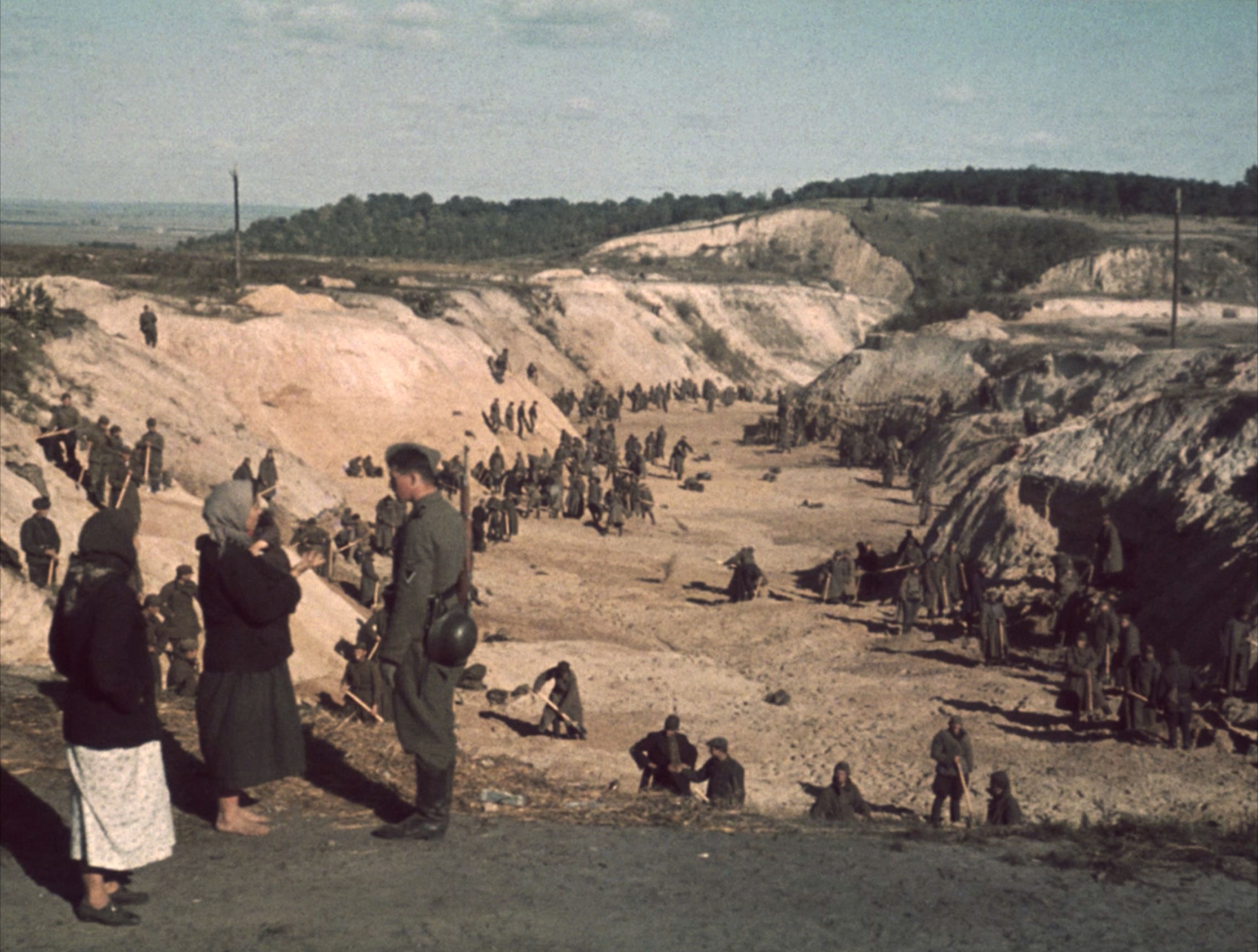
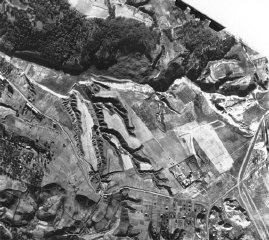
1941. The site continued as a killing ground until 1943. (Public Domain)
Babi Yar—the name means “Old Woman’s Ravine” in Ukrainian—was a
natural depression on the northwestern edge of Kiev. It was isolated,
deep, and perfect for what the Germans had planned.
As the Jews arrived at the assembly point, they were formed into
columns and marched toward the ravine. The procession stretched for
miles. Witnesses later described the eerie silence—thousands of people
walking to an unknown fate, many still believing they were being
relocated.
Upon reaching Babi Yar, the nightmare began.
German soldiers seized identification papers and burned them.
Valuables were confiscated—jewelry, watches, money, anything of worth.
Then came the order to undress.
Confusion turned to terror. Families were separated. Children cried
for their parents. The elderly stumbled in shock. German soldiers beat
anyone who hesitated, driving them forward with rifle butts and
whips.
In small groups, the victims were forced into the ravine. There, they
were ordered to lie face-down on top of the bodies of those who had
already been shot. Sonderkommando 4a gunmen, armed with submachine guns,
moved methodically along the rows, shooting each person in the back of
the neck.
Layer upon layer of bodies accumulated. The wounded, unable to move
beneath the weight of corpses, were buried alive as bulldozers pushed
earth over the ravine.
A truck driver who witnessed the massacre later testified: “The Jews
had to lie down in a certain order, and the marksmen stood behind them
and killed them with a shot in the neck. I watched without interruption
for about 15 minutes. During this time, the corpses were layered to a
height of approximately 60 centimeters.”
The Numbers: 33,771 in Two
Days
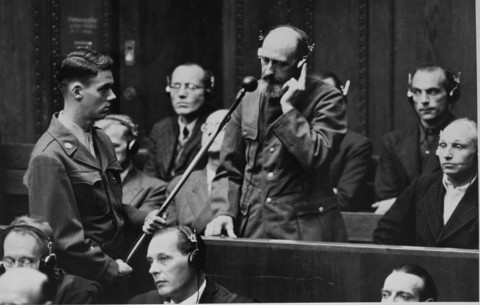
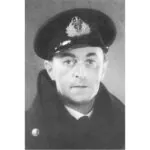
Einsatzgruppen Trial in Nuremberg, 1947. He was convicted and executed
in 1951. (United States Holocaust Memorial Museum, Public Domain)
The efficiency was horrifying. Over September 29-30, 1941,
Sonderkommando 4a, supported by German Police Battalions 45 and 303 and
Ukrainian Auxiliary Police, murdered 33,771 Jews.
The official report, sent to Einsatzgruppen headquarters, documented
the massacre with bureaucratic precision. It remains one of the most
damning pieces of evidence of Nazi atrocities—a cold accounting of mass
murder.
Only 29 people are known to have survived the initial massacre. One
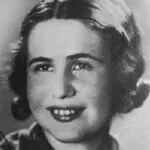
survivor, Dina Pronicheva, later testified at Soviet war crimes trials.
She described playing dead beneath corpses for hours, then crawling out
of the ravine under cover of darkness, her body covered in the blood of
the murdered.
The perpetrators showed no remorse. Paul Blobel, who personally
supervised the killings, later estimated he was responsible for 10,000
to 15,000 deaths—though the true number was far higher. He treated the
massacre as a logistical challenge, not a moral catastrophe.
Beyond September:
Babi Yar as a Killing Field
The horror of Babi Yar did not end on September 30. For the next two
years, the ravine remained a killing ground.
Thousands more were murdered there: Roma (Gypsies), Soviet prisoners
of war, communists, Ukrainian nationalists, and patients from the Ivan
Pavlov Psychiatric Hospital, who were gassed in mobile killing vans
before their bodies were dumped in the ravine.
By the time Soviet forces liberated Kiev on November 6, 1943, an
estimated 100,000 to 150,000 people had been murdered at Babi Yar.
The Cover-Up: Burning the
Evidence
anniversary of the massacre to specifically honor Jewish victims.
(United States Holocaust Memorial Museum, Public Domain)
In the summer of 1943, as the Red Army advanced westward, the Germans
realized their crimes would soon be exposed. They launched a desperate
cover-up operation.
Approximately 300 prisoners from the nearby Syrets labor camp were
forced to exhume the mass graves. Under the supervision of Paul
Blobel—who had been reassigned to lead Sonderaktion 1005, a Reich-wide
effort to destroy evidence of atrocities—the prisoners dug up
decomposing corpses and burned them on massive pyres.
Blobel personally experimented with disposal techniques, alternating
layers of bodies with firewood and using liquid fat from corpses to fuel
the flames. The goal was complete incineration, leaving no trace.
Most of the prisoners forced to participate in this grisly work were
murdered afterward. A few escaped and later testified to Soviet
authorities, providing crucial evidence of both the massacre and the
cover-up.
Justice and Memory: The
Long Struggle
After the war, justice came slowly and incompletely.
In January 1946, 15 members of the German police were tried in Kiev
for crimes committed at Babi Yar. Paul Blobel was tried at the
Einsatzgruppen Trial in Nuremberg in 1947. He was convicted of war
crimes and crimes against humanity and hanged at Landsberg Prison on
June 7, 1951.
But for decades, the memory of Babi Yar was suppressed.
The Soviet government, uncomfortable with acknowledging the
specifically Jewish nature of the tragedy, referred to the victims as
“peaceful Soviet citizens.” The first official monument, erected in
1976, made no mention of Jews. It acknowledged 100,000 deaths but erased
the identity of the victims.
This erasure sparked outrage. In 1961, Russian poet Yevgeny
Yevtushenko published “Babi Yar,” a searing indictment of Soviet
anti-Semitism and historical amnesia. Composer Dmitry Shostakovich set
the poem to music in his 13th Symphony, bringing international attention
to the massacre and the Soviet Union’s failure to properly commemorate
it.
Only after Ukraine gained independence in 1991 was a Menorah-shaped
monument erected at Babi Yar, specifically honoring the Jewish victims.
The site now features multiple memorials to different groups murdered
there—a “crowded memorial landscape” reflecting the complexity of memory
and victimhood.
In 2016, the Babyn Yar Holocaust Memorial Center was established to
create a comprehensive museum and memorial complex. Researchers continue
to identify victims; in 2022, they added 1,031 names to the list of the
murdered. The database now contains 29,671 names—each one a life stolen,
a family destroyed.
Why Babi Yar Matters Today
The Babi Yar massacre represents a crucial chapter in Holocaust
history. It was one of the largest single mass killings of Jews during
World War II and a stark example of the “Holocaust by bullets”—the mass
shootings that preceded the gas chambers of Auschwitz and Treblinka.
Unlike the industrial killing centers, Babi Yar was intimate and
direct. Perpetrators looked their victims in the eye. They heard the
screams, saw the terror, felt the blood. And they continued, day after
day, until the ravine overflowed with corpses.
The massacre also illustrates how genocide requires collaboration.
German SS and police units could not have murdered 33,771 people in two
days without help. Ukrainian auxiliary police, local collaborators, and
even ordinary citizens who turned a blind eye all played roles in the
atrocity.
Finally, Babi Yar reminds us that memory is a battleground. For
decades, the Soviet Union tried to erase the Jewish identity of the
victims, to subsume their suffering into a broader narrative of “Soviet
citizens.” Only through the courage of survivors, poets, and activists
was the truth preserved.
In March 2022, the Babi Yar memorial was damaged by a Russian missile
strike during the invasion of Ukraine. The attack was a grim reminder
that sites of memory remain vulnerable—and that the lessons of history
are never fully learned.
Today, Babi Yar stands as a testament to the depths of human cruelty
and the resilience of memory. The ravine that once echoed with gunfire
and screams is now a place of reflection and mourning. The 33,771 Jews
murdered there in September 1941 are not forgotten. Their names, their
stories, and their suffering endure—a warning to future generations of
what happens when hatred goes unchecked.