
The Bombing of Dresden: When the Allies Turned a City to Ash
On the night of February 13, 1945, the air raid sirens wailed across Dresden. For most of the war, the “Florence on the Elbe” had been spared the devastation that had consumed other German cities. Its baroque spires and Renaissance palaces stood intact, a cultural jewel seemingly untouched by the inferno raging across Europe. Hundreds of thousands of refugees, fleeing the advancing Soviet army, had poured into the city, believing it safe.
They were wrong.
Over the next 36 hours, British and American bombers would drop nearly 4,000 tons of explosives and incendiaries on Dresden, creating a firestorm so intense it melted metal and consumed oxygen from the air itself. When the smoke cleared, an estimated 25,000 people were dead, and 15 square miles of one of Europe’s most beautiful cities had been reduced to ash and rubble.
The bombing of Dresden remains one of the most controversial military actions of World War II—a flashpoint in the eternal debate over the morality of total war.
The Florence on the Elbe
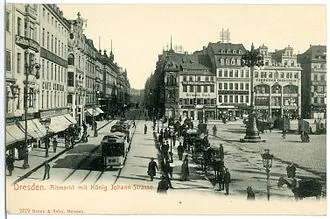
Before February 1945, Dresden was a city of contradictions. Known for centuries as one of Europe’s most magnificent cultural centers, it boasted the stunning Frauenkirche cathedral, the ornate Zwinger Palace, and the world-renowned Semperoper opera house. Its museums housed priceless art collections, and its workshops produced the finest porcelain in Europe.

But Dresden was more than just a museum piece. By early 1945, it had become a crucial cog in the German war machine. The city and its suburbs contained 127 factories producing aircraft components, anti-aircraft guns, optical targeting devices, and even poison gas. An estimated 50,000 workers supported these war industries.
More critically, Dresden was Germany’s seventh-largest city and a vital railway hub. Its marshaling yards connected major routes to Berlin, Prague, Vienna, and—most importantly—the Eastern Front, where the Soviet Red Army was advancing relentlessly westward. Thousands of German troops, tanks, and artillery pieces moved through Dresden’s logistical network daily.
By February, the city’s pre-war population of 640,000 had swollen dramatically. Hundreds of thousands of refugees—mostly women, children, and the elderly—had fled into Dresden ahead of the Soviet advance, cramming into train stations, parks, and any available shelter. They believed the cultural city would be spared.
Operation Thunderclap: The Plan to Break Germany
The decision to bomb Dresden came from the highest levels of Allied command. At the Yalta Conference in early February 1945, Soviet General Aleksei Antonov requested Allied air support to paralyze German transportation networks and prevent reinforcements from reaching the Eastern Front.
British Prime Minister Winston Churchill and Air Chief Marshal Sir Charles Portal endorsed the plan. They turned to Air Chief Marshal Sir Arthur “Bomber” Harris, the uncompromising head of RAF Bomber Command and architect of Britain’s area bombing strategy.

Harris was a true believer in strategic bombing. He was convinced that destroying German cities—their factories, their homes, their will to fight—was the fastest path to victory. When asked to strike eastern German cities, he proposed a massive, coordinated assault on Dresden, Chemnitz, and Leipzig as part of Operation Thunderclap.
The goal was simple: create chaos, disrupt logistics, and break civilian morale. Dresden, with its packed refugee population and vital rail yards, was the perfect target.
The Night the Sky Burned
The RAF struck first on the night of February 13, 1945, employing tactics refined through years of brutal experience. The attack was designed not just to destroy, but to create a firestorm—a self-sustaining inferno that would consume everything in its path.
At 10:00 PM, the first wave of 240 Lancaster heavy bombers roared over Dresden. They dropped high-explosive bombs designed to blow the roofs off buildings and shatter windows, exposing the wooden interiors. Three hours later, a second wave of over 500 bombers arrived, dropping thousands of incendiary bombs onto the exposed structures.
The timing was deliberate and deadly. The second wave caught firefighters and rescue workers in the open, maximizing casualties and chaos.

The incendiaries did their work with terrifying efficiency. Small fires merged into larger ones, which merged into a single, massive conflagration. The superheated air rose rapidly, creating a vacuum at ground level. Cold air rushed in from the periphery at hurricane-force speeds, feeding the flames and raising temperatures to over 1,500 degrees Fahrenheit—hot enough to melt metal and asphalt.
People in the streets were incinerated instantly. Those who sought shelter in basements suffocated as the firestorm consumed all available oxygen. Survivors described a hellscape of melting bodies, exploding buildings, and a roar like a thousand freight trains.
The firestorm raged through the night, visible for miles.
The Americans Finish the Job
The next morning, February 14, over 300 American B-17 Flying Fortress bombers arrived to target Dresden’s railway marshaling yards. But smoke from the still-burning fires obscured their targets. Bombs fell across the city, restarting fires and compounding the destruction.
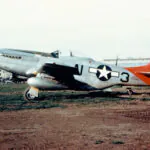
Escorting P-51 Mustang fighters reportedly strafed streets and columns of refugees—a standard tactic to sow further chaos after their primary escort duties were complete.

The Americans returned again on February 15, ensuring that nothing remained of Dresden’s transportation infrastructure—or much else.
In total, over 1,200 Allied heavy bombers participated in the raids. When they were finished, 1,600 acres of Dresden’s city center had been obliterated. The Frauenkirche stood as a blackened shell. The Zwinger Palace was gutted. Seventy-five thousand homes were destroyed.
And an estimated 25,000 people were dead.
The Numbers Game: Propaganda and Truth
The death toll from Dresden became a weapon in itself. In the immediate aftermath, Nazi Propaganda Minister Joseph Goebbels seized on the bombing to portray Germany as a victim. His ministry fabricated casualty figures of 200,000, later inflating them to 500,000.
These exaggerated numbers served multiple purposes: they vilified the Allies, stoked German resolve, and provided ammunition for post-war revisionism. For decades, inflated casualty figures circulated widely, promoted by authors like David Irving and co-opted by neo-Nazi groups to equate the bombing with the Holocaust—a grotesque false equivalence known as the “Bomberholocaust.”
Modern historical research has thoroughly debunked these claims. A comprehensive 2010 study by a commission of German historians appointed by the city of Dresden concluded that the death toll was approximately 25,000—still a staggering and tragic number, but far from the propaganda figures.
The truth is horrific enough without exaggeration.
Military Necessity or Moral Crime?
The bombing of Dresden ignited a debate that continues to this day: Was it a legitimate military operation or an unforgivable atrocity?
The case for military necessity: – Dresden was a major industrial center producing essential war materiel – It was a critical transportation hub whose destruction would hamper German reinforcements to the Eastern Front – The attack was consistent with accepted Allied strategy and conducted at Soviet request – By the standards of the time, it was a legitimate target
The case for moral condemnation: – By February 1945, Germany was on the verge of collapse; the attack was militarily unnecessary – Area bombing and firestorm tactics were inherently indiscriminate, targeting civilians as much as military assets – The destruction of a city of immense cultural value was a profound and needless loss – The attack violated humanitarian principles regarding the protection of non-combatants
Even Winston Churchill, who had initially pressed for the raids, expressed misgivings afterward. In a memo to his chiefs of staff, he questioned whether the bombing of German cities had gone too far, writing: “The destruction of Dresden remains a serious query against the conduct of Allied bombing.”
British philosopher A.C. Grayling later described the RAF’s area bombing campaign as a “moral crime.”
The Legacy: Laws Written in Ash
The bombing of Dresden, along with the firebombing of Tokyo and the atomic attacks on Hiroshima and Nagasaki, marked the apex of total war in the 20th century. These events raised profound questions about the efficacy and morality of strategic bombing.
The horrors of indiscriminate urban bombing became a major impetus for the development of post-war international humanitarian law. The 1949 Geneva Conventions and their subsequent protocols sought to codify protections for civilians in wartime, establishing principles of distinction (between combatants and non-combatants) and proportionality.
The legacy of Dresden contributed directly to the modern legal and ethical framework intended to limit the brutality of armed conflict.
Remembering Dresden
Today, Dresden has been painstakingly rebuilt. The Frauenkirche, which stood as a ruin for decades as a memorial to the bombing, was reconstructed between 1994 and 2005 using original stones and plans. It stands once again as a symbol—not just of the city’s destruction, but of reconciliation and renewal.
Every February 13, Dresden holds a day of remembrance. Thousands gather in silence to honor the dead and reflect on the lessons of that terrible night.
The bombing of Dresden forces us to confront uncomfortable truths about war. It reminds us that even in a just cause—and the defeat of Nazi Germany was unquestionably just—the methods we employ matter. The line between military necessity and moral crime is often blurred, and the consequences of crossing it are measured in ash and bone.
Dresden stands as a warning: that in the pursuit of victory, we must never lose sight of our humanity. Because when we do, we risk becoming the very thing we fight against.
The bombing of Dresden occurred 81 years ago this week, on February 13-15, 1945. The debate over its necessity and morality continues to this day, a testament to the enduring questions it raises about the nature of war and the limits of acceptable conduct in pursuit of victory.