
In the scorching summer of 1941, Adolf Hitler’s armies seemed
invincible. Operation Barbarossa, the massive invasion of the Soviet
Union, had shattered the Red Army’s border defenses in a matter of
weeks. Hundreds of thousands of Soviet soldiers marched into captivity,
and the road to Moscow appeared wide open. But at a city called
Smolensk, 400 kilometers from the Soviet capital, something unexpected
happened. The Blitzkrieg—the lightning war that had conquered Poland,
France, and the Balkans—finally met its match.
The Battle of Smolensk, fought from July to September 1941, would
become one of the most consequential engagements of World War II. Though
it ended in a tactical German victory, it cost the Wehrmacht something
far more valuable than territory: time. And in the race to capture
Moscow before winter, time was the one resource Hitler could not afford
to lose.
The Road to Smolensk:
Barbarossa’s Momentum
When German forces crossed the Soviet border on June 22, 1941, they
unleashed the largest military operation in history. Three million men,
organized into three massive army groups, drove deep into Soviet
territory with terrifying speed. Army Group Centre, commanded by Field
Marshal Fedor von Bock, formed the spearhead aimed directly at
Moscow.
By early July, von Bock’s forces had already achieved a stunning
victory at the Białystok-Minsk pocket, encircling and destroying three
Soviet armies. The panzer divisions of Generals Heinz Guderian and
Hermann Hoth raced eastward, their tank tracks churning up clouds of
dust on the primitive Russian roads. The Soviet Union appeared to be on
the verge of collapse.
But Stalin and his generals knew that if Moscow fell, the war was
lost. The city of Smolensk, sitting astride the traditional invasion
route to the capital, became the line that had to hold. Marshal Semyon
Timoshenko was given command of the reconstituted Western Front and
ordered to stop the German advance at any cost.
The Trap Closes:
Encirclement at Smolensk
The German plan was elegant in its simplicity—and brutal in its
execution. Guderian’s 2nd Panzer Group would strike from the south,
crossing the Dnieper River and enveloping the Soviet defenders.
Simultaneously, Hoth’s 3rd Panzer Group would advance from the north,
capturing Vitebsk and driving toward Yartsevo. The two armored pincers
would meet east of Smolensk, trapping the Soviet armies in another
massive Kessel—a cauldron of encirclement.
On July 10, the offensive began. Guderian’s tanks smashed through the
Soviet 13th Army’s defenses and crossed the Dnieper in a lightning
thrust. By July 16, his 29th Motorized Division had broken into Smolensk
itself, initiating a week of savage street fighting. To the north,
Hoth’s panzers captured Vitebsk and raced toward the rendezvous
point.
The Soviets threw everything they had into stopping the encirclement.
In a desperate counterattack near Lepiel, they committed over 2,000
tanks from the 5th and 7th Mechanized Corps. But the assault was poorly
coordinated, and the Soviet armor ran headlong into prepared German
anti-tank positions. Within days, over 800 Soviet tanks lay burning in
the fields.
By July 27, the trap had closed. The pincers of the 2nd and 3rd
Panzer Groups linked up at Yartsevo, encircling three Soviet armies—the
16th, 19th, and 20th—in a pocket west of Smolensk. It appeared to be
another catastrophic Soviet defeat, another replay of the disasters at
Białystok and Minsk.
“They Will Not
Surrender”: Soviet Resistance
But something was different this time. The trapped Soviet armies did
not collapse. Instead, they fought with a ferocity that shocked the
German commanders. Inside the pocket, Soviet soldiers launched desperate
breakout attempts, tying down entire German infantry divisions. Outside,
Timoshenko organized wave after wave of counterattacks to relieve the
encircled forces.
Newly mobilized reserve armies—the 24th, 28th, 29th, and 30th—were
thrown into battle as soon as they arrived at the front, often with
minimal training and equipment. These attacks were costly and often
futile, but they achieved something crucial: they slowed the German
advance to a crawl.

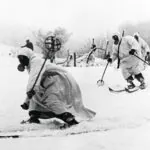
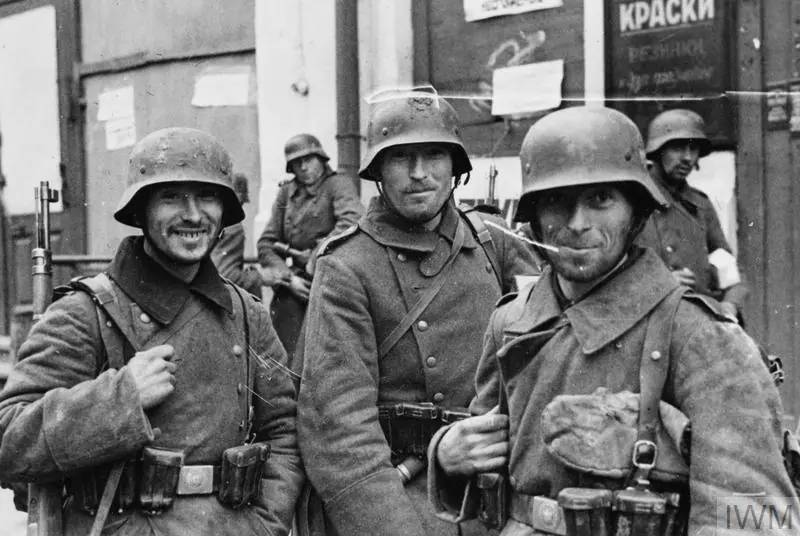
Barbarossa, 1941. The Battle of Smolensk marked the first major check to
the German advance. (Imperial War Museums)
The fighting around Smolensk was unlike anything the Wehrmacht had
experienced in the war so far. German soldiers faced not just organized
resistance but a kind of desperate, almost suicidal determination.
Soviet snipers picked off officers and NCOs. Artillery barrages rained
down on German positions day and night. And for the first time, German
troops encountered the terrifying Katyusha rocket launchers—“Stalin’s
Organs”—whose shrieking salvos could devastate entire battalions.
One German officer wrote in his diary: “The Russians fight to the
last man. They will not surrender. This is not war as we know it.”
The Battle of
Yelnya: Zhukov’s First Victory
Southeast of Smolensk, a particularly bitter struggle developed
around the town of Yelnya. German forces had captured the town and
established a salient that threatened the Soviet defensive line. In
August, General Georgy Zhukov—who would later become the Soviet Union’s
greatest commander—was given command of the Reserve Front and ordered to
eliminate the Yelnya salient.
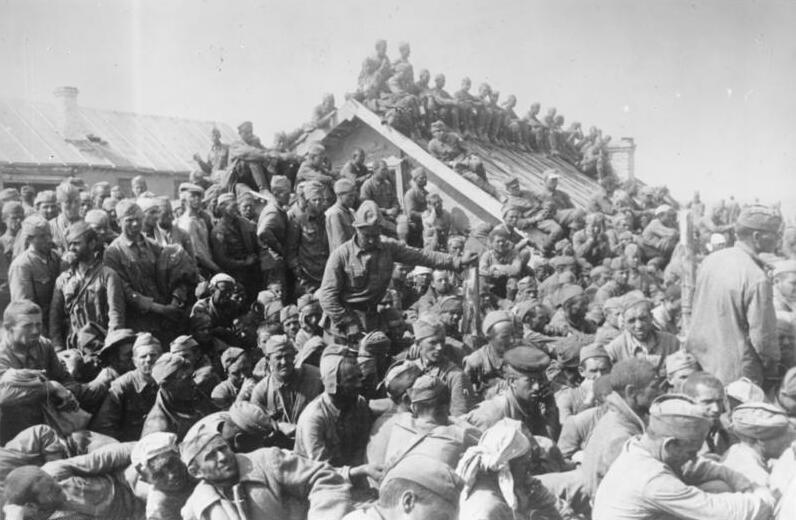
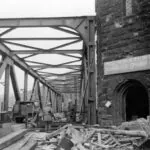
The Germans claimed over 300,000 prisoners when the main pocket was
cleared. (Bundesarchiv/Markwardt, CC-BY-SA 3.0)
Throughout August, Zhukov’s 24th Army launched relentless attacks
against the German positions. The fighting was brutal and costly, with
Soviet casualties mounting into the tens of thousands. But Zhukov was
willing to pay the price. On September 6, after weeks of grinding
combat, the Germans finally abandoned the salient.
The victory at Yelnya was small in strategic terms, but its
psychological impact was enormous. For the first time since the invasion
began, the Red Army had forced the Wehrmacht to retreat. Soviet
propaganda trumpeted the success, and Zhukov’s reputation as a commander
who could defeat the Germans was born.
The Fatal Pause: Hitler’s
Decision
By late July, the German high command faced a critical decision. Army
Group Centre had achieved another tactical victory at Smolensk, but at a
terrible cost. Over 115,000 German casualties had been suffered, and the
panzer divisions were exhausted. Supply lines stretched back hundreds of
kilometers over primitive roads. And most importantly, the advance on
Moscow had been delayed by two months.
Guderian and other generals argued for an immediate push toward the
Soviet capital. Moscow was just 400 kilometers away, and they believed
one more decisive blow could end the war. But Hitler disagreed.
Concerned about the exposed flanks of Army Group Centre and the
continuing Soviet resistance, he issued Directive 34 on July 30,
ordering the main advance on Moscow to halt.
advance toward Smolensk, July 1941. The battle stretched German supply
lines to their breaking point. (Bundesarchiv/Kurt Eckart)
Instead, Guderian’s panzers were diverted south to assist in the
encirclement of Kiev, while Hoth’s forces were sent north toward
Leningrad. The drive on Moscow would have to wait until autumn.
This decision would prove to be one of the most fateful of the entire
war. The two-month pause gave the Soviets precious time to mobilize
reserves, construct defensive fortifications around Moscow, and transfer
battle-hardened divisions from Siberia. When Operation Typhoon—the final
assault on Moscow—was finally launched in October, the window of
opportunity had closed. The autumn rains turned the roads to mud, and
then came the winter snows.
The Price of Resistance
The Battle of Smolensk was a bloodbath. Soviet casualties were
catastrophic: official figures report 486,171 killed, missing, or
captured, and another 273,803 wounded. The Germans claimed over 300,000
prisoners when the main pocket was finally cleared in early August.
Thousands of tanks and artillery pieces were lost.
But the Germans paid a price too. The 115,500 casualties suffered by
Army Group Centre included many experienced officers and NCOs who could
not be replaced. The panzer divisions, which had begun the campaign at
full strength, were now shadows of their former selves. And most
critically, the Wehrmacht had lost its most precious asset:
momentum.
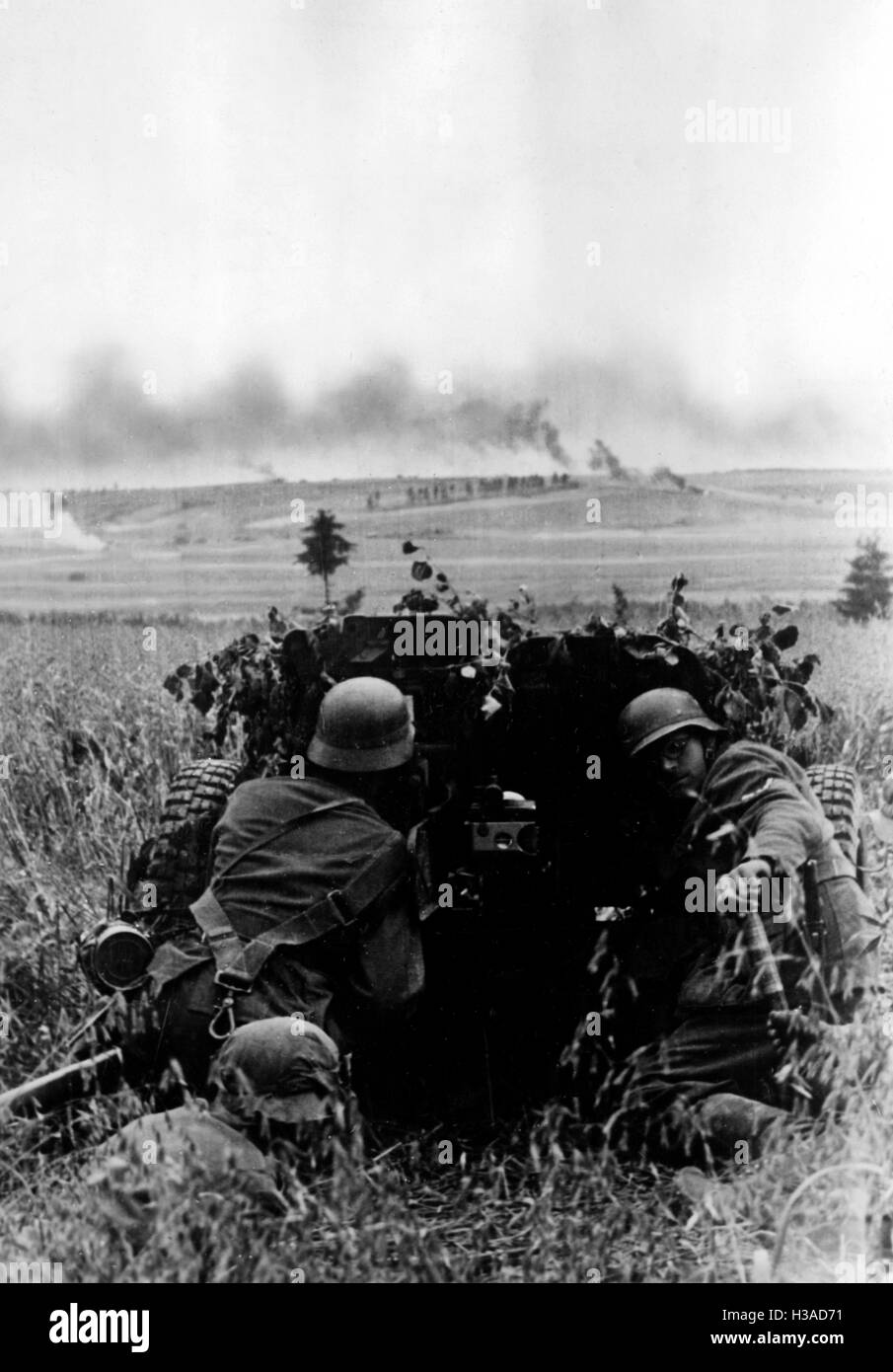
1941. The brutal fighting cost both sides dearly and marked the first
major check to the Blitzkrieg. (Bundesarchiv/Sepp Jäger)
A Pyrrhic Victory
Tactically, Smolensk was a German victory. Three Soviet armies had
been destroyed, and the Wehrmacht had advanced another 200 kilometers
toward Moscow. But strategically, the battle was a turning point—the
first major check to the seemingly unstoppable Blitzkrieg.
The fierce Soviet resistance at Smolensk demonstrated that the Red
Army would not collapse after the initial border battles. Despite
catastrophic losses, the Soviets continued to fight, counterattack, and
delay. They traded space for time, and in doing so, they saved
Moscow.
When the German offensive finally resumed in October with Operation
Typhoon, it was too late. The Wehrmacht reached the outskirts of Moscow
in December, close enough for German officers to see the spires of the
Kremlin through their binoculars. But they could advance no further. The
Soviet counteroffensive, launched in the depths of winter, drove the
Germans back and shattered the myth of Wehrmacht invincibility.
In 1985, in recognition of its heroic defense, Smolensk was awarded
the title of Hero City. The battle that took place there in the summer
of 1941 had changed the course of World War II. The Blitzkrieg had been
stopped, and the long, grinding war of attrition on the Eastern Front—a
war that Germany could not win—had begun.
The blood shed in the forests and fields around Smolensk in July and
August 1941 ultimately flowed all the way to Berlin. The first check to
Blitzkrieg became the beginning of the end for Hitler’s dreams of
conquest.