
She flirted her way through German checkpoints. She cycled 300 miles
through enemy territory in 72 hours. She killed an SS sentry with her
bare hands. And when the Gestapo put a 5 million franc bounty on her
head—the highest in France—she simply slipped through their fingers
again and again, earning the nickname that would define her legend:
The White Mouse.
Nancy Wake was no ordinary spy. She was a force of nature who
transformed from a glamorous socialite in Marseille to one of the most
effective and decorated Allied agents of World War II. Her story reads
like fiction, yet every incredible detail is true.
From Privilege to Peril
Nancy Grace Augusta Wake was born in Wellington, New Zealand, on
August 30, 1912, but grew up in North Sydney, Australia. Fiercely
independent from childhood, she ran away from home at 16 to work as a
nurse. When a £200 inheritance from an aunt arrived, she seized the
opportunity to see the world, eventually landing in Paris as a
journalist for Hearst newspapers.
It was in 1930s Vienna that Wake witnessed something that would
change her life forever. She saw Nazi gangs publicly beating Jewish men
and women in the streets. The brutality horrified her and planted a seed
of absolute determination: she would fight the Nazis, no matter the
cost.
In 1937, she met Henri Fiocca, a wealthy French industrialist. They
married in November 1939 and settled into a life of luxury in Marseille.
But when Germany invaded France in 1940, Wake’s comfortable existence
ended abruptly. She immediately volunteered as an ambulance driver, but
that was just the beginning.
The White Mouse Emerges
As France fell and the Resistance began to organize, Nancy and Henri
joined the underground fight. She became a crucial courier for the Pat
O’Leary escape network, one of the most successful operations helping
Allied airmen and Jewish refugees escape to neutral Spain. Her home
became a safe house, and she used her status as a wealthy socialite as
the perfect cover.
Wake was brilliant at her work—perhaps too brilliant. The Gestapo
knew someone was helping their enemies escape, but they couldn’t catch
her. Every trap failed. Every checkpoint she passed through. Her ability
to evade capture was so remarkable that the Germans nicknamed her
“The White Mouse” and placed a 5 million franc bounty
on her head, making her the Gestapo’s most wanted person in France.
Her methods were audacious. Once, when German soldiers wanted to
search her at a checkpoint, she simply flirted with them, asking coyly,
“Do you want to search me?” They waved her through. Her telephone was
tapped, her mail intercepted, yet she continued her dangerous work.
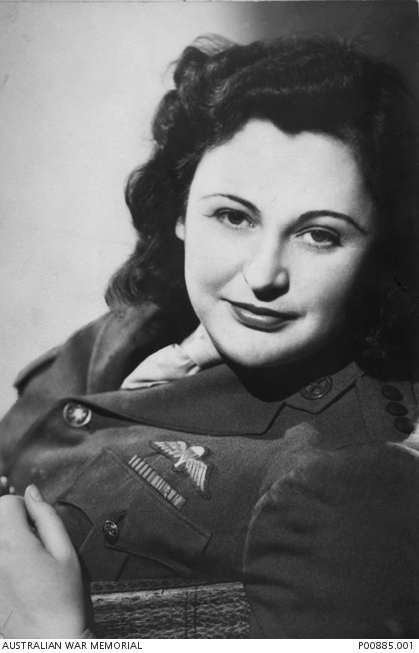
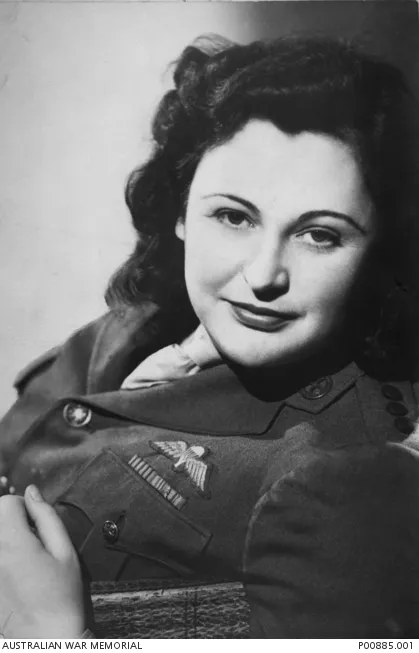
- Studio portrait of Nancy Wake, highly decorated woman member of the
Allied Escape Route Organisation in occupied France (1940–1943). For her
work with the French Resistance, she was known by the Gestapo as the
‘White Mouse.’ She is wearing a British Army uniform, that of the First
Aid Nursing Yeomanry. (Source: Australian War Memorial)
By 1943, the network had been betrayed. Wake had to flee. After
several failed attempts and a brief arrest (from which the network freed
her), she finally escaped across the Pyrenees into Spain. Her husband
Henri stayed behind to help her escape. The Gestapo captured him,
tortured him, and executed him in August 1943 when he refused to reveal
her whereabouts. Wake wouldn’t learn of his death until after the war—a
loss she would carry with guilt for the rest of her life.
Training for War
When Wake reached Britain in June 1943, the Special Operations
Executive (SOE) immediately recruited her. The SOE was Churchill’s
“Ministry of Ungentlemanly Warfare,” tasked with sabotage, espionage,
and supporting resistance movements across occupied Europe.
Wake underwent 16 weeks of brutal training: unarmed combat, silent
killing, explosives, parachuting, and guerrilla warfare. Her instructors
were impressed. Vera Atkins, a senior SOE intelligence officer,
described her as “A real Australian bombshell. Tremendous vitality,
flashing eyes.” Training reports noted she was a “very good and fast
shot” who “put the men to shame by her cheerful spirit and strength of
character.”
Given the code name “Hélène,” Wake was ready for her most dangerous
mission yet.
Parachuting into Hell
On the night of April 29-30, 1944, just weeks before D-Day, Wake
parachuted into the Auvergne region of central France as part of the
three-person “Freelance” team. Her mission: organize and arm the local
Maquis (French Resistance guerrilla fighters) to support the Allied
invasion.
Her parachute caught in a tree. A local Resistance fighter greeted
her romantically: “I hope that all the trees in France bear such
beautiful fruit this year.” Wake’s response was pure Nancy: “Don’t give
me that French shit.”

Wireless Operator in France. (Source: Imperial War Museums (image hosted
on Wikimedia Commons))
Leading 7,500 Fighters
In the Auvergne, Wake became the leader, organizer, and paymaster for
a Maquis force that grew to approximately 7,500 fighters. She
coordinated weapons drops, distributed supplies, and transformed
scattered resistance cells into a disciplined fighting force that
terrorized the Germans.
Under her command, the Maquis blew up railway lines, destroyed
bridges, ambushed convoys, and cut communication lines. Wake didn’t lead
from behind—she fought alongside her men, personally leading raids and
engaging in combat.
Several incidents from this period became legendary:
The Epic Bicycle Ride: When a German attack
destroyed her unit’s radio and codes, Wake needed to re-establish
contact with London. She embarked on a 72-hour, 500-kilometer (over 300
miles) bicycle ride through enemy-occupied territory to reach another
SOE radio operator. When she finally arrived, her backside was so sore
she couldn’t sit for a week. “I hope London appreciates what I go
through for them,” she reportedly said.
Killing with Bare Hands: During a raid on a German
installation, Wake encountered an SS sentry who was about to raise the
alarm. Using the silent killing techniques learned in SOE training, she
killed him with her bare hands—a “judo chop” to the neck. When asked
about it years later, she was matter-of-fact: “They’d taught this
judo-chop stuff with the flat of the hand at SOE, and I practiced away
at it. But this was the only time I used it—whack—and it killed him all
right. I was really surprised.”

1944. Left to right: Gilbert Galletti, Captain Patrick O’Regan, Captain
John Roper, Christine Granville (Countess Krystyna Skarbek) and Captain
Leonard Hamilton (Blanchaert). (Source: Imperial War Museums)
The Montluçon Raid: Wake participated in a daring
raid on Gestapo headquarters in Montluçon, which resulted in 38 German
casualties and the destruction of valuable intelligence files.
Fighting Withdrawal: When 22,000 German soldiers
attacked her 7,500 Maquisards, Wake organized a brilliant fighting
withdrawal. She personally visited each sector under fire, delivering
ammunition and orders, ensuring her force survived to fight another
day.
Her groups in the Auvergne caused more disruption and inflicted more
casualties on the Germans than any other Resistance network in
France.
The Most Decorated Woman of
the War
After the liberation of France, Nancy Wake returned to London as one
of the most highly decorated women of World War II. Her honors
included:
- Britain’s George Medal
- The United States Medal of Freedom
- France’s Croix de Guerre (three times)
- France’s Médaille de la Résistance
- France’s Légion d’honneur
- Australia’s Companion of the Order of
Australia
Yet the transition to peacetime was difficult. She worked briefly in
British Air Ministry intelligence and made several unsuccessful runs for
political office in Australia. In 1957, she married John Forward, a
former RAF officer.
- Studio portrait of Nancy Wake, highly decorated woman member of the
Allied Escape Route Organisation in occupied France (1940–1943). For her
work with the French Resistance, she was known by the Gestapo as the
‘White Mouse.’ She is wearing a British Army uniform, that of the First
Aid Nursing Yeomanry. (Source: Australian War Memorial)
A Defiant Spirit to the End
In 1985, Wake published her autobiography, The White Mouse.
After her second husband’s death, she returned to London in 2001, living
her final years in the Star and Garter home for ex-service personnel.
True to her irreverent character, she sold her medals to fund her
lifestyle, remarking, “There was no point in keeping them, I’ll probably
go to hell and they’d melt anyway.”
Nancy Wake died on August 7, 2011, at the age of 98. As per her
wishes, her ashes were scattered in the hills near Montluçon, France—the
same region where she had fought so valiantly for freedom.
Legacy of the White Mouse
Nancy Wake’s story is more than a tale of wartime heroics. It’s a
testament to what one person with courage, determination, and an
unshakeable moral compass can accomplish against overwhelming odds. She
saw evil and chose to fight it, sacrificing her comfortable life, her
marriage, and nearly her own life in the process.
When asked if she had any regrets, Wake was characteristically blunt:
“I don’t see why we women should just wave our men a proud goodbye and
then knit them balaclavas.”
The Gestapo called her the White Mouse because they could never catch
her. But perhaps a better metaphor would be a lioness—fierce, fearless,
and absolutely unstoppable. Nancy Wake didn’t just survive the war; she
helped win it, one daring mission at a time.
Her life reminds us that heroes don’t always wear uniforms or carry
official titles. Sometimes they’re journalists who see injustice and
refuse to look away. Sometimes they’re socialites who trade champagne
for explosives. And sometimes, they’re women who the world
underestimated—until it was far too late.
The White Mouse slipped through the Gestapo’s fingers for years. But
her legacy? That’s something no one can escape. It lives on in every
story of courage against tyranny, every act of resistance against
oppression, and every person who refuses to stand by while evil
prevails.
Nancy Wake showed us that one person truly can make a difference. And
what a difference she made.