
Japanese American Internment: Democracy’s Darkest Hour
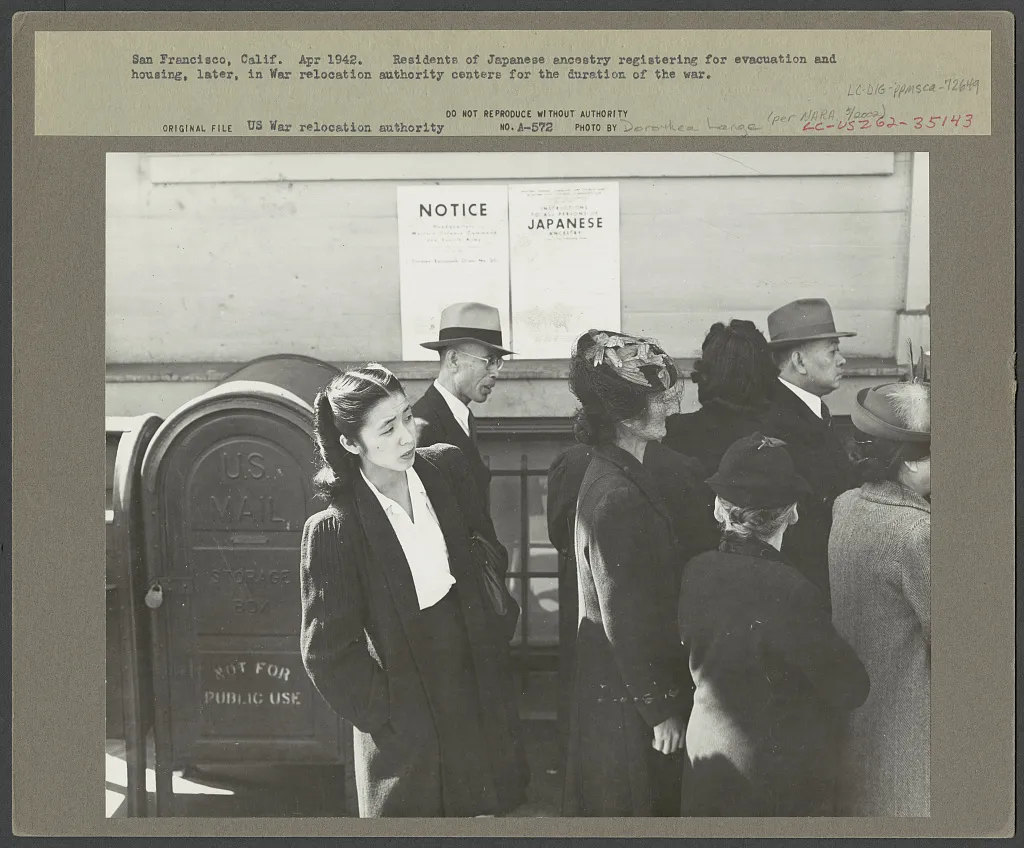
The telegram arrived with brutal simplicity: “Prepare to evacuate. You have 48 hours.” For 120,000 Japanese Americans living on the West Coast in 1942, these words marked the beginning of one of the most shameful episodes in American history. Families who had built lives, businesses, and communities over generations were suddenly branded as potential enemies—not because of anything they had done, but simply because of their ancestry.
What followed was a mass incarceration program that would strip American citizens of their homes, their livelihoods, and their constitutional rights. Behind barbed wire and guard towers in America’s remote deserts, an entire community would spend years imprisoned in their own country. This is the story of Japanese American internment during World War II—a cautionary tale about what happens when fear and prejudice override justice and the Constitution.

The Seeds of Suspicion
The attack on Pearl Harbor on December 7, 1941, changed everything. Within hours of the Japanese strike that killed over 2,400 Americans and plunged the nation into World War II, suspicion fell upon Japanese Americans living in the United States. The FBI immediately began arresting community leaders—1,291 people seized without evidence, their only “crime” being their Japanese heritage.
Anti-Japanese sentiment wasn’t new. For decades, Japanese immigrants had faced discrimination, denied citizenship and property rights in many states. But Pearl Harbor transformed prejudice into panic. Newspapers ran sensational stories about potential saboteurs. Politicians demanded action. Lieutenant General John DeWitt, head of the Western Defense Command, infamously declared: “A Jap’s a Jap… It makes no difference whether he is an American citizen or not.”
The fact that no acts of espionage or sabotage by Japanese Americans had been documented didn’t matter. Fear had taken hold, and it demanded a scapegoat.
Executive Order 9066: The Legal Framework for Injustice
On February 19, 1942, President Franklin D. Roosevelt signed Executive Order 9066. The document was carefully worded, never explicitly mentioning Japanese Americans. Instead, it authorized military commanders to designate “military areas” and exclude “any or all persons” from them. But everyone knew its true target.

The order gave the military sweeping powers to remove anyone of Japanese ancestry from the West Coast—California, Oregon, and Washington. It didn’t matter if you were a citizen. It didn’t matter if you were a child. If you had even 1/16th Japanese ancestry, you were subject to removal. Over 17,000 children under the age of ten would be imprisoned.
The legal justification was “military necessity”—the claim that Japanese Americans posed a threat to national security. Yet this same logic was never applied to German Americans or Italian Americans, despite the United States being at war with Germany and Italy as well. The policy was, at its core, based on race.
“Take Only What You Can Carry”
Starting in March 1942, notices appeared on telephone poles and storefronts in Japanese American neighborhoods. Families were given as little as 48 hours to report to assembly points. They could bring only what they could carry—typically two suitcases per person.
The economic devastation was immediate and catastrophic. Families sold homes, businesses, and farms for pennies on the dollar—or simply abandoned them. A lifetime of work vanished overnight. One farmer sold his tractor for $35. A family lost a hotel worth $10,000 for $500. Many stored possessions with neighbors, only to return years later and find everything gone.
First, evacuees were herded into temporary “Assembly Centers”—converted fairgrounds, racetracks, and livestock pavilions. Families slept in horse stalls that still reeked of manure. There was no privacy, inadequate sanitation, and little food. These were meant to be temporary, but some families spent months in these squalid conditions.

Life Behind Barbed Wire
From the Assembly Centers, internees were transported to ten permanent “Relocation Centers” scattered across America’s most desolate regions: the scorching deserts of Arizona and California, the frozen plains of Wyoming, the swamps of Arkansas. The camps had innocuous names—Manzanar, Poston, Tule Lake, Heart Mountain—but they were prisons in all but name.
Barbed wire fences surrounded the camps. Armed guards manned watchtowers with orders to shoot anyone who tried to escape. Searchlights swept the grounds at night. The barracks were hastily constructed wooden buildings with tar paper walls, offering little protection from desert heat that could reach 120°F or winter cold that plunged below zero.
Entire families lived in single rooms measuring 20 by 25 feet. There were no private bathrooms—only communal latrines and showers. Meals were served in mess halls, further eroding family structure as children ate with friends rather than parents.
Despite these conditions, the internees worked to create community. They established schools, newspapers, and sports leagues. They grew vegetables and raised livestock. Some camps even had small factories producing camouflage nets and other war materials. Internees were paid for work—but at rates far below minimum wage, from $12 to $19 per month.
Yet the camps were never safe. Violence erupted repeatedly:
– At Lordsburg, New Mexico, guards shot and killed two elderly, disabled internees during a night march. – At Manzanar, a riot over poor conditions ended with guards firing into a crowd, killing a 21-year-old man. – At Topaz, Utah, 63-year-old James Wakasa was shot dead by a guard for walking too close to the fence. – At Tule Lake, designated for those deemed “disloyal,” the Army used tanks to suppress protests, and a prisoner was shot and killed.
The Fighters: Korematsu, Endo, and the 442nd
Not everyone accepted their imprisonment quietly. Some Japanese Americans fought back—in the courts and on the battlefield.
Fred Korematsu was a 23-year-old welder from Oakland who refused to report for evacuation. He underwent minor plastic surgery and changed his name, hoping to stay with his Italian American girlfriend. But he was arrested, convicted, and sent to an internment camp.
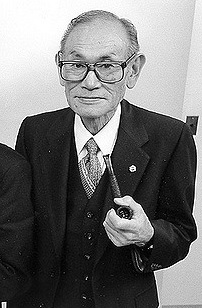
Korematsu’s case reached the Supreme Court in 1944. In a 6-3 decision that would haunt American jurisprudence for decades, the Court upheld his conviction. Justice Hugo Black’s majority opinion accepted the government’s claim of “military necessity,” despite the lack of evidence. The dissenting justices were scathing. Justice Robert Jackson warned the ruling would “lie about like a loaded weapon” for future abuses of power. Justice Frank Murphy called it a descent into “the ugly abyss of racism.”
Decades later, in 1983, newly discovered documents proved the government had suppressed evidence showing Japanese Americans posed no threat. Korematsu’s conviction was overturned. In 1998, he received the Presidential Medal of Freedom. The Supreme Court finally repudiated the Korematsu decision in 2018, with Chief Justice John Roberts declaring it “gravely wrong the day it was decided.”
Mitsuye Endo, a California state employee, filed a habeas corpus petition challenging her detention. In 1944, the Supreme Court ruled unanimously that the government could not continue to detain a concededly loyal citizen. While the Court didn’t address the constitutionality of the initial evacuation, the Endo decision forced the government to begin closing the camps.
Meanwhile, thousands of young Japanese American men volunteered to fight for the country that had imprisoned their families. The 442nd Regimental Combat Team, composed almost entirely of Japanese Americans, became the most decorated unit in U.S. military history for its size and length of service. They fought with extraordinary valor in Europe, earning over 18,000 individual decorations, including 21 Medals of Honor. Their motto: “Go For Broke.”
The Long Road Home
The last internment camp, Tule Lake, closed in March 1946—six months after the war ended. Internees were given $25 and a train ticket. Many had nowhere to go.
They returned to find their homes occupied by strangers, their businesses shuttered, their possessions stolen or sold. They faced continued hostility and discrimination. Some communities posted signs: “No Japs Wanted.” Families had to start over from nothing, often working menial jobs despite their education and skills.
The psychological scars ran deep. Many internees, especially the older generation, never spoke of their experiences. Shame and trauma were passed down through generations. The Japanese concept of shikata ga nai—”it cannot be helped”—became a way to cope with the injustice.
Apology and Reparations
For decades, the U.S. government refused to acknowledge its wrongdoing. But Japanese Americans and their allies never stopped fighting for recognition.
In 1976, President Gerald Ford officially repealed Executive Order 9066, declaring: “We now know what we should have known then—not only was that evacuation wrong, but Japanese-Americans were and are loyal Americans.”
In 1988, Congress passed the Civil Liberties Act, signed by President Ronald Reagan. The act issued a formal apology and provided $20,000 in reparations to each surviving internee. The apology stated clearly: “The Congress recognizes that… a grave injustice was done to both citizens and permanent residents of Japanese ancestry by the evacuation, relocation, and internment of civilians during World War II.”
It was a small measure of justice, but it came too late for many. By 1988, more than half of the original internees had died.
Lessons for Today
The internment of Japanese Americans stands as a stark warning about the fragility of civil liberties in times of crisis. It demonstrates how easily fear can override constitutional principles, how quickly “us” can become “them,” and how the machinery of government can be turned against its own citizens.
The story is not just about what happened to Japanese Americans. It’s about what can happen to any group when prejudice is given the force of law. It’s about the importance of speaking out against injustice, even when—especially when—it’s popular to remain silent.
Fred Korematsu spent his later years speaking to students about his experience. His message was simple but urgent: “If anyone should do any pardoning, I should be the one pardoning the government for what they did to the Japanese-American people… Stand up for what is right.”
In an era when debates about national security, immigration, and civil liberties continue to divide America, the lessons of Japanese American internment remain painfully relevant. The question is not whether we will face similar tests in the future. The question is whether we will have learned from this dark chapter—or whether we will repeat it.
The guard towers are gone now. The barbed wire has been removed. But at sites like Manzanar, preserved as a National Historic Site, the barracks still stand as monuments to injustice. They remind us that democracy is not self-sustaining. It requires constant vigilance, moral courage, and the willingness to defend the rights of all people—especially those who are different, unpopular, or afraid.
That is the true lesson of Japanese American internment: freedom is never more than one generation away from extinction. We must guard it, or lose it.