
Wake Island: The ‘Alamo of the Pacific’ That Defied the Japanese Empire
The message that crackled through the radio on December 8, 1941, was terse and terrifying: Pearl Harbor was under attack. On a tiny coral atoll 2,300 miles to the west, 449 U.S. Marines, a handful of Navy personnel, and over a thousand civilian contractors braced for what they knew would come next. Wake Island—a speck in the vast Pacific, barely three miles long—was about to become the stage for one of World War II’s most heroic last stands.
What followed was a 15-day battle that would electrify a shocked American nation, deliver the first tactical victory against the Japanese juggernaut, and ultimately end in tragedy. This is the story of Wake Island: the “Alamo of the Pacific.”
A Fortress Unfinished

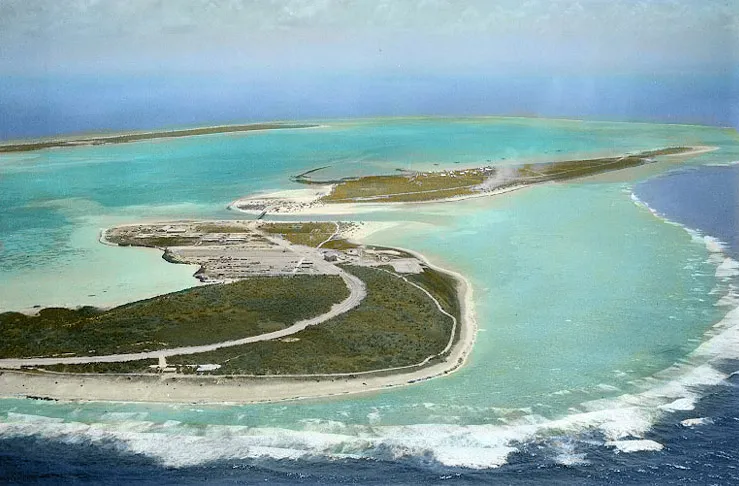
Wake Island wasn’t much to look at—three small islets (Wake, Peale, and Wilkes) forming a V-shaped atoll with a lagoon in the middle. But its location made it invaluable. Sitting roughly halfway between Hawaii and the Philippines, it was designated to become an advanced naval and air base, a vital link in America’s Pacific defense chain.
By December 1941, the transformation was far from complete. Construction crews from Morrison-Knudsen were still building runways and fortifications. The garrison was undermanned and underequipped. Commander Winfield S. Cunningham held overall command, with Major James P.S. Devereux leading the Marine contingent. Their arsenal consisted of six 5-inch coastal guns, twelve 3-inch anti-aircraft guns, and twelve brand-new F4F Wildcat fighters that had arrived just days earlier with Marine Fighter Squadron VMF-211.
Critically, Wake Island lacked radar. The defenders would have no early warning of incoming attacks—a vulnerability the Japanese would exploit within hours.
The Storm Breaks
At noon on December 8 (December 7 in Hawaii, across the International Date Line), 36 Japanese bombers materialized out of low clouds. Four Wildcats were already on patrol, but the remaining eight sat parked on the airfield, wingtip to wingtip. The Japanese strike was devastating. Within minutes, eight fighters were burning wreckage, 23 Marines lay dead or wounded, and Wake’s air defense capability was crippled before the battle had truly begun.
For the next three days, Japanese bombers from the Marshall Islands pounded the atoll relentlessly. The four surviving Wildcats fought back with desperate courage, but everyone knew what was coming: an invasion fleet.
“Hold Your Fire!”
On the morning of December 11, Rear Admiral Sadamichi Kajioka’s invasion force appeared on the horizon: three light cruisers, six destroyers, and transports carrying 450 Special Naval Landing Force troops. Confident that the air raids had neutralized the island’s defenses, Kajioka ordered his ships to close in for a pre-landing bombardment.
Major Devereux watched through his binoculars as the Japanese warships approached. His coastal guns were outranged by the enemy cruisers, so he gave an order that required nerves of steel: “Hold your fire.”
The Japanese ships crept closer. 6,000 yards. 5,000 yards. At 4,500 yards, Devereux gave the command: “Commence firing!”
Battery L’s 5-inch guns roared to life. The first salvos struck Kajioka’s flagship, the cruiser Yubari, forcing it to turn away trailing smoke. The Marine gunners shifted targets to the destroyer Hayate. A direct hit detonated the ship’s magazine, and it exploded in a massive fireball, sinking instantly with all 168 hands. It was the first Japanese surface warship sunk by American forces in World War II.
Overhead, the four remaining Wildcats dove into the fray. Captain Henry T. Elrod, a soft-spoken Texan who would become the battle’s greatest hero, executed a daring bombing run on the destroyer Kisaragi. His 100-pound bombs detonated the ship’s depth charges, tearing it apart. Within minutes, a second Japanese destroyer had vanished beneath the waves.
The invasion fleet retreated in disarray. Against all odds, the tiny garrison had repelled an amphibious assault—the only time in the entire Pacific War that shore-based guns alone would achieve such a feat.
A Nation’s Hope
News of the victory electrified America. After the shock of Pearl Harbor and the string of defeats across the Pacific, Wake Island offered a desperately needed story of heroism and defiance. Newspapers trumpeted the headline: “WAKE ISLAND MARINES SMASH JAP LANDING ATTEMPT.”
A legend was born—though one that would later prove apocryphal. According to popular accounts, when asked if there was anything the garrison needed, Major Devereux supposedly replied: “Send us more Japs.” The message was inspiring propaganda, but it was never actually sent. The reality was grimmer: the defenders needed reinforcements, supplies, and air support. None would arrive in time.
The Noose Tightens

The Japanese, humiliated by their defeat, were determined to take Wake Island at any cost. Daily bombing raids intensified, systematically destroying what remained of the island’s defenses. By December 22, the last two Wildcats were out of action. Captain Elrod, his plane grounded, picked up a rifle and joined the infantry.
Meanwhile, the Japanese assembled an overwhelming force: the aircraft carriers Soryu and Hiryu (diverted from the Pearl Harbor strike force), heavy cruisers, additional destroyers, and nearly 1,600 fresh troops. This time, there would be no repulse.
A relief expedition centered on the carrier USS Saratoga was dispatched from Pearl Harbor, but it moved with agonizing slowness. On December 22, with the task force still over 500 miles away, Vice Admiral William S. Pye made the agonizing decision to recall it. Fearing the loss of one of America’s few remaining carriers, he abandoned Wake Island to its fate.
The defenders never knew how close help had come.
The Final Stand
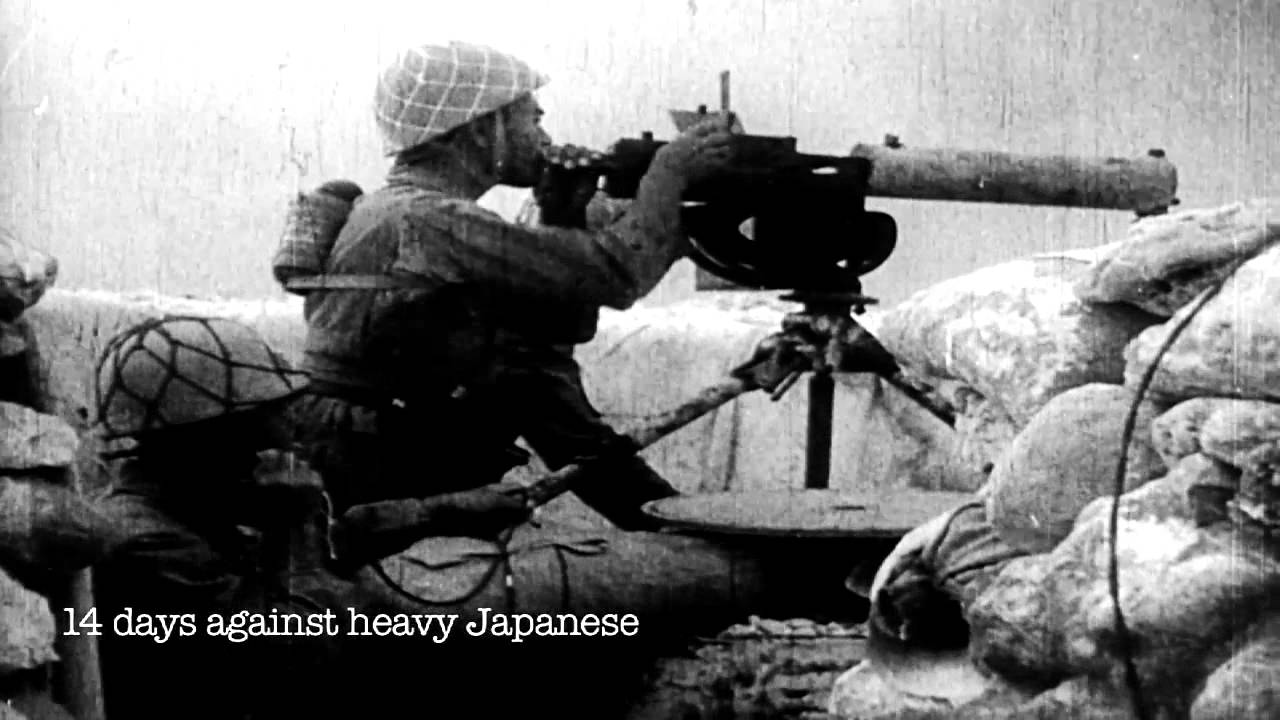
In the pre-dawn darkness of December 23, the second Japanese assault began. Under cover of carrier aircraft and naval gunfire, approximately 1,000 Japanese troops stormed ashore. Two patrol boats deliberately beached themselves on the reef, disgorging troops who poured into the American positions.
The fighting was savage and close-quarters. Marines, sailors, and civilian volunteers fought with rifles, machine guns, and bare hands. Captain Elrod, leading a counterattack, was killed by enemy fire—he would posthumously receive the Medal of Honor, the first awarded to a Marine aviator in the war.
For over 11 hours, the outnumbered defenders held out, but Japanese forces systematically infiltrated and overwhelmed their positions. With communications severed, ammunition running low, and no hope of relief, Commander Cunningham made the hardest decision of his life. At 1:30 PM on December 23, he ordered the garrison to surrender.
Major Devereux personally ensured his reluctant Marines complied. The battle was over.
The Price of Valor

The 15-day defense cost 52 American military personnel killed and 49 wounded, with an additional 70 civilians dead. Japanese losses were far heavier: an estimated 800-1,000 casualties, two destroyers, two patrol boats, and at least 20 aircraft destroyed.
But the true horror was yet to come. The 433 captured military personnel and 1,104 civilian workers were subjected to brutal treatment. Most were shipped to POW camps in Japan and China aboard “hell ships,” where they endured starvation, disease, and forced labor.
Ninety-eight civilian contractors were kept on Wake Island as slave laborers. On October 7, 1943, following an American carrier raid, the Japanese garrison commander, Rear Admiral Shigematsu Sakaibara, ordered their execution. The 98 men were blindfolded, bound, and machine-gunned to death. One prisoner briefly escaped and carved a message on a coral rock—”98 US PW 5-10-43″—before being recaptured and beheaded by Sakaibara himself. After the war, Sakaibara was tried, convicted, and executed for this war crime.
Legacy of the Alamo
Wake Island remained under Japanese control until September 4, 1945, when a U.S. Marine detachment accepted the garrison’s surrender. Today, the atoll continues to serve as a U.S. military outpost, a living monument to the men who defended it.
The battle provided crucial lessons about the importance of radar, integrated defenses, and logistical support for isolated bases. But more than that, it became a symbol—a reminder that courage and determination can achieve the impossible, even in the face of overwhelming odds.
The defenders of Wake Island knew they were doomed. They fought anyway. In those desperate December days of 1941, when America needed heroes, the Marines of Wake Island answered the call. Their sacrifice would not be forgotten.
Wake Island was officially designated a National Historic Landmark in 1985. The atoll remains under U.S. control and is administered by the U.S. Air Force.