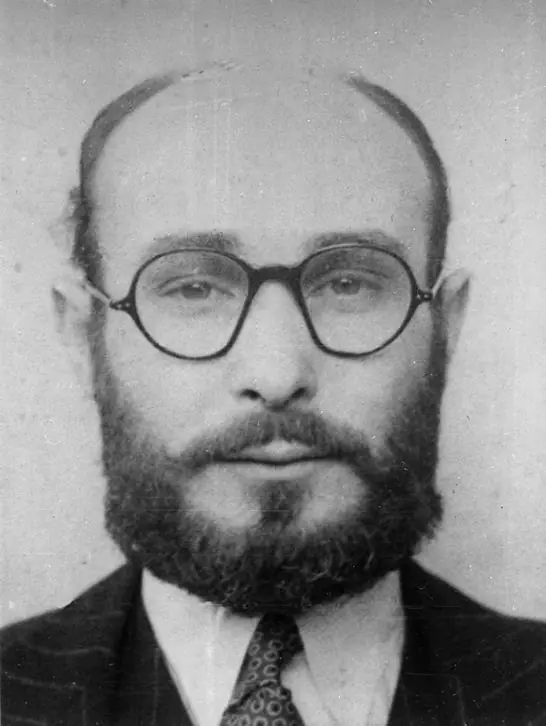
GARBO: The
One-Man Spy Network That Saved D-Day
In the spring of 1944, the fate of the entire Allied war effort
rested on a lie — and the man telling it was a Spanish chicken farmer
with no formal intelligence training, no government backing, and no real
agents to speak of. His name was Juan Pujol García. The British called
him GARBO. The Germans called him ALARIC. History would come to call him
the most effective double agent of the Second World War.
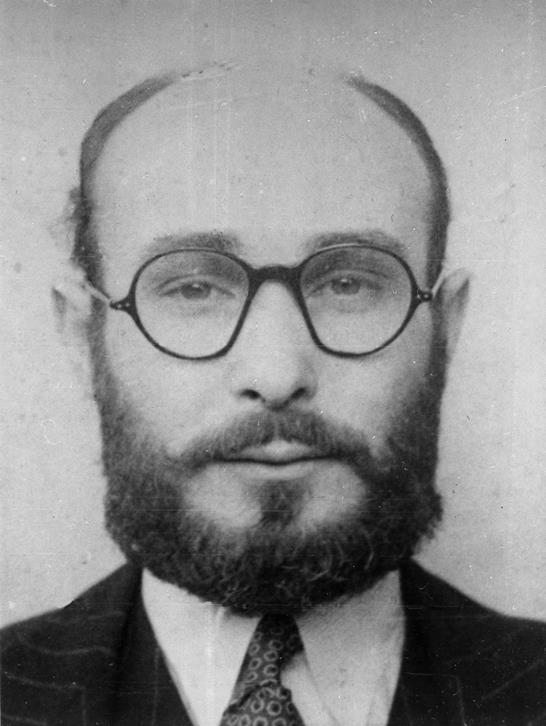
Source: The National Archives (UK) / Security Service — Public Domain
(Crown Copyright). Featured Image
A Man Driven by Principle,
Not Profit
Born in Barcelona on February 14, 1914, Juan Pujol García was, by
most accounts, an unremarkable man. He managed a cinema, dabbled in
poultry farming, and harbored no particular ambitions for adventure. But
the Spanish Civil War (1936–1939) changed him profoundly. Forced to
serve on both the Republican and Nationalist sides, he emerged from the
conflict with a deep revulsion for political extremism in all its forms
— fascism and communism alike.
When World War II broke out and Nazi Germany began its march across
Europe, Pujol resolved to do something about it. He admired Britain’s
stubborn resistance and decided he would help — not because anyone asked
him to, but because he believed it was the right thing to do.
In January 1941, he walked into the British Embassy in Madrid three
separate times and offered his services as a spy. Three times, he was
turned away.
Most people would have given up. Pujol had a better idea.
The Audacious
Plan: Become a German Spy First
If the British wouldn’t take him, he would make himself impossible to
refuse. Pujol fabricated a persona as a fanatically pro-Nazi Spanish
government official, obtained a fake diplomatic passport, and approached
the Abwehr — German military intelligence. They were delighted. They
gave him the codename ALARIC, a crash course in invisible ink and
codebreaking, and £600 in expenses. His mission: travel to Britain and
build a spy network.
Instead, Pujol moved to Lisbon, Portugal — a city he had never left —
and began inventing Britain from scratch.
Using a tourist guidebook, railway timetables, and cinema newsreels,
he fabricated detailed intelligence reports about British military
movements, troop dispositions, and civilian morale. He invented
sub-agents: a KLM pilot who served as a courier, a Welsh nationalist
with a grudge against the English, a Venezuelan student studying in
Glasgow. None of them existed. Every report was fiction, carefully
constructed to sound plausible.
The Germans were thrilled. They paid him handsomely and praised his
network’s productivity.
Meanwhile, British intelligence — intercepting his messages through
the Ultra program — launched a full-scale manhunt for what they believed
was a highly active German spy ring operating on British soil.
MI5 Finally Comes Calling
The turning point came when the German Kriegsmarine wasted
significant resources hunting for a non-existent Allied convoy that
Pujol had reported. MI5 realized the “spy ring” they were hunting was
actually a one-man deception operation run by a Spanish civilian in
Lisbon. In February 1942, Pujol made contact with the Americans, who
passed him to the British.
He arrived in Britain on April 24, 1942. His new case officer, Cyril
Mills, gave him the codename GARBO — after Greta Garbo, because he was,
Mills said, “the best actor in the world.”
who helped build the fictional spy network that deceived the Abwehr.
Source: MI5 / HM Government — Open Government Licence v1.0.
Pujol was assigned to the XX Committee — the famous Double Cross
System — and partnered with MI5 officer Tomás Harris, a fluent Spanish
speaker and gifted intelligence officer. The two men formed one of the
most creative partnerships in the history of espionage.
Together, they expanded Pujol’s fictional network to 27
entirely invented sub-agents, each with a distinct backstory,
personality, and role. There was a US Army sergeant, a disgruntled Welsh
nationalist, a censor inside the Ministry of Information, and a
Venezuelan student in Glasgow. The Germans knew this network as
“Arabal.” They trusted it completely.
The volume of intelligence flowing from GARBO’s network was so
immense — 315 letters averaging 2,000 words each — that German handlers
in Madrid became overwhelmed and stopped trying to recruit other spies
in Britain. Why bother? ALARIC had it covered.
The Art of Controlled
Deception
Feeding a sophisticated intelligence service like the Abwehr required
more than simple lies. Pujol and Harris developed a sophisticated system
of controlled deception:
Delayed truth: Genuine military intelligence was
sent via methods that ensured it arrived too late to be useful. When the
Allied fleet departed for Operation Torch — the invasion of North Africa
— GARBO sent an accurate report by airmail. It arrived after the
landings had already succeeded. The Germans praised his accuracy without
realizing the timing was deliberate.
Credible failures: When a major fleet movement from
Liverpool went unreported, GARBO told the Germans his Liverpool agent
had fallen gravely ill. The agent later “died.” A fake obituary was
placed in a local newspaper to cement the story.
Manufactured urgency: To explain why certain
intelligence arrived late or incomplete, GARBO invented personal crises,
bureaucratic delays, and logistical problems — all of which made his
network seem more human and therefore more believable.
By August 1943, the Germans trusted GARBO so completely that they
asked him to establish a direct radio link for faster communication.
Pujol and Harris obliged — by inventing a fictional radio operator.
Operation
Fortitude: The Greatest Deception in Military History

to deceive German aerial reconnaissance into believing a massive armored
force was massing in southeast England, c. 1944. Source: Imperial War
Museums — IWM Non-Commercial Licence.
By early 1944, GARBO’s network had become the central pillar of
Operation Fortitude — the Allied plan to convince the
German High Command that the main invasion of France would land at
Pas-de-Calais, not Normandy.
The deception was built around the entirely fictional First
U.S. Army Group (FUSAG): a ghost army of 150,000 men and 11
divisions supposedly massing in Kent and Essex, directly across the
Channel from Calais, under the command of the aggressive and feared
General George S. Patton. Between January 1944 and D-Day, GARBO’s
network transmitted over 500 radio messages reinforcing the
Pas-de-Calais threat.
The Germans believed every word.
The Most Important
Message of the War
On the night of June 5–6, 1944, as the largest amphibious invasion in
history crossed the English Channel toward Normandy, GARBO sent an
urgent warning to his German handlers. His radio operator, however, was
not on duty to receive it.
This apparent failure was, in fact, a stroke of genius. When contact
was finally made, GARBO furiously berated his handlers for their
negligence — reinforcing his image as a loyal, frustrated agent who had
tried his best to warn them. His credibility soared.
Then came the decisive blow.
On June 9, 1944 — three days after the Normandy landings — GARBO
transmitted a two-hour radio message to Berlin. He reported that he had
consulted his entire network and reached a firm conclusion: the Normandy
invasion was a feint. A massive diversion designed to draw German
reserves away from Pas-de-Calais, where Patton’s FUSAG was still waiting
to launch the real invasion.
Field Marshal Gerd von Rundstedt, commander of German forces in the
West, believed him completely.
As a direct result, the German High Command held back two
Panzer divisions and 19 infantry divisions in the Pas-de-Calais
region — waiting for an attack that would never come. Those armored
divisions, had they been deployed to Normandy in the critical days after
June 6, might have driven the Allies back into the sea.
They never moved.
Decorated by Both Sides
On July 29, 1944, the German High Command awarded Juan Pujol García
the Iron Cross for his extraordinary services to the
Reich. Five months later, on November 25, 1944, King George VI made him
a Member of the Order of the British Empire (MBE) for
his services to the Allied cause.
He remains one of the very few individuals in history to be
officially decorated by both sides in the same conflict.
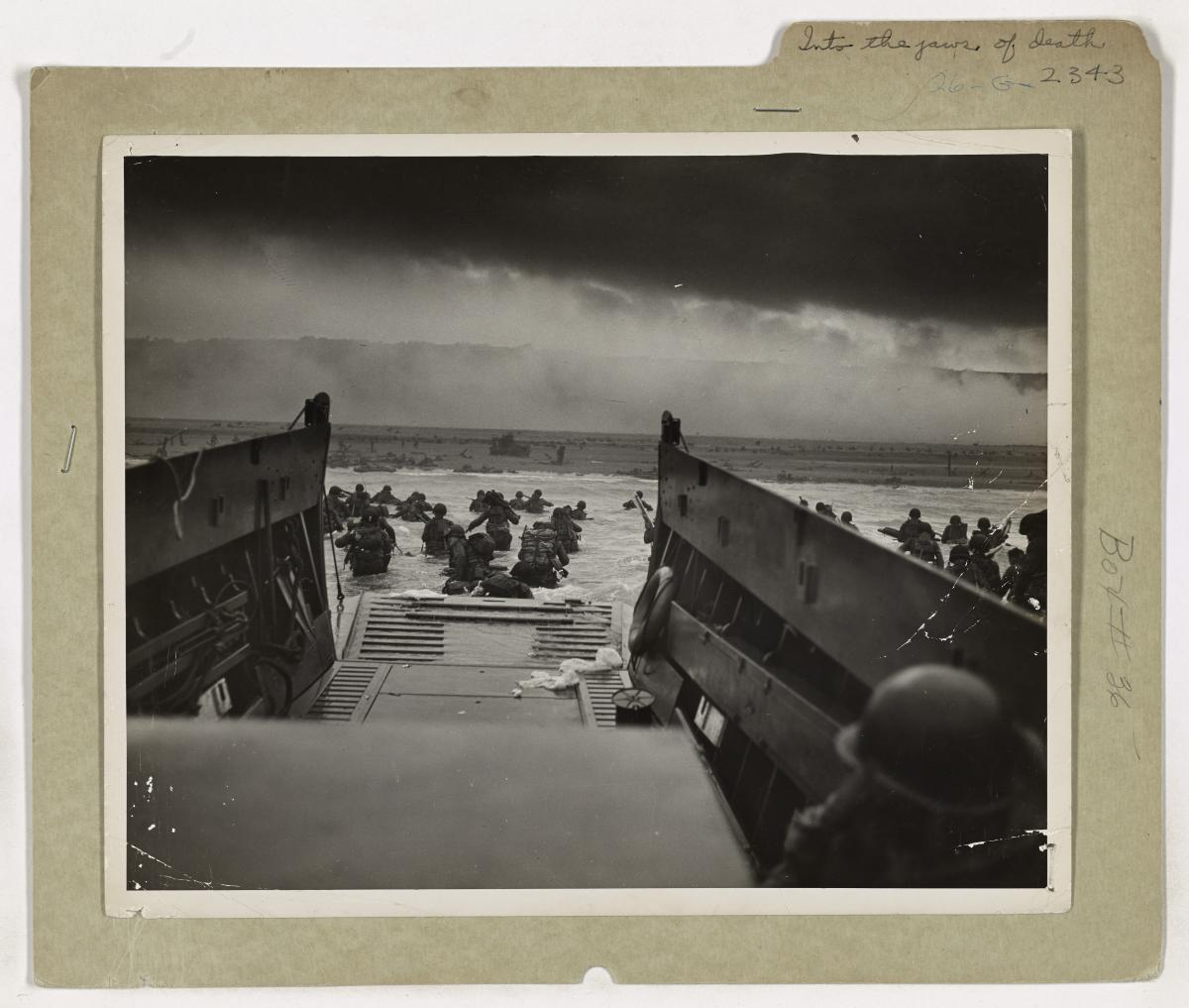
gunfire to land on Omaha Beach, June 6, 1944. GARBO’s deception helped
ensure German armored reserves were held back from Normandy. Photo by
Robert F. Sargent. Source: U.S. National Archives and Records
Administration — Public Domain.
A Ghost Who Came Back
After the war, Pujol feared retribution from surviving Nazi networks.
With MI5’s assistance, he faked his own death from malaria in Angola in
1949 and disappeared to Venezuela, where he ran a bookstore and gift
shop in Lagunillas under a false name. He remarried, raised a new
family, and told no one about his past.
His story remained secret for decades. In 1984, British writer Nigel
West tracked him down after growing suspicious of gaps in the official
records. Pujol returned to London for the 40th anniversary of D-Day,
where he was honored and reunited with former colleagues. He published
his autobiography, Operation Garbo, in 1985.
Juan Pujol García died in Caracas, Venezuela, on October 10, 1988 — a
man who had, with nothing but imagination, nerve, and a tourist
guidebook, helped change the course of the Second World War.
Why GARBO Still Matters
The story of Juan Pujol García is more than a tale of wartime
espionage. It is a reminder that individual courage and moral conviction
— even without institutional support, formal training, or official
sanction — can alter the course of history.
He was rejected by the British three times. He had no agents, no
network, no resources. He had only the audacity to believe that one
determined person, armed with a good story and the willingness to tell
it convincingly, could make a difference.
On the beaches of Normandy, where thousands of Allied soldiers landed
on June 6, 1944, and found the German armored reserves mysteriously
absent, that difference was measured in lives.
Sources: MI5 official history; Juan Pujol García, “Operation
Garbo” (1985); National WWII Museum; Wikipedia; Warfare History Network;
Spartacus Educational