
Operation
Spring Awakening: Germany’s Last Desperate Offensive
The date was March 6, 1945. Berlin was in ruins, Allied armies were
closing in from both east and west, and the Third Reich had mere weeks
left to live. Yet in the muddy fields of western Hungary, Adolf Hitler
was about to launch one final, desperate offensive—a last roll of the
dice that would consume Germany’s remaining elite armored forces in a
futile attempt to turn back the tide of history.
Operation Spring Awakening (Unternehmen Frühlingserwachen)
would be the Wehrmacht’s last major offensive of World War II. It would
also be one of its most catastrophic failures.
The Last Drop of Oil
By early 1945, Germany’s strategic situation was beyond desperate.
The Red Army stood 70 kilometers from Berlin. Budapest had fallen on
February 13. The Ardennes Offensive—Hitler’s gamble in the west—had
failed spectacularly, bleeding away precious reserves for no gain.
But one resource obsessed Hitler above all others: oil.
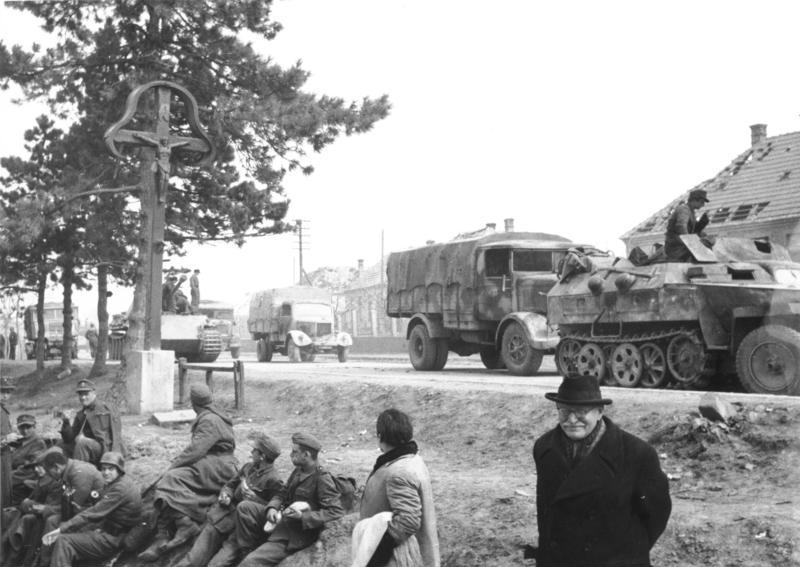
Balaton, Hungary, March 1945. The column includes an SdKfz 250
half-track, a Lancia 3RO truck, and a Panther tank. Photo: Wilfried
Woscidlo / German Federal Archives (Bundesarchiv) / CC BY-SA 3.0 Germany
The loss of Romania’s Ploiești oil fields in August 1944 had been a
body blow to the German war machine. Now, the Nagykanizsa region in
southern Hungary represented the last source of natural crude oil under
Axis control—accounting for a staggering 80% of Germany’s total oil
production. Without it, the Luftwaffe couldn’t fly, the Panzerwaffe
couldn’t roll, and the war effort would grind to a halt within
weeks.
General Heinz Guderian, the architect of Blitzkrieg, pleaded
with Hitler to use Germany’s last armored reserves to defend the Oder
River line before Berlin. Hitler refused. The Hungarian oil, he
insisted, was more important than the capital itself. The 6th SS Panzer
Army—Germany’s most elite formation, recently withdrawn from the failed
Ardennes offensive—would be sent not to defend Berlin, but to attack in
Hungary.
It was a decision that would seal the fate of both the Panzerwaffe
and the Third Reich.
The Plan: Grandiose and
Doomed
Hitler’s objectives for Operation Spring Awakening were
characteristically ambitious and utterly divorced from reality:
- Secure the Hungarian oil fields by pushing Soviet forces back from
the Nagykanizsa region - Destroy the Soviet 3rd Ukrainian Front in a massive pincer
movement - Recapture territory west of the Danube, potentially even retaking
Budapest - Disrupt Soviet preparations for their own offensive toward
Vienna
To accomplish this, Army Group South concentrated approximately
430,000 men, 900 tanks and assault guns, and 850 aircraft. The spearhead
would be the 6th SS Panzer Army under SS-Oberstgruppenführer Josef
“Sepp” Dietrich, comprising four elite SS Panzer divisions: the 1st SS
Leibstandarte Adolf Hitler, 2nd SS Das Reich, 9th SS
Hohenstaufen, and 12th SS Hitlerjugend.
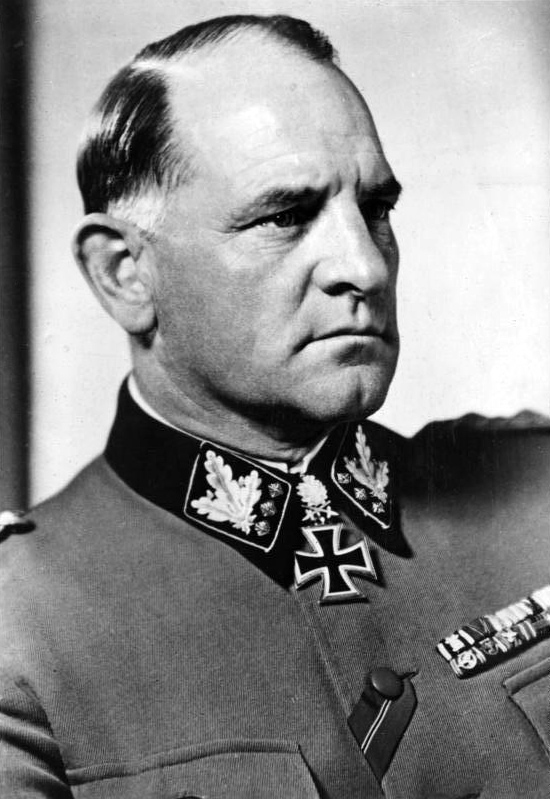
Army during Operation Spring Awakening. Photo: German Federal Archives
(Bundesarchiv) / CC BY-SA 3.0 Germany
On paper, it looked formidable. In reality, these “elite” divisions
were shadows of their former selves—understrength, filled with hastily
trained replacements from the navy and air force, and chronically short
of fuel. They were being asked to achieve what the Wehrmacht at the
height of its power had failed to do: defeat a prepared Soviet
defense.
The Soviet Trap
Marshal Fyodor Tolbukhin, commander of the 3rd Ukrainian Front, was
no fool. Soviet intelligence had detected the transfer of the 6th SS
Panzer Army to Hungary weeks earlier. Tolbukhin knew exactly what was
coming.
Drawing on lessons learned at Kursk, the Soviets constructed a
defense-in-depth that would have made a medieval fortress builder proud.
Multiple trench lines stretched back 30 kilometers. Extensive minefields
channeled German armor into predetermined “killing zones” bristling with
anti-tank guns—as many as 66 such zones in some sectors. Over 7,000
artillery pieces and mortars were registered on likely German approach
routes.
The 3rd Ukrainian Front fielded over 400,000 men and 400 tanks. They
didn’t need to win a war of maneuver—they just needed to hold. And hold
they would.
Into the Mud
The German offensive began on March 6 with a three-pronged assault.
The main thrust—Frühlingserwachen proper—saw the 6th SS Panzer
Army attack north of Lake Balaton, driving toward the Danube. Supporting
attacks came from the 2nd Panzer Army south of the lake
(Eisbrecher) and Army Group E from the south
(Waldteufel).
Within hours, the offensive ran into two insurmountable obstacles:
Soviet firepower and Mother Nature.
An unseasonable thaw had turned the Hungarian plain into a sea of
mud—the dreaded rasputitsa that had plagued invaders of Russia
for centuries. Tanks that weighed 45 tons sank up to their turrets.
Vehicles could only move on the few paved roads, which were exactly
where the Soviets had concentrated their anti-tank defenses.
Panzergrenadiers were forced to advance on foot, without armored
support, into a storm of artillery and machine-gun fire.

1945, shortly before Operation Spring Awakening. Photo: Roeder / German
Federal Archives (Bundesarchiv) / CC BY-SA 3.0 Germany
The I SS Panzer Corps, the strongest formation in the attack, managed
to penetrate about 30 kilometers—a fraction of what was needed to reach
operational objectives. Every meter was bought with blood and burning
steel. Soviet anti-tank guns, dug in and camouflaged, picked off German
armor at point-blank range. Artillery fire was relentless, coordinated,
and devastating.
By March 15, after ten days of brutal fighting, the offensive had
completely stalled. The 6th SS Panzer Army had suffered approximately
12,358 casualties and lost at least 31 tanks in the attack phase alone.
They had failed to breach even the Soviet tactical defense zone, let
alone achieve a breakthrough.
The last German offensive of World War II was over.
The Counterattack
The Soviets had been waiting for this moment.
On March 16, 1945—exactly 81 years ago this week—Marshal Tolbukhin
unleashed the Vienna Offensive. The 6th Guards Tank Army, held in
reserve throughout the German attack, smashed into the exhausted and
overextended German lines. Within 24 hours, the Red Army had pushed the
Germans back to their starting positions. Within days, they were in full
pursuit.
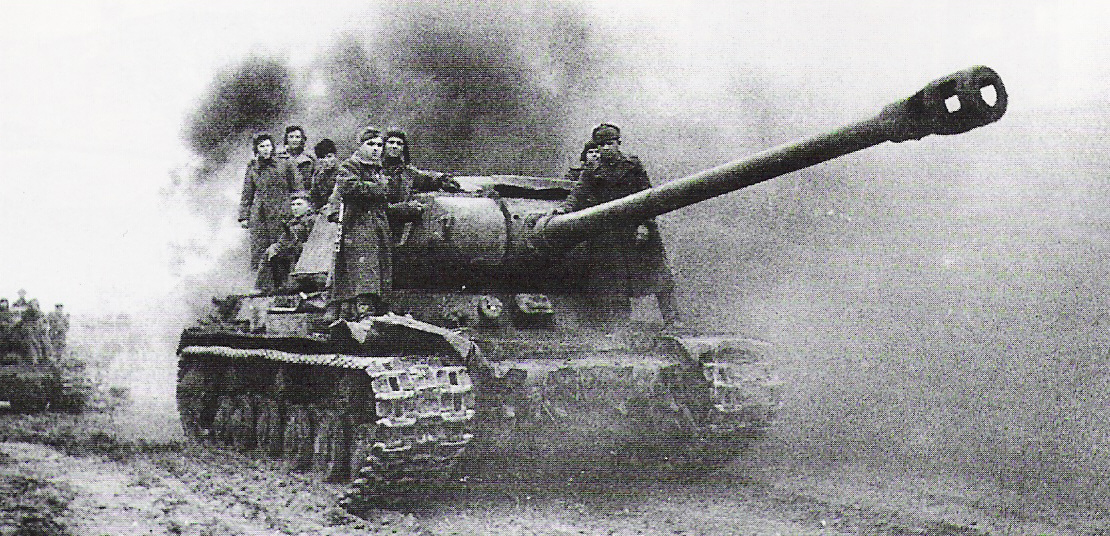
Similar tanks spearheaded the Vienna Offensive that followed Operation
Spring Awakening. Photo: Unknown Soviet photojournalist / Fortepan /
Public domain
The retreat became a rout. Hundreds of German tanks and assault guns
were destroyed or abandoned for lack of fuel. The 6th SS Panzer Army,
which Hitler had hoped would defend Berlin, was effectively destroyed as
a coherent fighting force. Its commander, Sepp Dietrich, reportedly
joked bitterly that the army was well-named—it had “only six tanks
left.”
Hitler, enraged by the failure, ordered the Waffen-SS soldiers to
remove their honorary cuff titles as a mark of disgrace. Dietrich, to
his credit, refused to fully implement the order, recognizing it as the
petulant rage of a madman.
The Last Gamble
Operation Spring Awakening cost the Soviets dearly—32,899 casualties,
152 tanks, and 415 anti-tank guns. But they could afford the losses.
Germany could not.
The offensive had squandered Germany’s last strategic armored reserve
in a futile attempt to secure oil that was already beyond reach. The
Panzerwaffe, the instrument that had conquered Poland, France, and much
of the Soviet Union, was finished. The path to Vienna—and ultimately to
Berlin—lay open.
The Vienna Offensive swept through Hungary and into Austria,
culminating in the capture of Vienna on April 13, 1945. Less than a
month later, Hitler would be dead and Germany would surrender
unconditionally.
Operation Spring Awakening was more than a failed offensive. It was
the death rattle of the Third Reich—a plan born of desperation, founded
on delusion, and executed with forces that were no longer adequate for
the task. It demonstrated that even Germany’s most elite units could no
longer achieve operational success against a prepared Soviet
defense.
In the muddy fields of Hungary, the Wehrmacht’s offensive capability
died. All that remained was the final, desperate defense—and the
inevitable end.
Legacy
Today, Operation Spring Awakening is largely forgotten, overshadowed
by the dramatic final battles for Berlin and the atomic bombings of
Japan. But for military historians, it stands as a case study in
strategic bankruptcy: what happens when ideology trumps military
reality, when desperation replaces planning, and when a regime refuses
to accept that the war is already lost.
The Hungarian oil fields that Hitler sacrificed his last reserves to
protect? They fell to the Soviets within weeks. The 6th SS Panzer Army
that was supposed to defend Berlin? Destroyed in the Hungarian mud. The
Third Reich that was supposed to last a thousand years? It had less than
two months left.
Spring had awakened in Hungary in March 1945. But for Nazi Germany,
it was the beginning of the final winter.